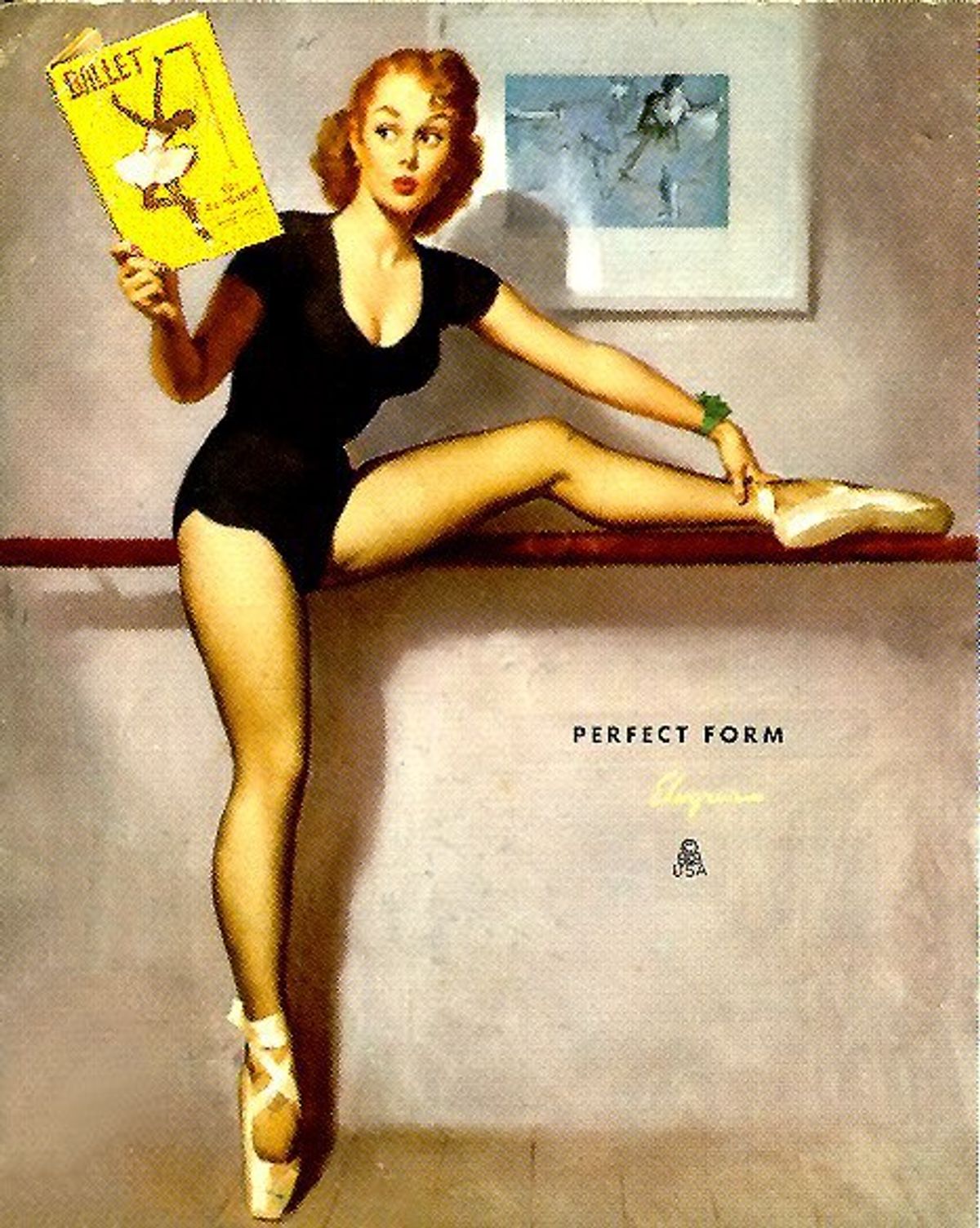
The American pinup girl is an iconic figure in American art history during the 1930s and 1940s. She was sassy, curvy, cute, innocent, and sexy all at the same time. I personally love the American pinup girl and what she represents, and I have grown quite appreciative of old pinup paintings. As a feminist in an era where women are pressured to look, dress, and act a certain way; women are told to be innocent yet sexually experienced; and where women are told to be proud of their bodies, but not too proud; it’s important for me to express my love for the pin up girl and why I think the American pinup is a positive image for feminist ideology.
Most pinup girls are portrayed as hyper-sexualized, and were painted in an time period where women were told not to portray themselves as sexually available, since this was an undesirable trait. Yet there are so many ways in which the value of the American pin up girl transcends her superficial sexual appeal.
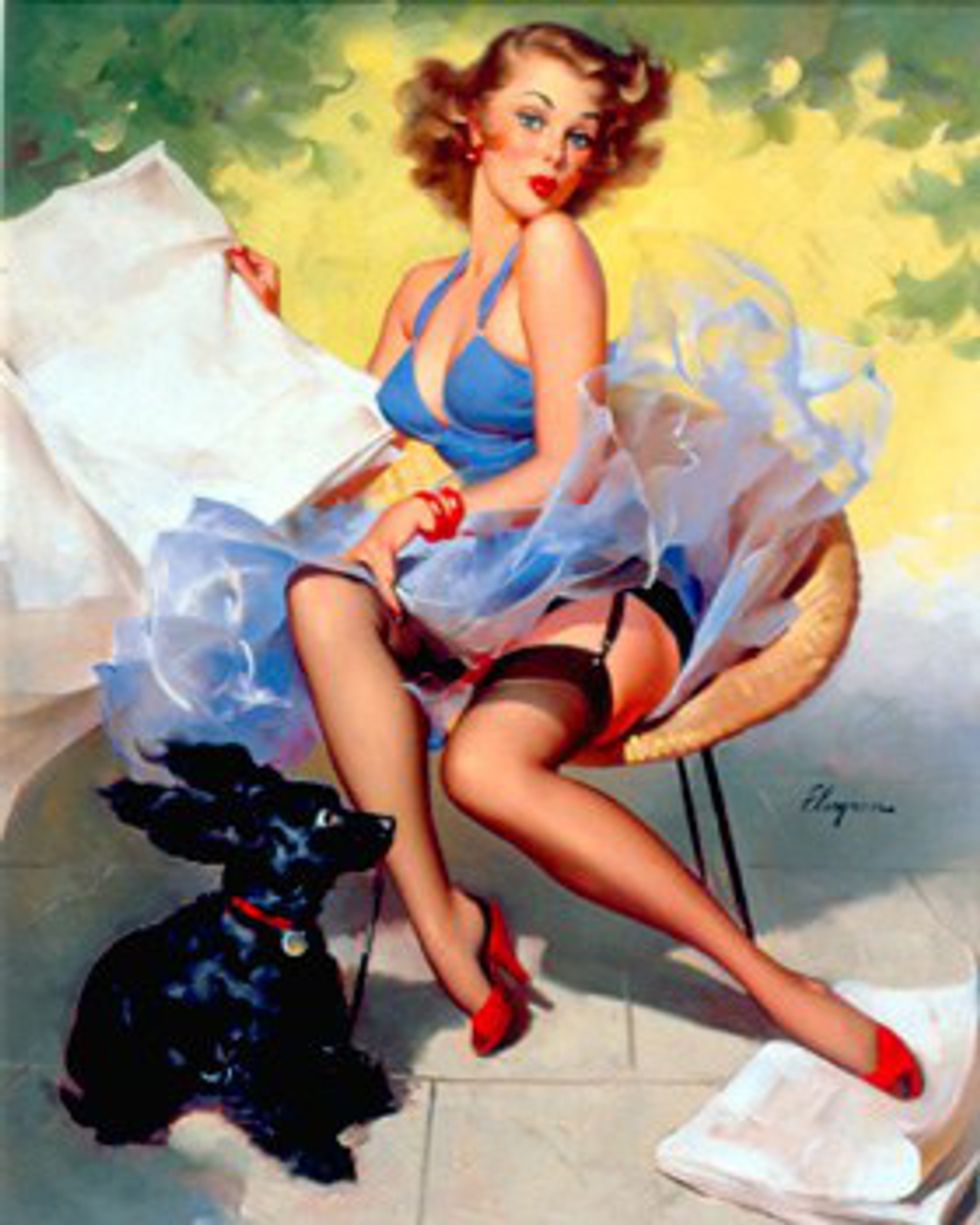
For starters, American pinup girl paintings were modeled after real-life women. Artists such as Gil Elvgren, Alberto Vargas, and George Petty used real female models as inspirations for some of their most cheeky pinups. Gil Elvgren, for example, used 18 different females to model and pose for some of his most famous “cheesecake” pinups. The term “cheesecake” was coined by him since many of his paintings portray hyper-feminine and innocent, yet sensual and curvy women. Elvgren happens to be my favorite pinup artist because his images are very cheeky and since they don’t portray these women as super=sexualized objects.
American pinup transcends its superficial sexual appeal for a number of reasons, and as a result, pinup becomes an empowering image for me as a woman and a feminist. First of all, the women who posed for these pin up paintings were very liberal for their time. In the time period between the 1930s through the early 1960s, women were not encouraged to pose in their nighties or lingerie. Posing or modeling for a pinup artists was a very liberal act in this time period, and these women embraced their bodies and femininity.
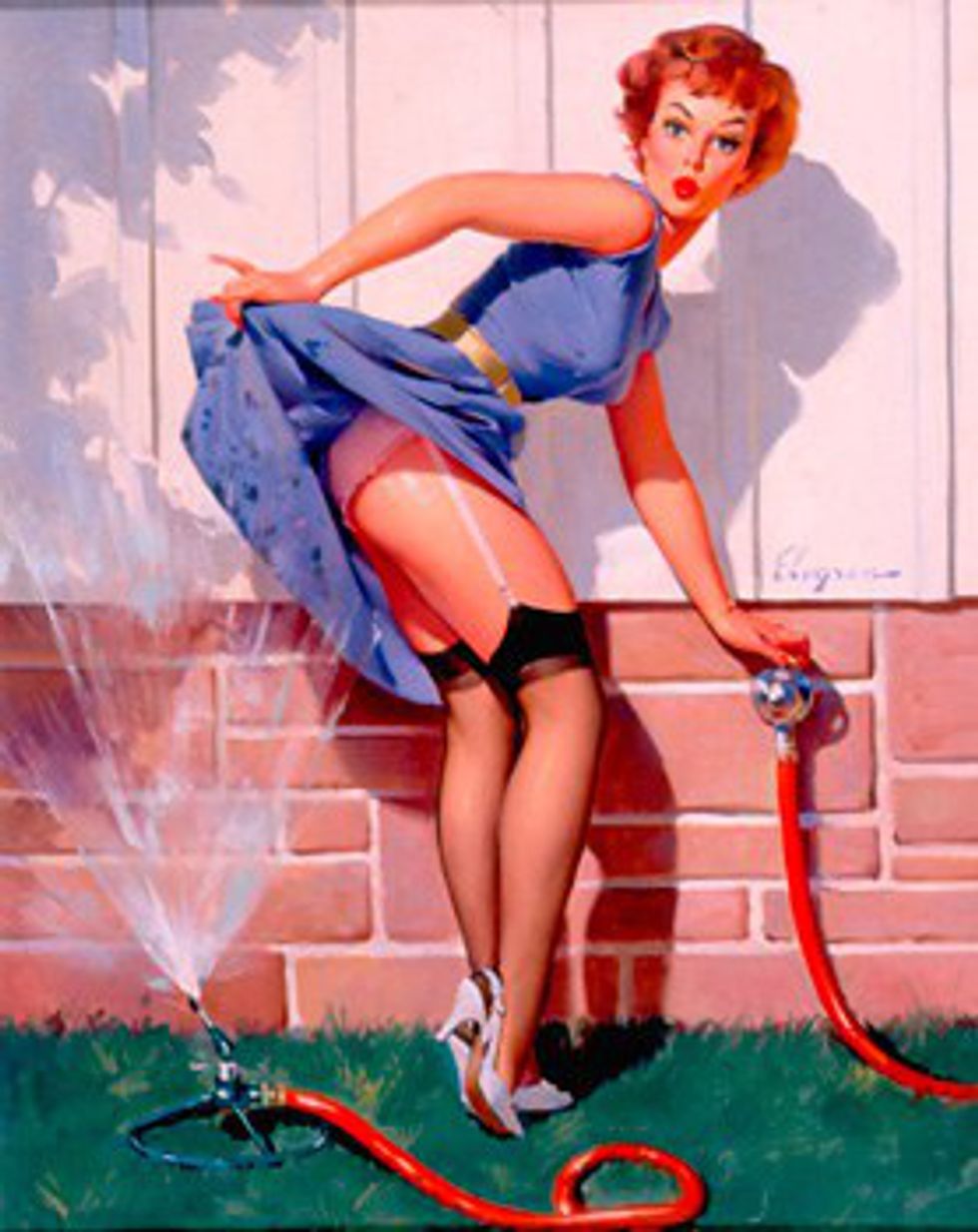
Additionally, especially in the case of Gil Elvgren, his ladies were never pictured lifting up their own clothes or standing in lingerie for the pleasure of others. His paintings always depicted some outside force lifting up the clothing of these ladies accidentally, which would then reveal their stockings or garter belts. Forces such as a strong breeze or wind, or their clothing being accidentally caught on something were ways in which their bodies would become exposed, and the women’s reactions in these paintings were usually ones of surprise. The actual woman herself was not usually the cause of her body exposure.
For the record, pinups were not equivalent to girlie mags (such as PlayBoy), or "Tijuana Bible"s (erotic comic books common in this time period). Pinup paintings were meant to be “pinned up” on the wall as any other poster or piece of art. The women who modeled for artists such as Elvgren were really putting themselves out there, and to me, many of these images say, “I’m a woman, and I look sexy doing the laundry even without trying too hard." And what women doesn’t want to be encouraged to feel sexy doing normal day-to-day activities?
Furthermore, American pinup art was very important in the 1930s during the Great Depression, and in the 1940s during World War II. Pinups were painted on the sides of military planes as a reminder to soldiers of the women or girlfriends back at home, sort of as a propaganda, but also as a motivation. No, not motivation based purely on sex and sex appeal, but because pinups were curvy and had womanly bodies that could support child birth and child-bearing. Pinups acted as a reminder of the love, and possibility of marriage and a family waiting back home for them in the States.
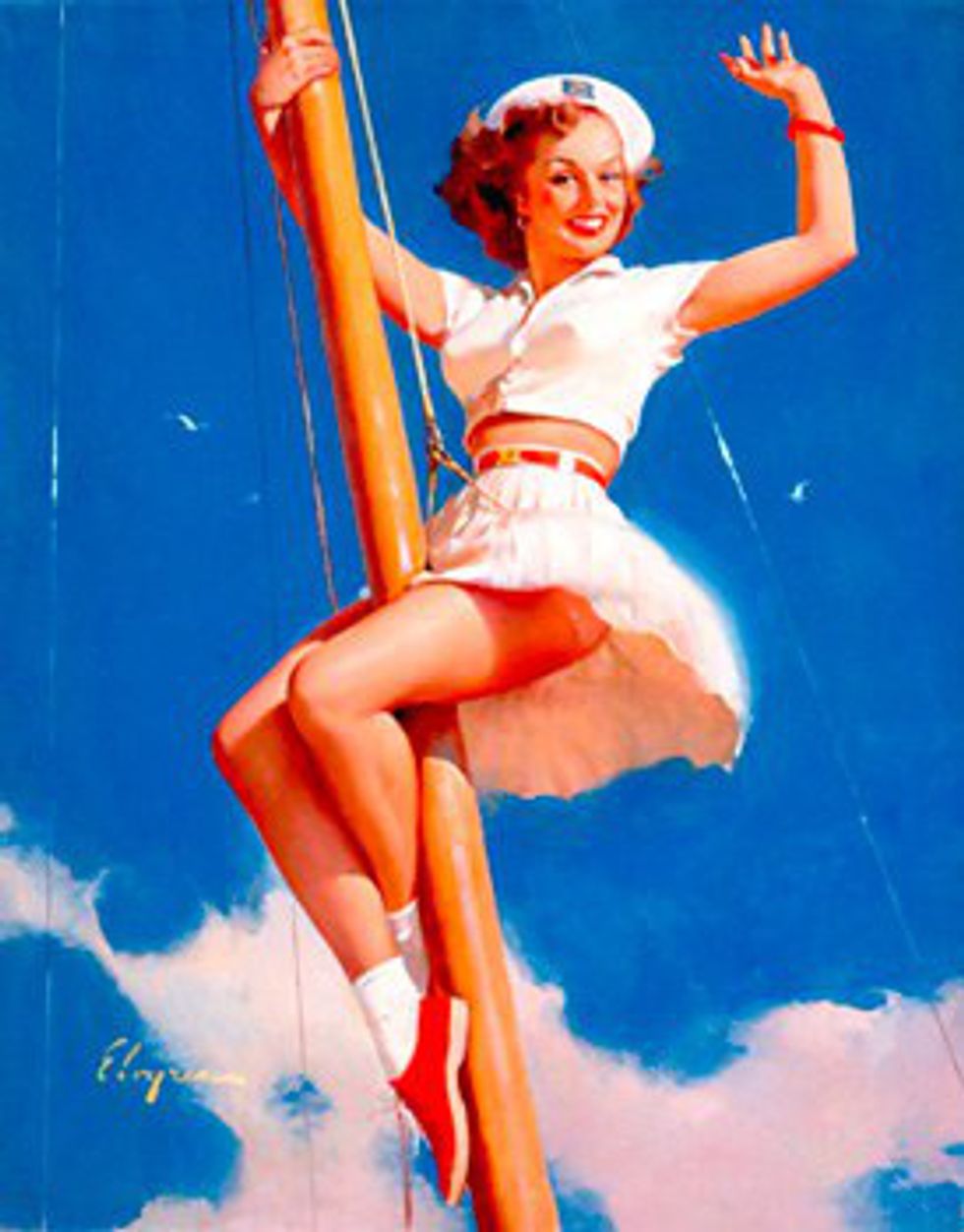
Finally, the American pinup girl body type was that of a healthy female. Round stomach and thighs, curves, an hour glass shape, a full bosom, and a round bottom all encompassed the idea of the American pin up. The women who posed for pinup paintings were not told to diet or find cosmetic ways to alter their bodies for the sake of the painting. Of course, like any other person who paints animated images, pinup girls ended up looking a bit more cartoony on canvas than they did in real life, and artists would enhance their features even if their photo was taken as a basis for the painting. Also, I’m not denying the fact some artists chose models who had certain features for their paintings.
Nonetheless, these images lacked a size zero waist, they lacked heavy makeup, they lacked a “thigh gap” and “bikini bridge," and they lacked abdominal muscles or muscular definition. The images painted are females in their most feminine form, and I think it is empowering to have images of women depicted as desirable despite their curves or tummy pouches, in a time where society today would deem these physical qualities as shameful or “fat."
The American pinup girl symbolizes more than just innocence and superficial female sexuality. She represents a full-figured, beautiful, and naturally sexy woman in all of her feminine glory. My appreciation for the American pinup girl reinforces my beliefs on feminism, and self-love and acceptance. It is OK to love one’s body and be proud to show it. It is OK to feel sexy, whether your picture is on a war plane encouraging soldiers to return home safely, or whether your skirt accidentally flies up while trying to turn off the garden hose. As a feminist, it’s OK to love and appreciate the American pinup girl because these images are some of the only images of women left that hearten them to embrace their feminine shape and femininity.