

This week, I decided to do something a little different: a step away from my short story series and into something more musical but just as important to me.
In 2014, the second season of the international phenomenon, Tokyo Ghoul, was aired. As an avid anime and manga fan, I am enamored by the Tokyo Ghoul franchise and its complex characters and plot. It’s treacherously heartbreaking, but at the same time, comedic and filled with satisfying, violent fights many shounen fans look for.
I, however, have not watched the anime and have only read the manga. While some people may gasp and scream WATCH IT PLEASE FOR THE LOVE OF GOD like many of my friends, I strangely didn’t feel the need to back in 2014, and still don’t in 2017. I’m one of the few who are satisfied with just the manga, though I may give the anime a chance when I have time.
But the main focus of this article isn’t about Tokyo Ghoul; rather, it’s focusing on the anime’s music, specifically season two’s ending. When my friend showed me the ending for the first time, I fell in love with Ishida Sui’s art (though I was always a fan, to me the coloring was exceptionally vibrant and stunning). Then, the piano started to play.
With wide, tearing eyes, I watched the images pan as a unique, somewhat hoarse voice sang. I was red in the face, clutching my friend’s phone, wondering why the hell was I so affected?
Immediately, I looked up the song. Romanized, the title is Kisetsu wa Tsugitsugi Shinde Iku, while the accepted English translation is Seasons Die One After Another, though there are other variations (translations are never exact and I find that so interesting and cool).
My friend and I spent around an hour talking about how beautiful and lovely the song was, then looked up English lyrics, then became even more enamored with it.
Of course, we went through multiple translations, looking at how each translator interpreted the song and how they shared the meaning through English. I was shocked and overjoyed to find how, regardless of interpretation, each page was filled with lyrics describing beautiful, poetic pain.
And that was the beginning of my quick descent into amazarashi obsession.
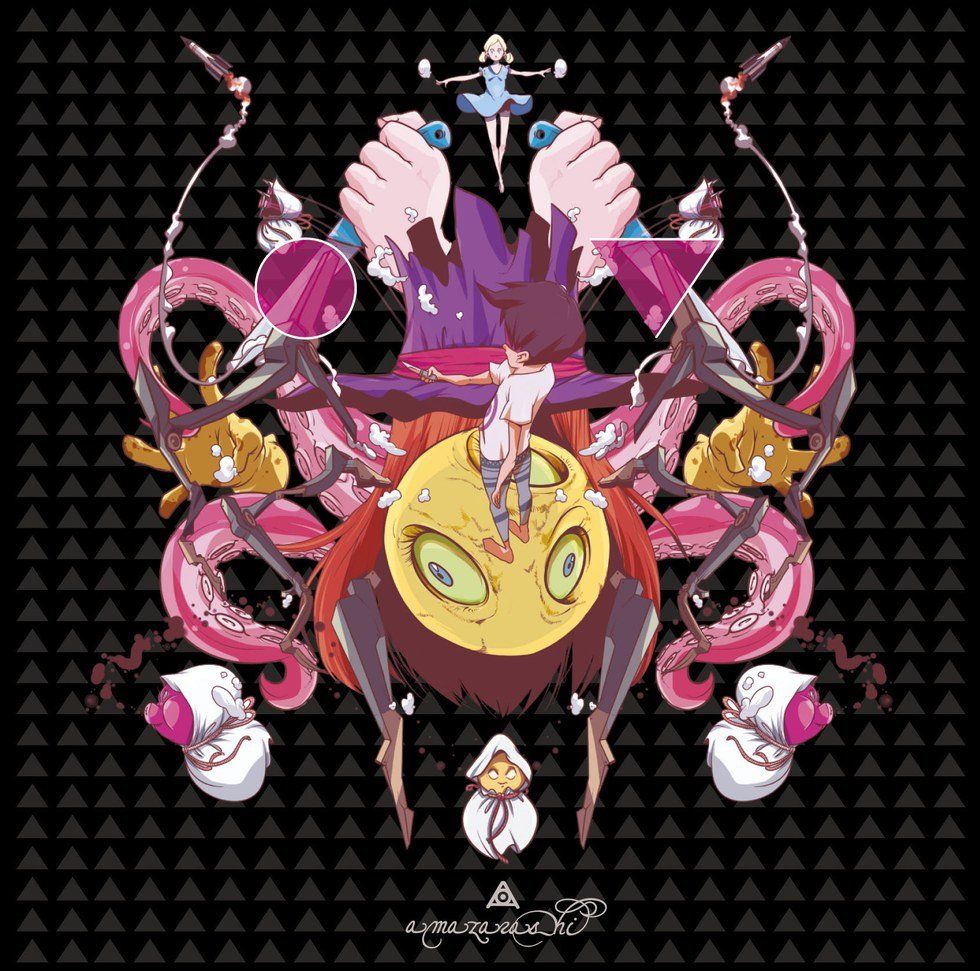
Led by Hiromu Akita from Aomori, amazarashi is a rather unique band that released their first album in 2009 and had their first major debut in 2010 with How To Make A Bomb. As far as I know, they have never revealed their faces, even during their concerts. Instead, they play behind a screen which displays numerous images that go along with the performance.
As I researched and listened to their songs, I found that each piece they made was filled with similar themes: the brutal pains of reality, the hypocrisy of human nature, and seemingly personal stories of depression. Many if not most followed the point of view of a single man who couldn’t help but hate the world for how cruel it could be. I would find songs with lyrics about feelings of personal hatred and unworthiness, such as Kaze ni Sasurai (roughly Wandering in the Wind), and about how disgusting humanity could be, like their song Anomie.
Without fail, I would cry and sob and find myself feeling miserable and indignant too. Their songs hit me in all the same places where a 2 AM societal panic would hit me on school days. The singer’s emotions were raw, full of angry anguish, and so very real. Each verse screamed about topics that are ignored by many or put down as insignificant, that are almost always kept inside the mind. Through my sobbing, I felt so content.
It was like I wasn’t alone anymore.
To know that someone goes through the same things as you, to be reminded that you aren’t weird or too sensitive (I really hate it when someone tells me that), gives you absolute contentment. Yeah I was crying my eyes out, but I was oh so happy.
amazarashi’s music filled me with all kinds of emotions and a lot of internal evaluations, and I love every song I listen to. I can’t help but feel for the genuine pain the lead singer expresses, which results in me having to go look for a quiet place to contemplate life (happens a lot I’m INFP). Despite the sadness each of their songs carry however, amazarashi manage to look to the future and put their pained pasts behind them.
Seasons Die Out One After Another, in addition to The Reason Why I Thought I’d Die, end with bittersweet hope. Even when the seasons die, they’re always revived, and songs filled with suffering will never go out.
And even when I thought about dying, if people like you are living in this world, then maybe it’s alright to hope a little too (credit to Matt Sandvig on YouTube).
So, rather than this being an article about one of my favorite Japanese bands, it ended up turning into a letter. Regardless, amazarashi is a beautiful band that makes beautiful music, and I hope that those reading will give them a chance. And finally, as all letters should end with a closing-
Thank you, amazarashi, from the bottom of my heart.
















