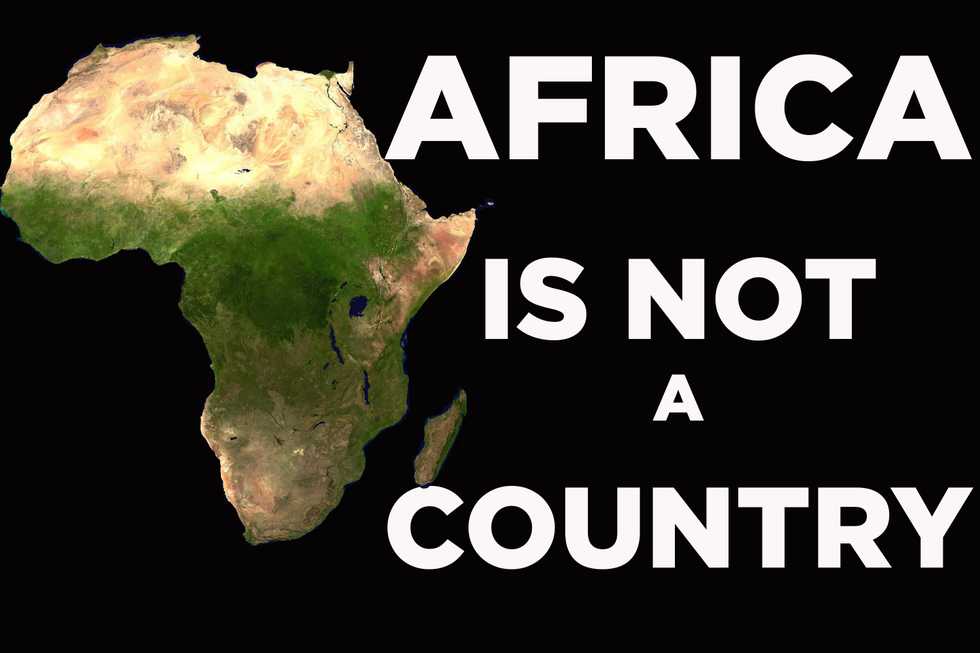
Africa is NOT a country. It IS indeed a continent.
Throughout my life, specifically in school, my peers and my own teachers practiced the habit of speaking about Africa in a generalized manner. “African culture is beautiful.” “Africa is this, Africa is that.” They had this tendency to refer to this one continent as one unified being.
Yes, Africa as a continent is a unifying factor for individuals who identify with the overarching “African” culture, but Africa is not one single being, it is a being that is comprised of multiple facets: its 54 unique faces.
Africa consists of 54 countries, and about 1.2 billion people make up the populations within these African nations. So that means that 1.2 billion people identify with one or more countries within this greater region. It is important to note that each of the 54 nations come with 54 unique cultures, lifestyles, and values.
A person from Libera (which is located in West Africa) will not necessarily share the same culture and lifestyle with that of a person from Zimbabwe (which is located in the southern region of Africa).
My parents were born in Nigeria, therefore tying them to country that is Nigeria, not solely tying them to the greater continent of Africa. Nigeria is a country with its own lifestyle, values, traditions, cultures, societal views/roles, etc… Nigeria is one facet of Africa.
Africa is not the sole representation of Nigeria and Nigeria is not the sole representation of the other countries within Africa.
We should speak of Africa in the same manner that we speak of Europe. When we speak of Europe, we usually tend to speak of individual countries within Europe, rather than the overarching continent that is Europe. There are indeed overarching themes, views, values, and cultures that are tied to the region of Europe, but we can all agree that the 50 sovereign states within Europe all possess unique qualities, lifestyles, values, cultures, and traditions.
How about we start viewing and acknowledging the uniqueness of African countries beyond the simple thought of Africa being one united being, and start attempting to understand and learn about the 54 faces that make up the greater continent of Africa instead of constantly generalizing this multifaceted cultural region.
It is crucial that as human beings, we challenge ourselves to undo the generalizations that our society has created which evidently have shaped our perspective on the outside world beyond what we can see, experience, and acknowledge. It is only right we move forward in our educational endeavors, that we begin to take charge and start educating ourselves beyond our textbooks to build our own unique perspectives that lack the intense pressures of the greater society.