When I was younger, I never really thought about the Christmas season outside of the commercial aspect. Of course we went to Christmas Eve service where we would say "thank you" to God-incarnate and light our individual candles all while singing Christmas carols. I was a child then and when you are a child, let's be honest, you're self-absorbed.
My parents, God bless them, always tried their hardest to explain to me the importance of the season, a season celebrating Emmanuel. I remember lighting candles in my grandparents' house as we sang "happy birthday" to Jesus. Those moments full of love and thanksgiving meant a lot to me. I loved the environment I was raised in, no matter how corny we could sometimes get.
But when you are a child, Christmas is largely characterized by things like cookies, eating way too much, and spending time with family and friends you haven't seen since the Christmas before. That was the focus.
Now I'm an adult.
I've never really called the Christmas season "Advent" until two years ago when I exposed myself to the ancient liturgies (which I fell in love with) and discovered that the word "Advent" means "coming" or "the arrival of a notable person, thing or event."
When you think of something coming or an arrival of an important thing, there usually are a few things preceding that arrival. It wasn't long that I began to understand the weeks of Advent as being characterized by an intense period of waiting, anticipation, and hope. When people talk about "living in the tension," I immediately think of Advent.
I think of Advent because the whole month of December is a time where you can feel the worldwide Church longing for something. We're waiting together. But what exactly are we waiting for?
For the Jewish people, it was the fulfillment of their law. God made a promise and so for thousands of years they waited on God to fulfill that promise. They waited. At times they clenched their teeth, looked to the sky and whispered "God, where are you" as the world around them became darker and darker. They waited as they waged wars and endured unspeakable things.
The world waited for God to slip into the vulnerability of skin and share in their (our) violent and disturbing world. A tired, weary and war-torn world waited to cry and rejoice at the morning news of God-in-flesh, God-among-us. The world waited for a light that would break into an empty tomb. The world waited for redemption, for restoration, and for healing.
Maybe that's why Christmas day is so upbeat because it symbolizes that momentous day in history where that waiting was broken. Maybe joy is written on every face on Christmas day because the tense anticipation is over. Christ the King, born on this day. God and humans finally reconciled.
I'm not going to pretend as if I actually believe Christ was born on December 25th. I don't know the exact date (some theologians claim that Christ was perhaps born somewhere between early-to-mid September). Neither am I going to pretend that a lot of Christian and Christmas traditions weren't developed from pagan traditions. I have many pagan friends, so I am not unnerved by this fact. (Side note: if you are unnerved by pagan traditions, I suggest you stay far away from the Episcopal Church, the Catholic Church, or basically any church.) To be straightforward, Advent is symbolic more than anything else.
The fact remains, however, that we are waiting. I get chills every time that period of waiting and longing is described as "hope."
Hope.
I don't know what exactly we are hoping for. Some Christians say we hope for the second coming of Christ. To be honest, I don't know what that looks like. I actually get pretty frustrated when people parade around (probably getting paid in the process) declaring the world is going to end and that judgment is about to fall upon us. I sometimes (wrongfully, maybe, I don't know) view things like the Rapture, Great Tribulations, One-World Government, and collapsing currencies all as the embarrassing spiritual equivalent to snake-handling or people with cardboard around their bodies that say "The End is Nigh."
I can tell you what I hope for. Maybe by telling you what I hope for, I can at the same time tell you what other Christians hope for.
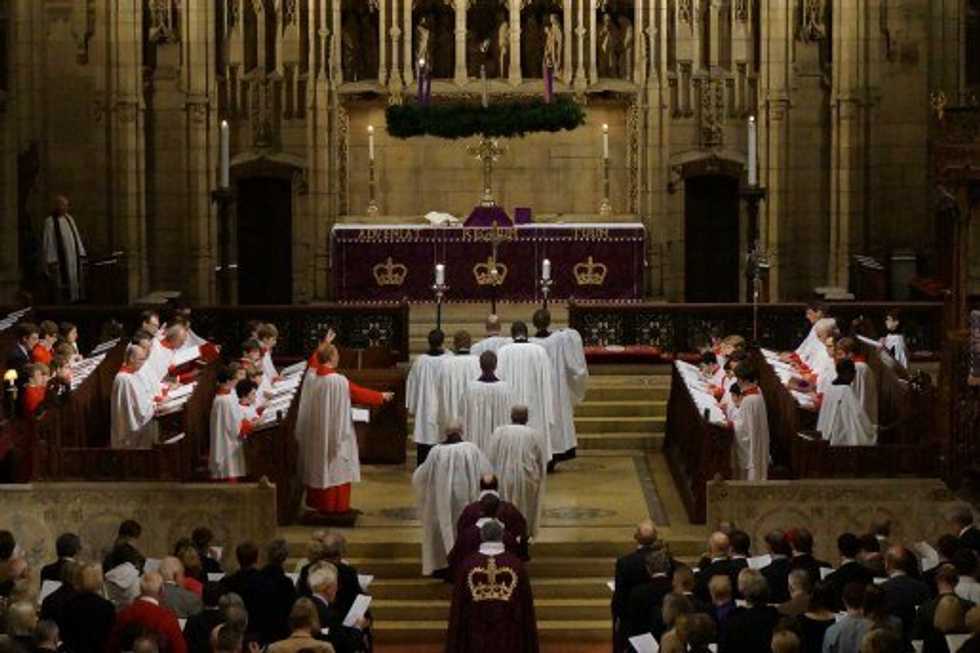
I hope for the coming of Christ into our lives in new ways, a desire that is heightened during this intense period of waiting and longing in the church. The beautiful readings from the Book of Isaiah, which we hear during Advent, describe how even the Earth longs for the presence of God. The lantern of burning incense that is swung during service seems to be swung with a plea, a cry of hope for God to be present. The "O Antiphons," sung at evening prayer and during the Gospel Acclamations towards the end of Advent, speak of a Christ as the King of Nations. The Gospel readings in the weeks of Advent tell of John the Baptist expressing Israel's hope for a Messiah. Mary and Joseph hope for the upcoming birth of a son. It's all about hope.
I'll be honest, I'm not really feeling the Christmas spirit this Advent. Our country seems plagued with racism, hate, fear, hysteria, sexism, homophobia, transphobia, xenophobia and Islamophobia. I see our world ready to go to war. I see poverty and homelessness. I see corruption, greed and egotism.
I suppose I'm just learning to be OK with it. I'm learning to be OK with the sadness that rises with the frustration of a broken world, with longings still unfulfilled, with the ache in my human heart for all things to be redeemed, restored, and whole. I suppose hoping is just my way of holding both the joy and the sorrow.
"Where are you?" we whisper to heaven. "This weary world is waiting."
I hope for a future where every tear is wiped from every eye. I hope for a future where people can dance with no reservation. I hope that we can still find joy in the small things: in bringing food to a grieving friend, in holding the door open for a stranger, in being the shoulder for someone to cry on.
We wait for the Kingdom of God, but maybe that kingdom is now. Right here. Right now. Hoping in the small and selfless acts of unchained love and boundless grace that constitutes God's Kingdom.
When I think about it, hope is completely absurd. It oftentimes goes against my very human instincts to burn down bridges, shut down dissent, pick fights, turn over tables, draw lines in the sand, to just peace out and leave the craziness behind.
Here's the weirdest thing about hope: it's subversive.
Hope isn't just withdrawing from reality or covering our eyes in ignorance. It's not like we bury our heads in the ground and sing songs of the Gospel. Hope is not about pretending that the world is fine, we're fine, and everything's just fine.
There are many things in our lives and in our world that are not fine. Hope admits that. Hope is subversive because it dares to admit that all is not as it should be.
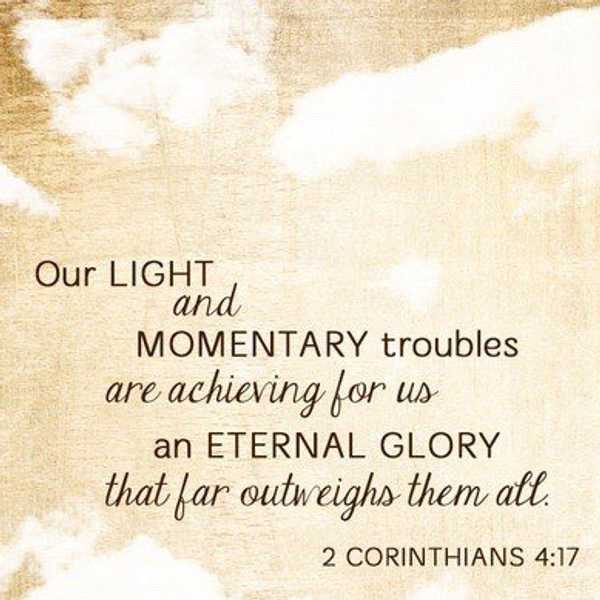
Sometimes I feel as if the only thing left to do is simply to hope, to hold on to each other, to pray without ceasing, and to dance in the darkness, waiting for the light to crack through. Sometimes I feel as if the only thing left to do is hold out for God to fulfill His promises of restoration, even if it means not living long enough to see it. I hope that our light shines in this world. I hope for our candles to scatter the darkness, confident that if/when our candle blows out, another Christian will come to us and rekindle that flame.
In hoping I think back to when I was little, to all those times we held candles during Christmas Eve service:
"This little light of mine. I'm gonna let it shine. Let it shine. Let it shine. Let it shine."