
Your phone buzzes. You look down and the message reads, “We need to talk.”
Your mind and heart start to race, and you struggle to swallow the lump in your throat. Those dreaded words can make us feel anxious, and sometimes, terrified. But now, it's time we start thinking about confrontation as an opportunity for open communication; a way to express our emotions in a healthy manner instead of bottling everything up.
So, do you have something you need to get off your chest but don't know where to start? Try following this simple guide for your much needed conversation:
1. In-person versus over the phone.
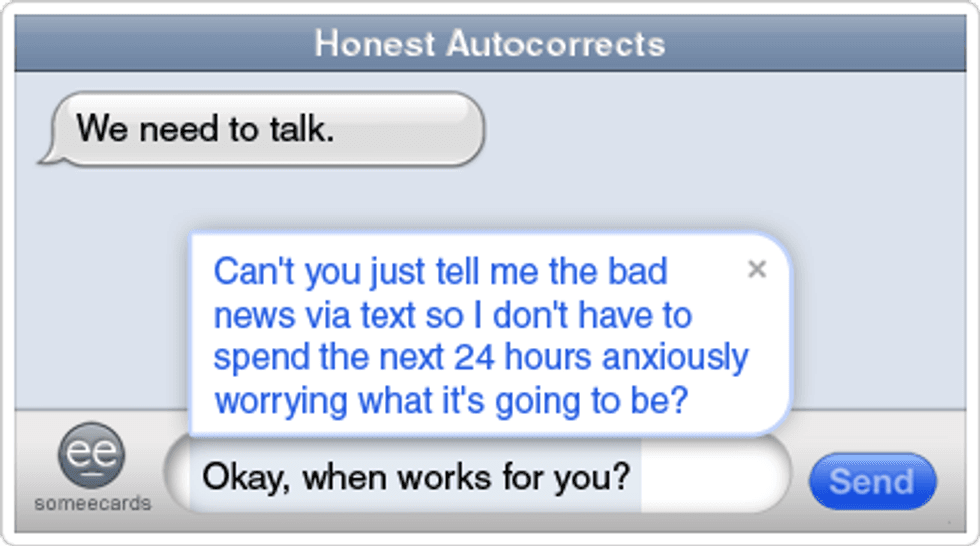
Texts are notorious for leaving the receiver confused about the tone of the message. You never really know if the person is joking or being 100 percent serious. If you do not want your feelings to be misconstrued or taken out of context, maybe it's best to talk over the phone or meet in person.
2. Timing and location.

First, you need to decide whether or not it is "timely" to bring up the problem. Is this problem reoccurring? Has the problem been addressed, but nothing has changed? Is the problem causing you stress?
If you've decided that the conversation needs to happen soon, ask the person if they can meet up with you soon to discuss the issue at hand. Set a time and place, and hold them to it.
Remember to be aware of your surroundings. If you need to have a serious talk with a sister in your chapter or a coworker at the coffee place you work at, it might be best to meet up somewhere else where people you know will not interfere. You can meet in a public place, but the conversation is not open to the public.
3. Put away your phone, close the laptop, turn off the music.

Nothing is more disrespectful than someone talking to you about something important and they see you retweeting Drake's song lyrics and watching Snapchat videos. Both parties should pause all distractions until the conversation is over.
4. Embrace the awkward silence.

Try embracing the awkward silence that can happen during a serious conversation instead of filling up the quiet. This usually encourages the other person to say more about their situation and/or feelings. It can also help the speaker collect their thoughts and possibly come up with their own solution to the problem.
5. Don't assume.
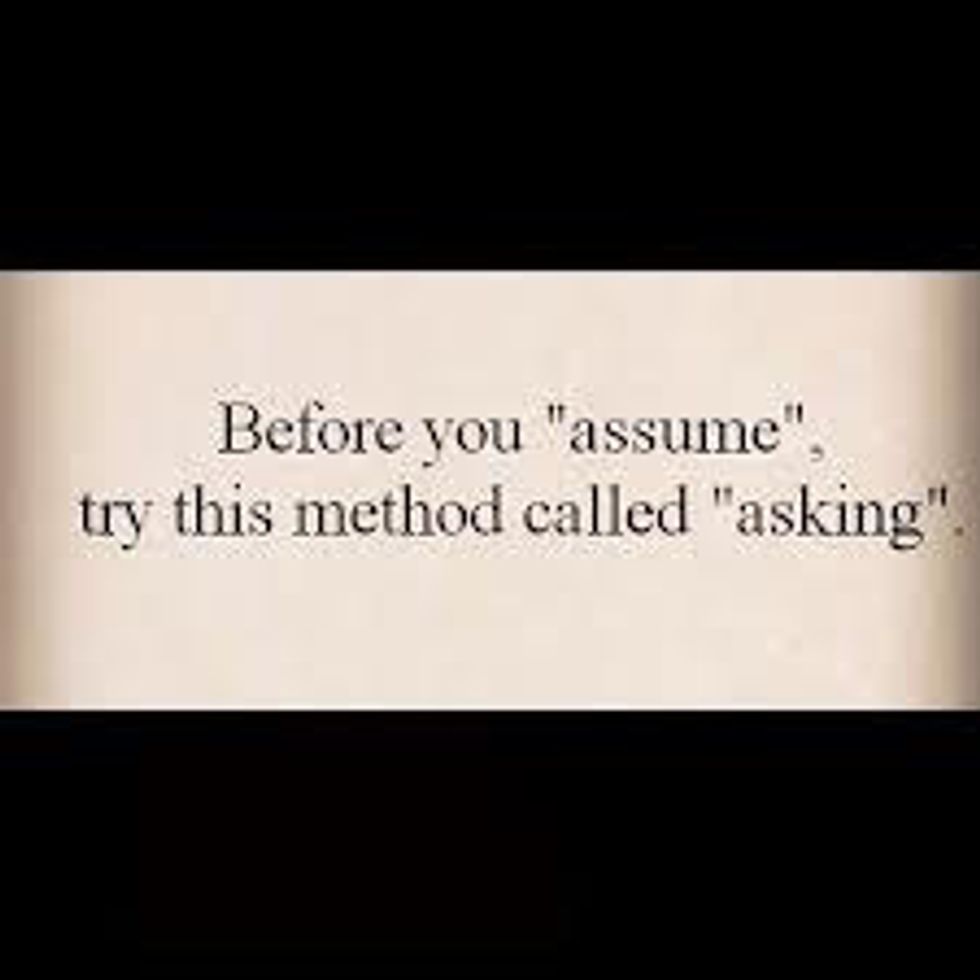
When I've talked to people in the past, I always assumed they knew what was bothering me. Most people didn't. People can't read your mind, and we shouldn't expect them to. Have the courage to ask questions and express what you want.
6. Avoid passive-aggression.
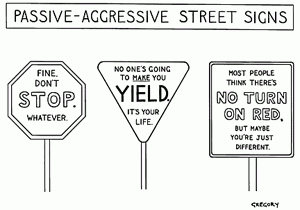
If you're like me, you tend to be a people pleaser. Therefore, you try to play it cool and try to ignore it so there is no confrontation. When someone does something that bothers you, you may do some of the following: get really quiet and answer with "I'm fine" or "It's fine," using short texts like "Ok" or "K" (which are death sentences), avoiding the person, dropping hints to see if they notice you're upset, etc. It's basically beating around the bush until the other person figures it out.
7. Active listening and "parroting."

Some people are terrible listeners. When someone is telling you what's wrong, a lot of us tend to prepare our counterarguments in our heads instead of paying attention to what's being said. One way to help the other person know that you are trying to understand is to "parrot" what they are saying to you. For example, if the person is upset about not doing chores around the apartment, you could say something like, "So, what I hear you saying is that you want me to do chores around the apartment more often." This gives the speaker the chance to reaffirm or adjust the message until both parties understand. Communication is a two way street, and if you aren’t listening, then no real progress can be made.
8. Avoid "you" statements, use "I" statements.

Using statements like "You did ____" or "You are ______" or "You don't ____." This is only going to start a never ending blame game. Instead, you should use statements like "I feel _____ when you ______" or "I am disappointed when _____." No one can argue with the way you feel because emotions are neither right or wrong.
9. Stay on topic.

This is the time to say what is bothering you in the "here and now." Don't bring up an incident from more than a month ago that is unrelated.
10. Honesty.

ALWAYS BE HONEST. Do not lie and do not withhold information.
11. Don’t be a jerk.

The conversation will not go anywhere if you choose to have a mocking or condescending tone, interrupt, use insults, throw objects, raise your voice, etc.
12. Solution?