
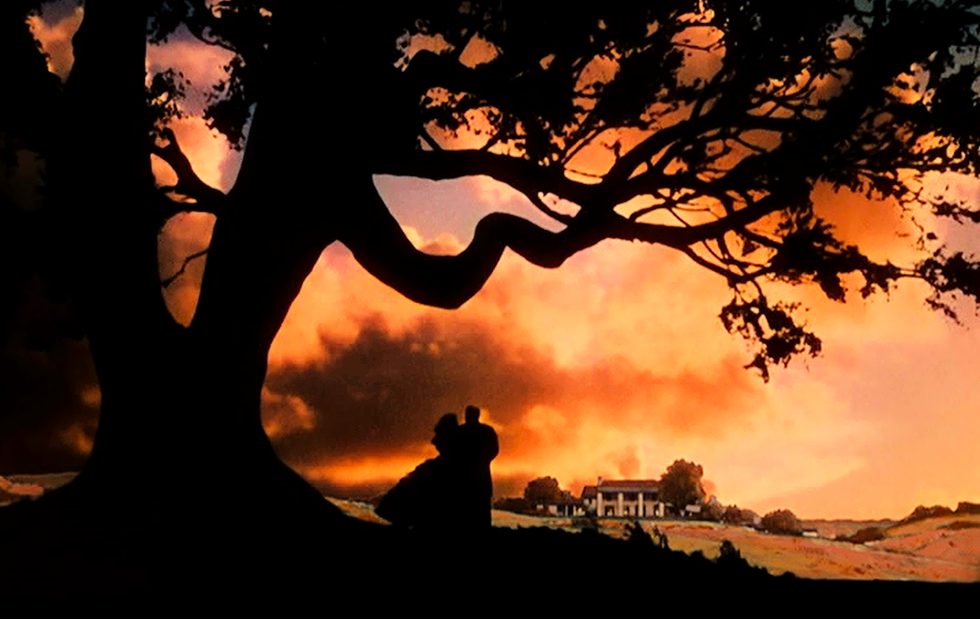
Years ago, I found myself deep in a world long forgotten. A time where gentry reigned, knights and their ladies held court on long stretches of farmland, and the parties glittered into the early morning hours.
It was a time that had disappeared in a full swoop, suddenly gone with the wind. They called it the Old South.
"Gone With the Wind," written by Margaret Mitchell, was published on June 30, 1936 -- 79 years ago today. Mitchell was a southern woman who had been injured and passed her time laying in bed by writing. The book itself is a collection of stories from her childhood, what relatives who lived through the Civil War and Reconstruction had been able to tell her. She took everything she could remember, and painted it as the backdrop for her main character, Scarlett O’Hara.
In a modern context, Scarlett still represents the ideals of a lot of Americans. There are major problems of race, state rights and southern pride surrounding her, and she chooses to ignore them all. Instead, she focuses on trying to comprehend why the man she loves, Ashley Wilkes -- someone who is focused on wanting to fix the issues laid before him -- says they are too different to be together.
Cue Rhett Butler, a savvy businessman who could care less about what’s wrong or right, and is just looking to make a buck. He plays whatever part that suits him in that moment. He is solely looking out for himself, and does not believe in the values that society supposedly holds men to.
I finished "Gone With the Wind" late one night, and didn’t sleep for the next two days. Years of school had not taught me the significance of what that book did. 79 years later, it is still at the forefront of American history. Against the backdrop of what we are now facing in our country, more than ever are the lessons taught in this novel significant.
Now, it’s been said that this book, this four-hour movie, glorifies slavery. It’s also been said that a sentimental view of the Confederacy is presented, and that’s the only take away from this modern day Twilight equivalent.
If that’s the only thing you can see, though, then you’ve been blinded by the surface.
Margaret Mitchell shows a different side of history, one told not from the winners, but from the losers. If the book glorifies slavery, if it shows a sentimental view of the Confederacy, it is only because she writes from the perspective of people who have been there, who were a part of it -- not because she wants to impose an opinion that things were better. It is a part of the world her characters reside in, a fictional place called the Old South.
The problem that arises out of the novel is when people forget that the Old South did not exist. For the few that owned acres of plantations, their lives were better off, obviously. But for the many that worked those plantations for no pay, for those who struggled in the cities looking for a dollar, this fairytale life never existed.
Instead, we see the total destruction of the South -- houses torched, fields salted, and opportunists from "up North" coming in to take what little bit is left of this war-torn province. We see those that have been freed unable to find work because of the color of their skin. We see the struggle of people from all walks of life watching as their world crumples beneath them.
Why was this all glossed over in school? They say all is fair in love and war, but is burning down entire cities part of that?
Can we not then see the world through a new lens, that perhaps these issues of race aren’t just popping up suddenly? This is something that has been boiling over since before the Civil War. Like Scarlett O’Hara, we turned a blind eye because, maybe, we didn’t want to know.
There is racism in Mitchell's novel, harsh words that should never be used. Many are quick to point out that it automatically discounts the importance of her work because she shows a side of history most people tend to shut out. But there is racism in today’s world, and those same ugly words are used by the kind of person who walk into a church and kill nine people.
Are we supposed to then forget about what he did, because it makes us uncomfortable, because we'd rather not think about the fact that nine lives were taken, for no other reason than what a person looks like?
"Gone With the Wind" highlights the fact that what we are experiencing today is the culmination of systematic repression, hatred, and a complete misunderstanding. If you shut out this book then you are trying to shut out history, and you will never understand the issues people have faced. There are two very different sides. While they say the Civil War was between the South and the North and it ended years ago, I say another one started.
Today's war is between the South and the South. Until we see real change and this culture of intolerance and pretending to be shocked ends, I don’t know if this war will ever go away.
79 years is a long time. What’s even longer, however, is waiting for some form of intellect to strike the people who still believe there’s nothing to be done.
Let me be clear: we are the next generation. We can stand idly by, watching our world die off and become gone with the wind. Or we can stand up and fight for something better.