

Middle and high school classrooms are plagued with misconceptions and sometimes just plain wrong information. Remember nice Mr. Jones? He wasn't out to get you. A majority of the population still prescribes to these misdemeanors.
1. THE BIG BANG MADE A LOT OF NOISE.
One of the most widely accepted theories concerning the origin of the universe, the Big Bang Theory often receives attention from theologians and atheists alike (as well as the appreciator of a good half hour scientific comedy). Whether one ascribes to the theory or not, there is a often confusion concerning the details of the Big Bang. By the nature of its name, it is easy to assume that there was some huge, cosmic explosion that rocked the universe sonically, but in reality the Big Bang made only a Tiny Pop.
To understand why, there are some details about sound that become relevant. Unlike light--which is electromagnetic radiation--sound is a transverse wave. This is a very important difference. Light, which is a form of radiation, can travel through space (essentially a vacuum). Sound, on the other hand, requires something to transmit the wave. By definition as a wave, sound cannot be transmitted through a vacuum and therefore cannot travel through space. So when the entire universe was contained in a sphere the size of a dime and rapidly started to expand, all a person would have been capable of hearing is a quick pop as the expansion passed them. In fact, they would likely have heard nothing as the energy released from the rapid expansion would have incinerated them before their brain could have 'heard' the noise.
2. ALL DINOSAURS WENT EXTINCT IN THE JURASSIC PERIOD.
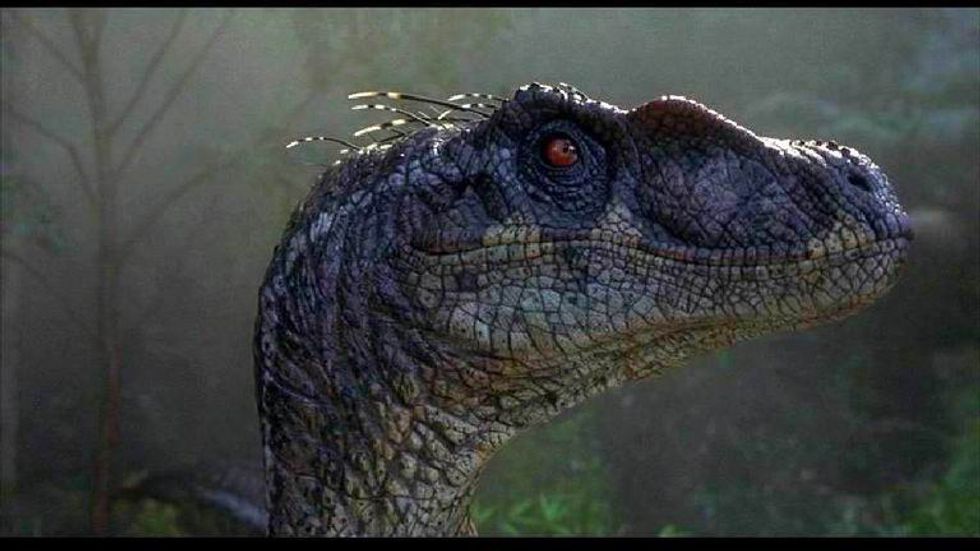
Luckily for birdwatchers around the world, some dinosaurs survived the extinction at the end of the Cretaceous Period. That's right folks, dinosaurs ruled the earth during the Triassic, Jurassic, and Cretaceous Periods. They were the dominant species longer than humans have existed. As critics of Jurassic Park often claim, dinosaurs did not look exactly as Hollywood and the rest of us all imagine them to. Once again, Disney Animations was more accurate. In the Good Dinosaur audiences are introduced to small bipedals (animals that walk on two legs) with feathers on their snouts and down their tails. Yes folks, these are the same velociraptors that terrorized Lex and Tim in the kitchen.
Velociraptors did likely have feathers and this leads to an easy connection: Dinosaurs are the ancient ancestors of modern birds. But for this to be true, some dinosaurs have to have survived the mass extinction. In fact, while most large dinosaurs fell at the end of the Cretaceous period as the food chain collapsed, some smaller dinosaurs survived and adapted to the quickly changing landscape. These few and adept survivors evolved over millions of years into the birds we enjoy today.
3. IF (WHEN?) THE SUN WENT OUT, ALL LIFE ON EARTH WOULD END.
While humans may be out of the picture (sorry guys) along with all the other mammals, as Dr. Ian Malcom so wisely said "Life finds a way." In this case, it already has. Our dependency on the sun is two fold. We need its heat and we need its light. The suns light powers photosynthesis, which in turn powers plants and then us! Light is truly the bottom of the food chain. So how did life circumvent the necessity of light and heat? To find out we journey to one of the most remote and desolate ecosystems known to man: deep ocean vents.
At deep ocean vents, sulfur and organic compounds are spewed into the ocean from breaks in the earth's crust. Surrounding these vents are unique organisms that do not do photosynthesis (there's no sunlight down there). Instead, they perform chemosynthesis using the output of the vents. They are not at all dependent on the sun. So if the sun were to go out, life could possibly continue on on earth, using chemosynthesis.
4. THE TONGUE HAS SPECIFIC REGIONS FOR EACH TASTE.
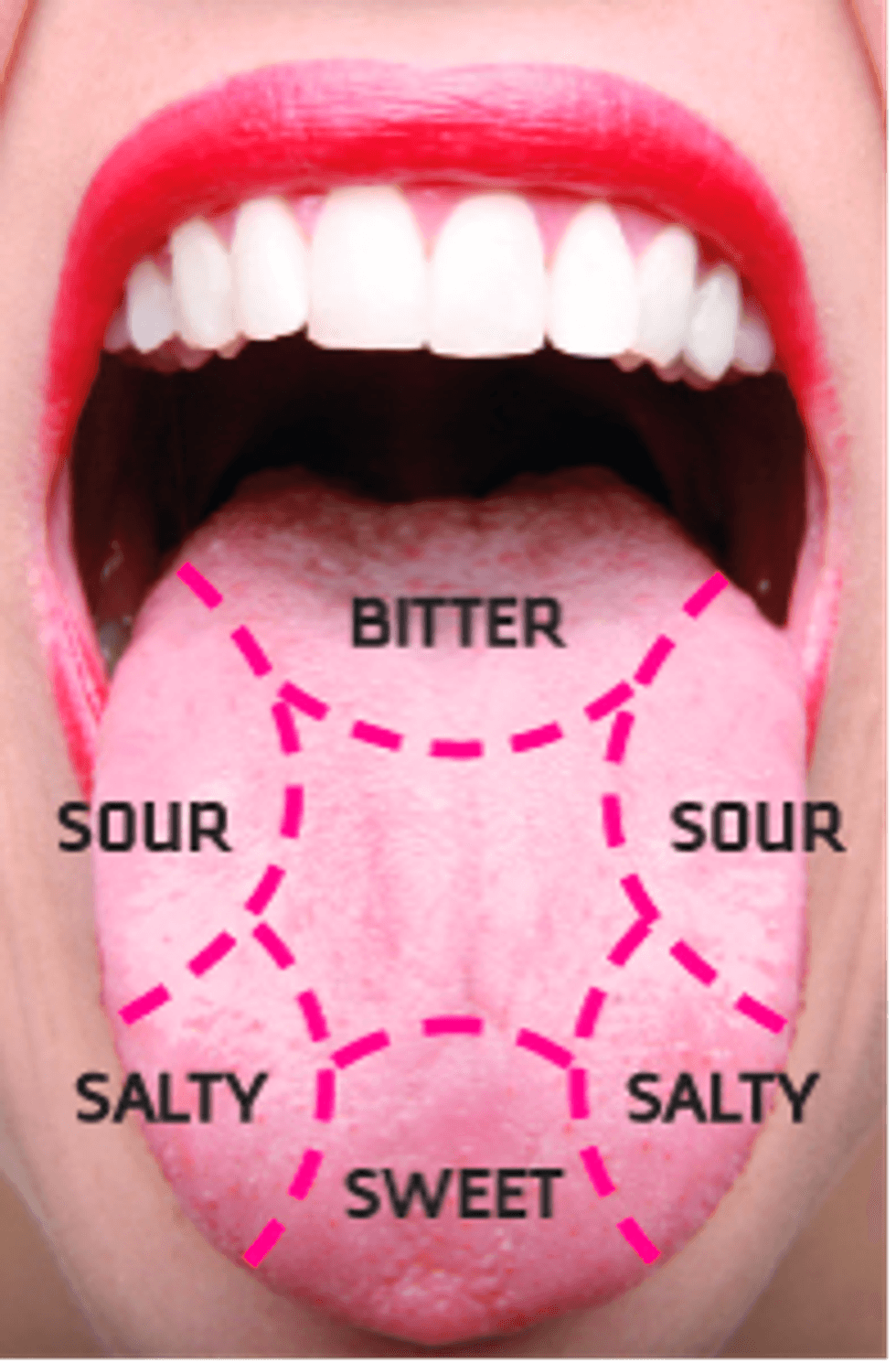
Nope. The tongue is one of the most complex muscles in the body, fulfilling both the sensation of taste and aiding in vocalizations. It is complex, but it does not compartmentalize. The entire tongue is covered in receptors that, when activated, cause the five tastes: sweetness, sourness, saltiness, bitterness, and umami (AKA savory). So holding a Warhead in one side of your mouth won't stop the pain.
Bonus! Your tongue is also not the only surface on which taste buds are located. Your inner cheek and pallets as well as some areas of the gums may have taste buds to help you better enjoy that double malt.
5. HUMANS HAVE FIVE SENSES.
It seems pretty simple right? Taste, touch, hearing, sight, and smell. Nope, humans actually have approximately 20 senses. What defines a sense you ask? A sense is a " faculty by which humans and animals perceive stimuli originating from outside or inside the body." From this we see that human senses include pain, balance, hunger, thirst, and movement. This is often still taught though and a school of thought has classified touch, taste, hearing, sight, and smell as the "core senses" with each of the approximately 15 others falling into one of those categories.
6. BULLS HATE THE RED CAPES OF MATADORS.
This one is a bit of a show secret. For generations, matadors used red capes to enrage bulls and daringly jump away in the last seconds. It came into popular culture that it is the red color that the bulls despised. Sadly this isn't true; bulls are actually colorblind. What then, you ask, enrages the bull? The bull has been pushed to the point of physical violence before even being let into the pen and the motion of the matador's cape serves as a target for the bull's rage, causing it to charge.
7. HUMANS EVOLVED FROM CHIMPANZEES.
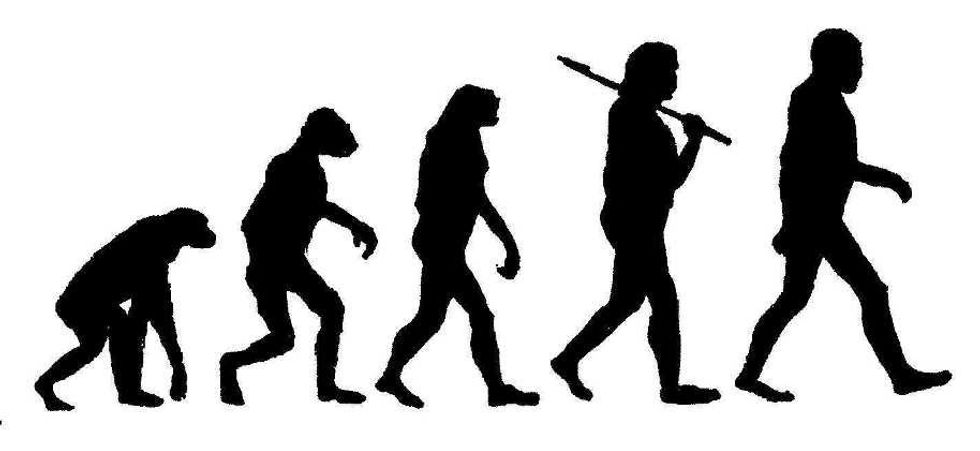
Don't worry, this is not a throw against evolution. Humans did not evolve from chimpanzees, for it they did no chimpanzees would be left on earth (that survival of the fittest and all). Chimpanzees are the closest genetic relatives of humans, differing by only 4% of their genomes. Chimps and humans are theorized to have shared a common ancestor approximately 6 million years ago, which leads to the idea that humans evolved from chimps. Both chimpanzees and humans though, have their own unique evolutionary history.
The classroom is a breeding ground for scientific misconceptions, so next time your coworkers try and pull one of these over on you, know the hard facts!