


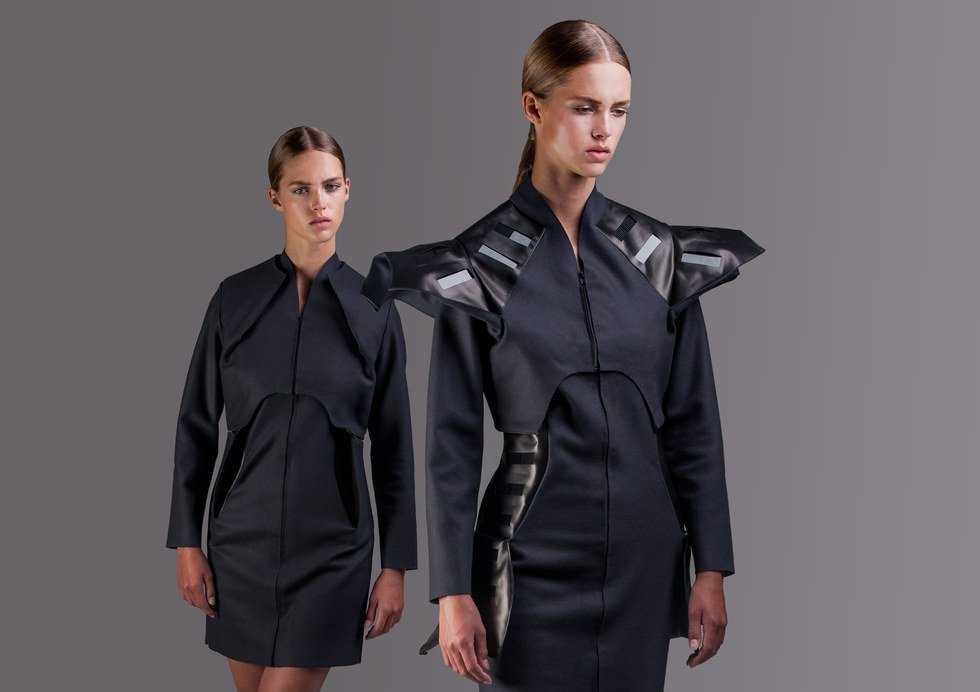
Although it may not seem like it now, the future of wearable technology is here. Spending on wearable technology is expected to reach $53 billion worldwide by 2019. This may be incredibly surprising at the moment, especially since what's available in wearable technology now seems to only cater to gadget geeks and fitness fanatics and not much else. Even the highly anticipated Apple Watch seemed to have a short lived craze phase and isn't highly desired in the fashion sphere. But where wearable technology is now, lends to a much bigger and better potential for the future. Products in the future are predicted to be more complex, efficient, lighter, geared towards a wider variety of people and quite frankly, smarter than us.
Our clothes will be able to keep track of our physical stats and tell us what's going on with our bodies. The launch of Ralph Lauren's PoloTech T-shirt (below) in August, is evidence of wearable technology becoming more increasingly relevant to people's everyday lives and connected to the apparel industry. Even though this shirt is more geared towards athletes (it allows the wearer to track biometric information including heart rate, breathing rate, steps taken and more), it's still a great step forward. 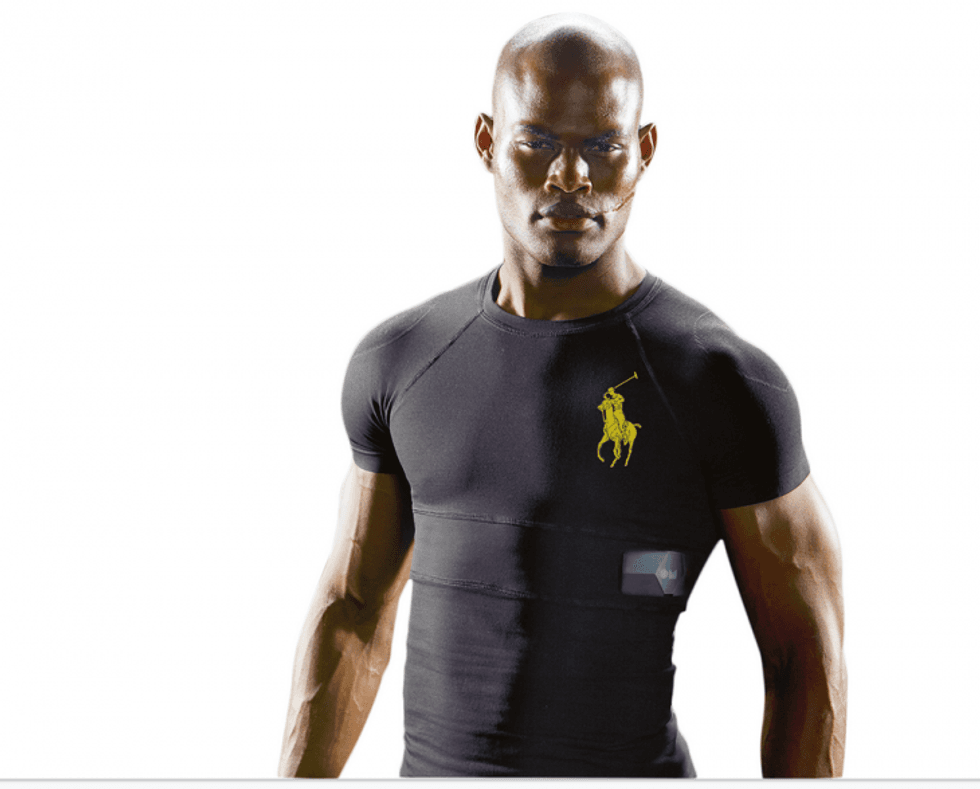
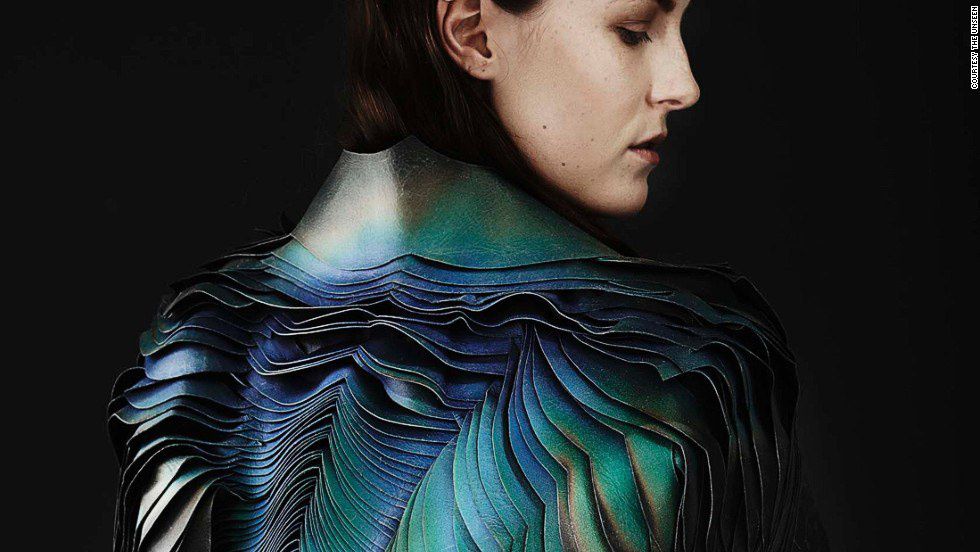
Our clothes will change color based on environmental changes. Whether it's in climate or localized brain activity, our clothes will be able to tell us about these changes via color. Wouldn't it be great to change the color or pattern of our clothes when we see someone wearing the same thing? The Unseen, a London based trio of fashion designers, has already experimented with developing innovative textiles that change color in response to environmental stimuli using a unique dye formula. They have used this technology in a headpiece (adorned with 4,000 conductive Swarovski stones) and a leather jacket (second below) which changes color slowly throughout the day with the buildup of humidity.

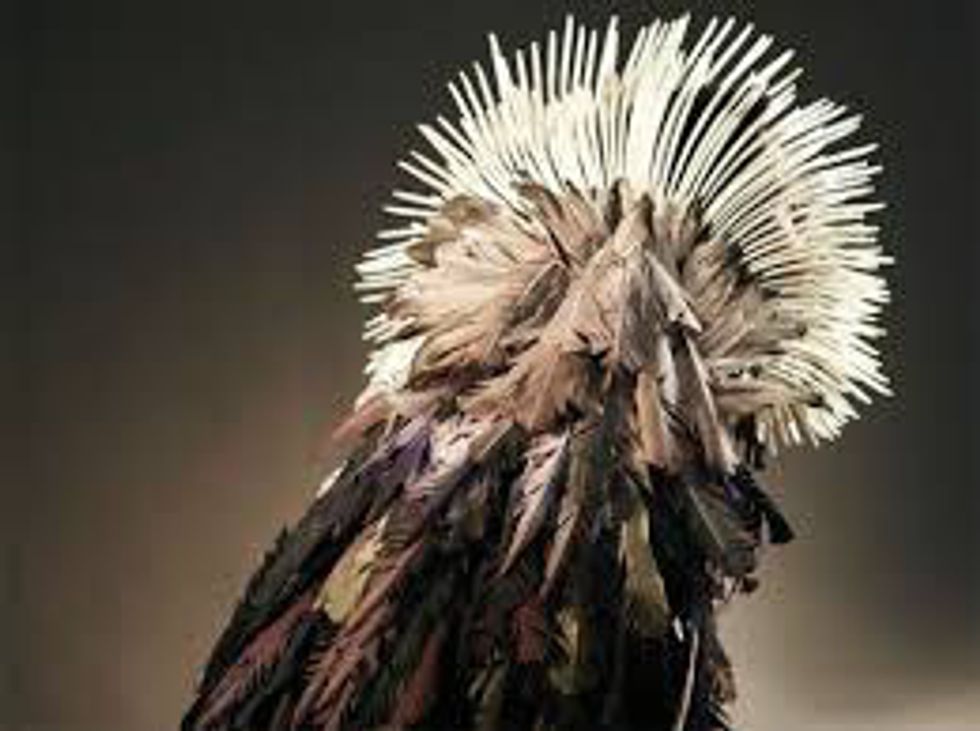
Then there's alchemist Lauren Bowker who used embedded ink that also changes color depending on different climatic conditions into a feathered garment (below). It's a more artistic application of the technology but nonetheless still demonstrates where our clothing is headed.
Our jeans will talk to and do things for us. We're already at a stage where you can walk into a Starbucks and see people talking to their Apple Watches which, not too long ago would have been the weirdest thing. But things are able to get weirder. Next year, Google will launch Project Jacquard in tandem with Levi's which introduces the idea of weaving conductive yarns into textiles to allow touch interactivity between the wearer and the fabric. Basically what this means is making clothes interactive in the same way any touch screen device is. It's like wearing your smartphone or tablet on your body. Now you can request an Uber or call your best friend from your jeans. 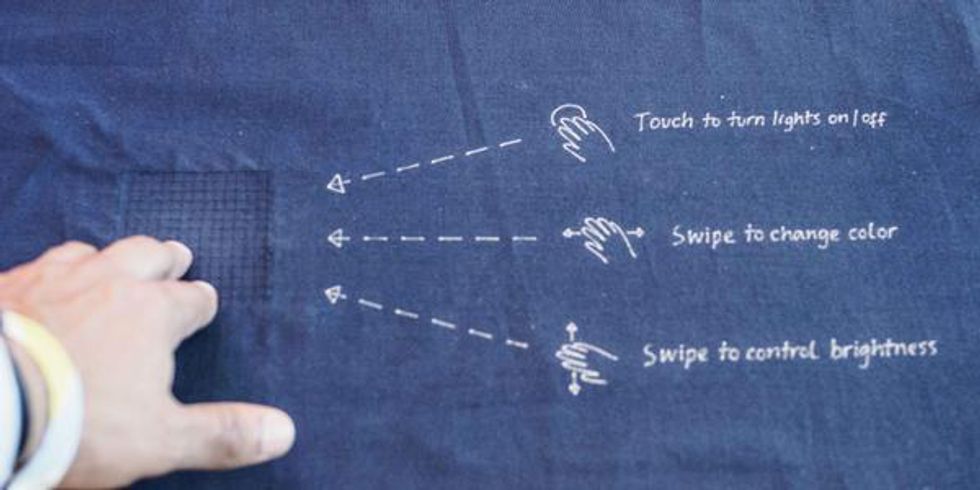
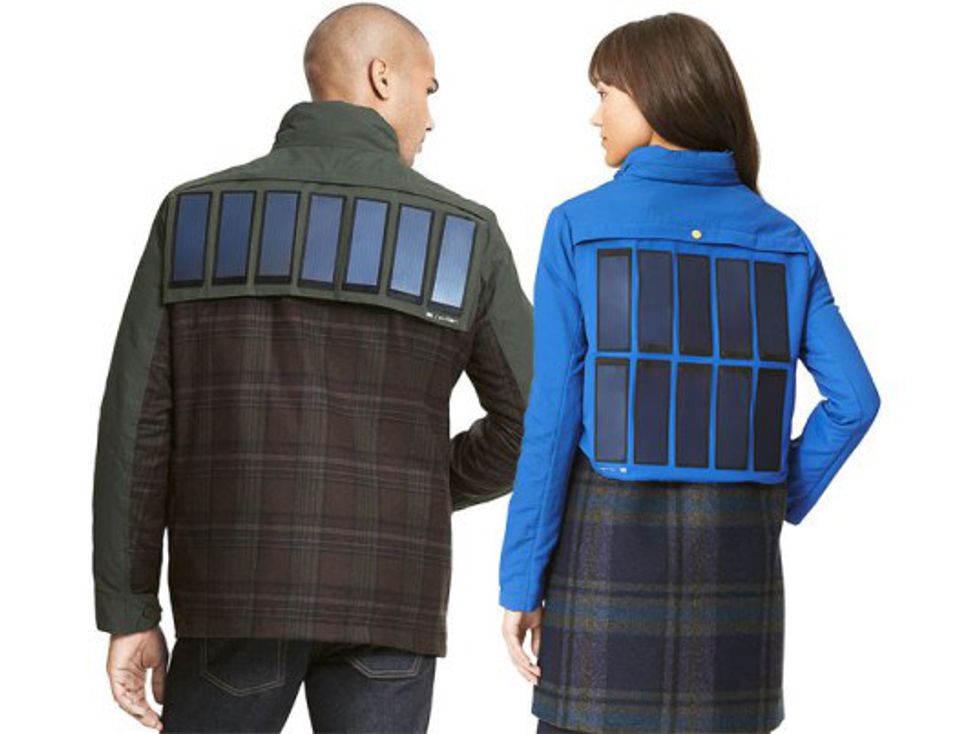
Our clothes will charge our phones. These type of products have been out on the market for a while now. Last year, we saw the launch of Tommy Hilfiger's phone charging parka. With a little tech help from solar manufacturer, Pvilion, Tommy Hilfiger was able to release jackets (one for men and one for women) each with a small portable battery and detachable solar panels on the back. A cable runs to the battery pack in one of the front pockets, which has a double USB port, so you can charge two devices at once. At full charge, the battery contains enough power to completely charge a 1,500 mAh device up to four times. And did I mention it's also water resistant?
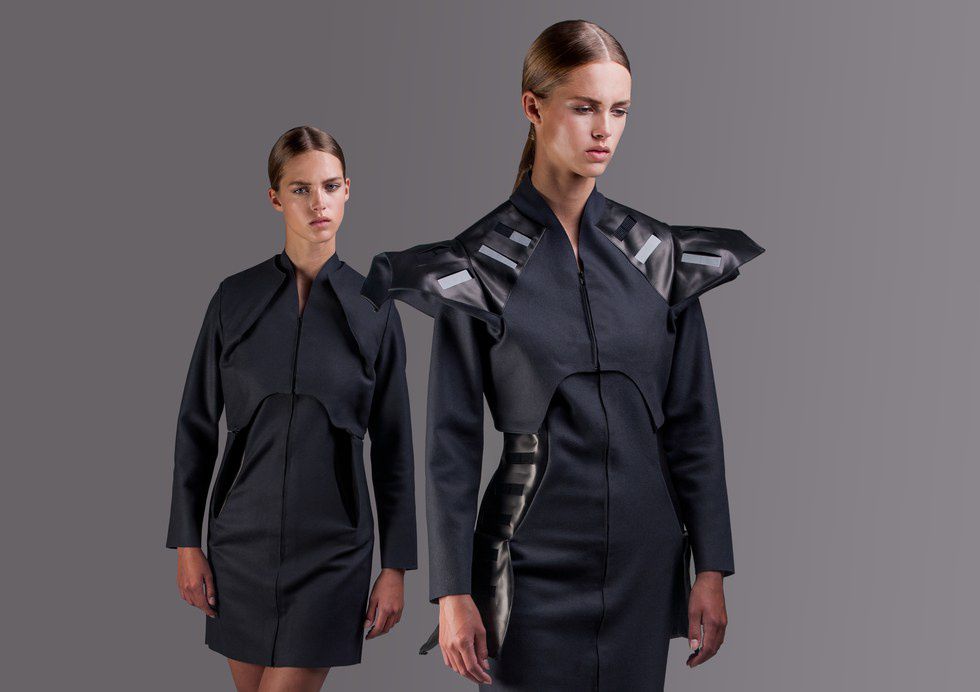
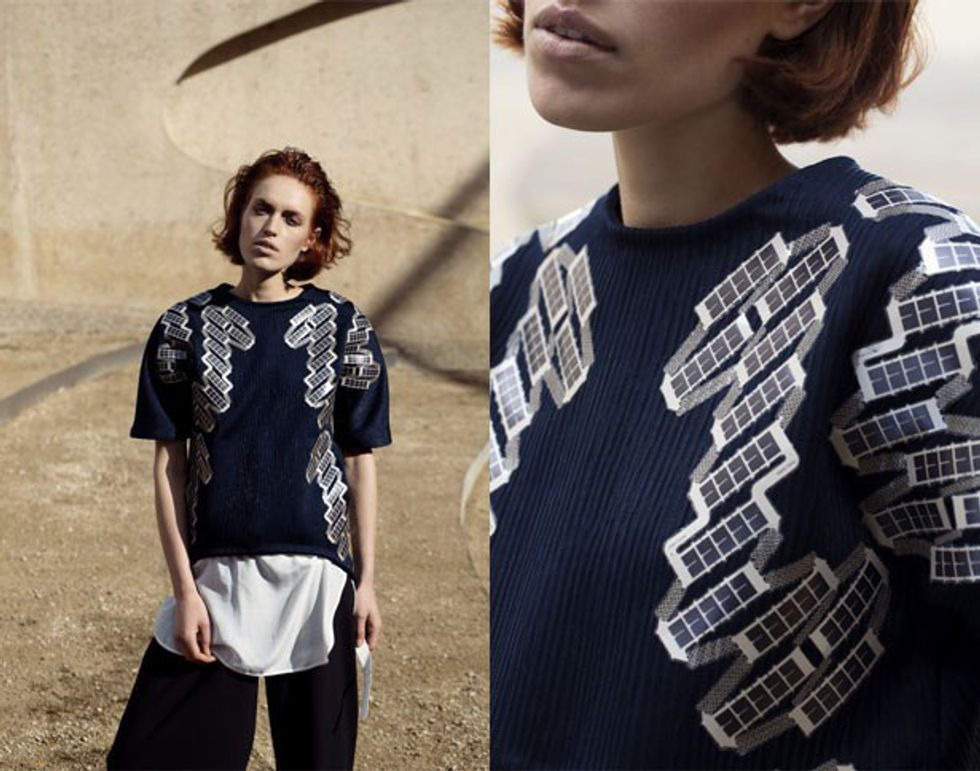
Dutch designer Pauline van Dongen has also integrated this technology into a dress, coat (both below) and T-shirt (second below) she created for her Wearable Solar collection. The coat incorporates 48 rigid solar cells while the dress has 72 flexible solar cells. The shirt can garner about 1W of energy in just two hours if exposed to bright sunlight, which is enough to charge your standard smartphone. But the shirt can also charge smartphones, MP3 players, cameras, GPS systems and other USB-compatible handheld or portable devices.
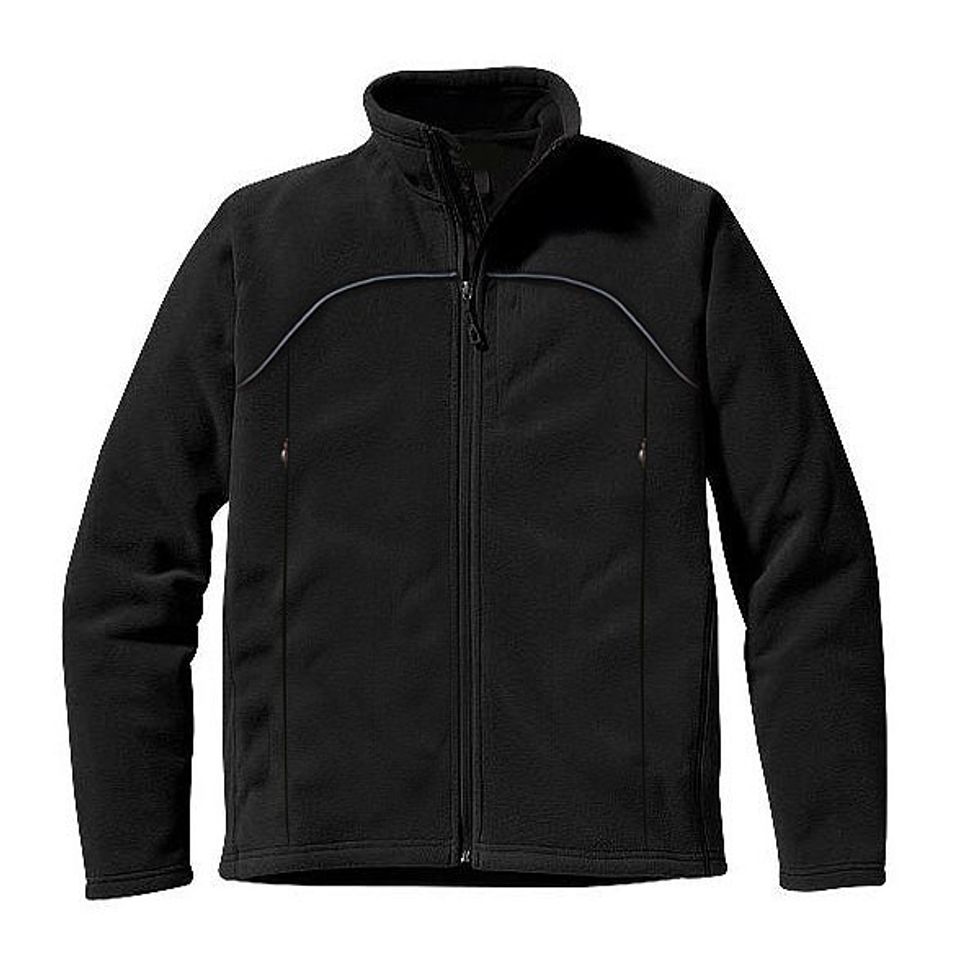
In the future we may even see technology that will allow us to control the temperature in our homes by connecting our body temperatures with our thermostats so that when you walk in, its just the right temperature.
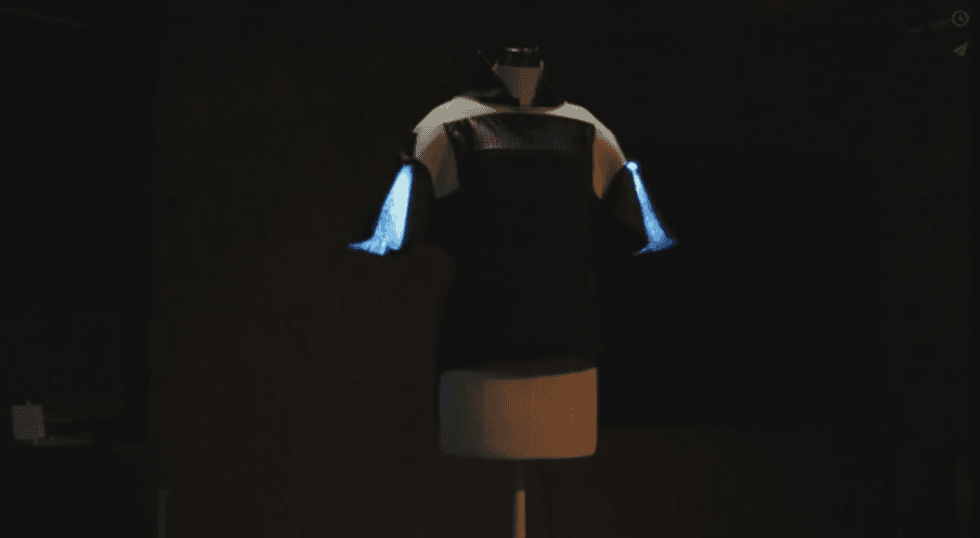
Our clothes will be able to change shapes. Although being able to actually change the shape, and thus the functionality of, our clothes, it is still just a concept that is being explored, where many designers have taken first steps. An artistic collective in South Korean has developed a shirt that changes shape accordingly with the wearer's blood alcohol content. The project titled "Metamorphosis" (below), is both functional and beautiful, displaying a kinetic and colorful light show when alcohol in your veins nears its capacity.
Actually being able to convert a garment (i.e. change a short sleeved shirt to a long sleeved shirt, silhouettes that grow slimmer), involves complicated fiber science and actually changing the molecular structure of fibers. This is something that companies such as OMsignal are already looking into.

















