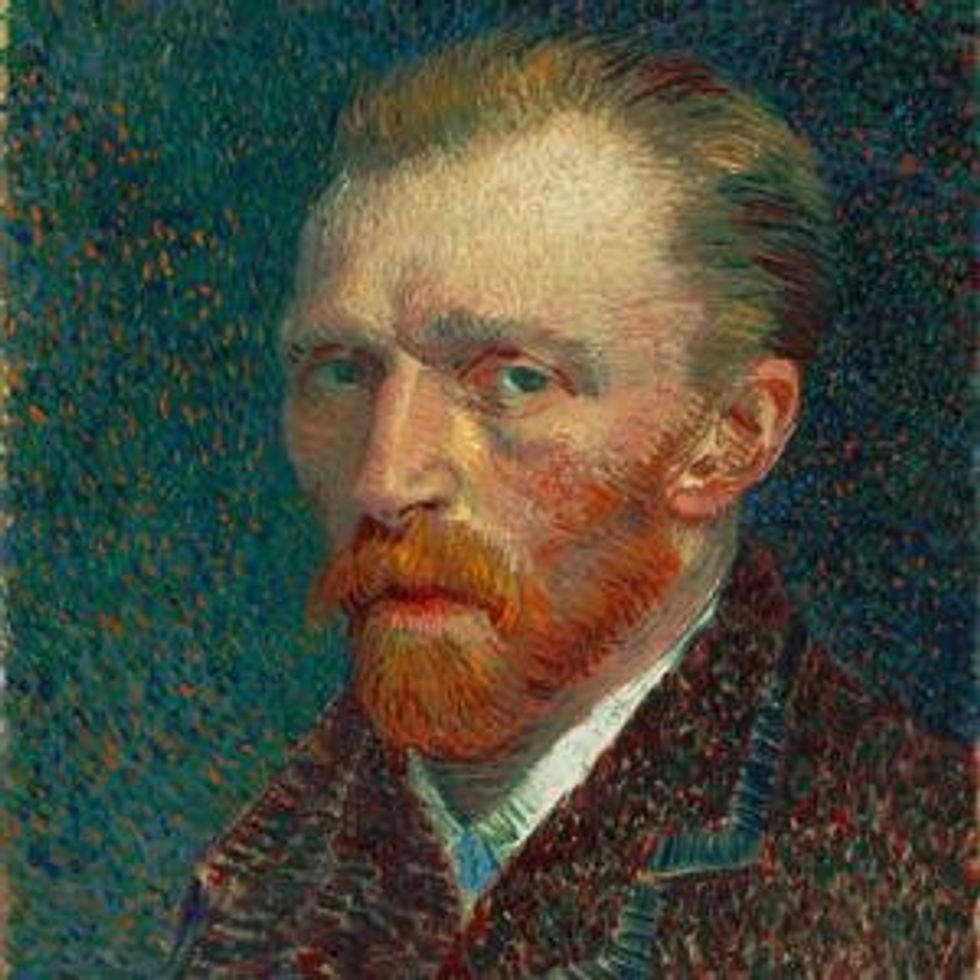
Van Gogh. The Dutch post-Impressionist is known to be the original "tortured artist"—brooding, haunted by mental illness and triumphing over his insanity through creation. What no one seems to understand is that he was a devout Christian, full of love for others, and wanted to do nothing but good—he just got stuck with a bad lot in life.
Vincent Van Gogh was born March 31, 1853 in Zundert, Netherlands to a God-fearing family. He never planned on becoming an artist, instead wishing to follow in his father's footsteps and become a pastor; he tried preaching to the miners of the Borinage village near Brussels and was kind of terrible at it. No one really took him seriously and he became very discouraged. Van Gogh was a man who thoroughly loved people and loved everything about the world God created: "But I always think that the best way to know God is to love many things" (July 1880). This part of his life is often breezed past by biographers, since it doesn't fit in with the beautifully tragic soul he is considered to have. After being ignored by the miners in the Borinage, Van Gogh became pretty discouraged with himself—I'd consider this point here is where he really began to slip into the complex artist he is known to be.
Nothing really went right in his life. The man only sold one painting during his lifetime ("The Red Vineyard" in 1888) and was nonexistent as an artist—at his own insistence, mind you—becoming well-known long after his death. His favorite brother, Theo, was an art dealer and collector for much of his life and regularly tried to get his older brother to exhibit. We know much about the details of his life through his correspondence with Theo (these primary sources are those I believe quite thoroughly—many were translated into English from French and Dutch in this edition).
He was also seemingly unable to have relationships with women, to his own frustration. Van Gogh was madly in love with his cousin, Kee Vos-Stricker, and repeatedly professed his devotion only to be repeatedly rejected and subsequently disappointed. Later on, after moving to the Hague and moving in with Sien Hoornik, he faces another failed relationship, and in the summer of 1884 briefly dates Margot Begemann.
I hope you'll reconsider the time-honored belief that Van Gogh was simply "that insane guy who cut off his own ear" (which isn't even entirely true, by the way) and instead appreciate his complexity in relation to the fascinating details of his life as governed by his Christian faith. For more information on equating artists only to their work, see my friend Hannah's article here.