
Almost a year ago, The Supreme Court deemed same-sex marriage legal in all 50 states—hooray! With same-sex marriages and relationships becoming more commonly accepted, television shows and movies have started introducing more accurate representations of these relationships. One of the television shows that have done this incredibly well is "The 100."
For those of you who have never seen "The 100," it follows a group of juvenile prisoners who come down to Earth from a space station called “The Ark” 97 years after a nuclear apocalypse wiped out almost all life. The female protagonist, Clarke, is a prime example of how "The 100" introduces LGBT relationships while navigating the pitfalls of tropes and exaggerations. Before I continue, I must warn you that there are spoilers ahead.
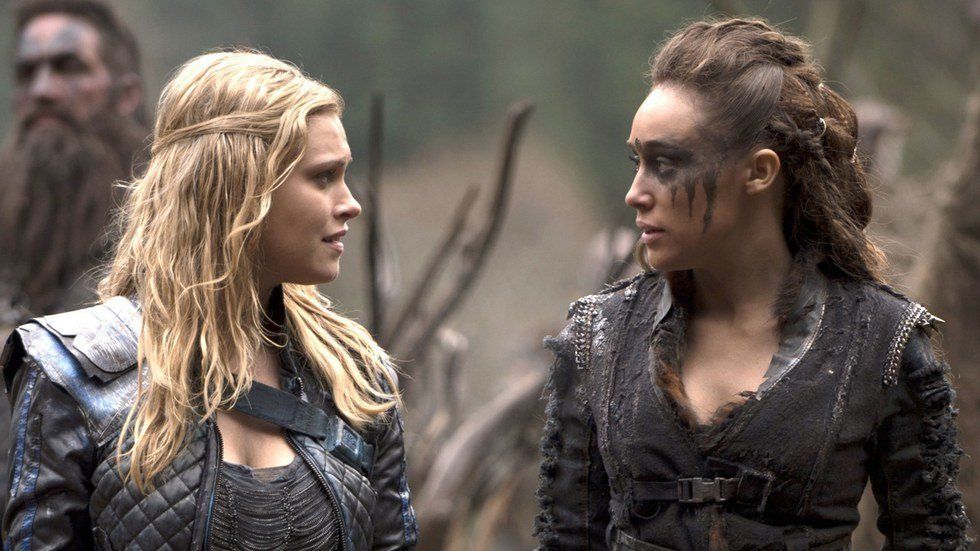
Throughout the first season and into the second season, Clarke has a relationship with Finn, a fellow inmate. This leads the audience to believe that Clarke is heterosexual. But towards the end of the second season, Lexa, an Earth native and commander of the “grounders” reveals her feelings for Clarke and the two kiss. While Clarke explains to Lexa that she isn’t ready for a relationship due to the death of Finn earlier that season, she does not reject Lexa due to her sexual orientation; this leads the audience to believe that Clarke is actually bisexual.

This is confirmed early in the third season when Clarke is shown having sex with a “grounder” woman, as well as professing her love and having sex with Lexa towards the end of the third season; this amazing revelation is bittersweet, however, as Lexa is killed shortly after. Several other characters in "The 100" are aware of Clarke’s romantic endeavors, but the question of her sexual orientation is never posed or even mentioned. It is simply accepted as fact. This is much the same with the relationship between two Ark natives, Bryan and Nathan, who openly express their love for each other by sharing living quarters and showing public displays of affection.
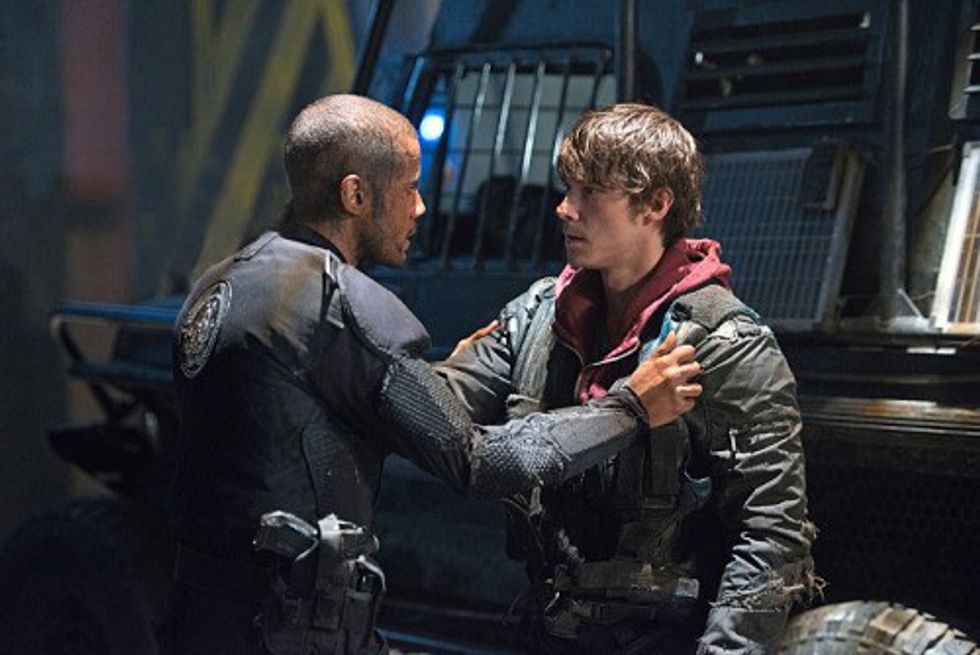
There is never any question of why they are together or the morality of their relationship, though their friend Harper is often seen teasing them for how “cute and disgusting” they are.
What is so refreshing to me is seeing LGBT relationships for what they are: completely natural. As a bisexual woman, I’m relieved to see another bisexual woman being accepted for who she is and able to love whomever she chooses. Bisexuality is often fetishized in popular culture, and in reality, or not considered as a valid sexual orientation. Common things a bisexual man or woman might hear:
-Are you sure you’re not just confused?
-Have you ever been with someone who is the same sex? Then how do you know?
-Aren't you just choosing to be with a man or a woman depending on how you feel that day?
-Wow! So I bet you’re super into threesomes, huh?
Gross. While it is not my intention to downplay the hardships faced by gay/lesbian individuals, bisexual individuals still have a long way to go in order to be accepted by modern society. Nevertheless, I believe "The 100" has started an important conversation on the way LGBT relationships are portrayed in popular culture and what changes need to be made in order to accurately represent these relationships. To alter Lexa's iconic motto "Blood must have blood," I believe love must have love.