

April Fools' Day is a weird holiday.
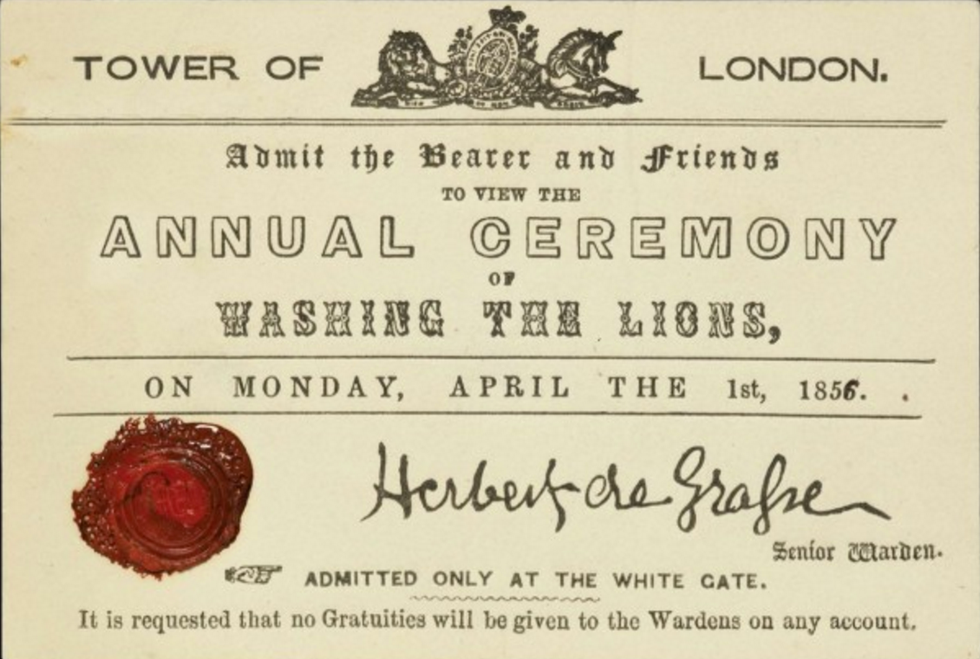
The first documented April Fools' Day prank was in 1698 at the Tower of London. Targeting primarily newcomers to the city, invitations were handed out to people telling them to "come see the lions being washed at the Tower of London." While the tower did have a menagerie at this time, there was no public washing. This first prank was redone in the nineteenth century as well when there weren't actually lions anymore. Maybe you had to be there?
Arguably, as time has gone on, the pranks have improved. In 1905, a German newspaper decided to print an article claiming to have stolen all of the silver and gold in the United States Treasury, in a coordinated effort with American millionaires. Apparently, the idea of the American government being undermined by criminal millionaires seemed totally plausible in Europe because the story spread like wildfire, being reprinted without hesitation. No one was harmed, maybe just embarrassed.
In 1957, the BBC praised Swiss farmers for their excellent "spaghetti crop" that year and the eradication of the “spaghetti weevil.” The story included staged footage of workers plucking limp pasta from trees. As ridiculous as it sounds, there were people who believed this was serious reporting. This prank is often praised as the greatest April Fools' prank of all time because no one was harmed or offended, and it was all in good fun and largely successful.
In 1977, the Guardian newspaper had a seven page supplement about a fictional semi-colon-shaped archipelago called "the Republic of San Seriffe." The supplement was full of typographical puns and convinced many readers that they could have an exotic vacation on the islands of Upper Caisse and Lower Caisse. Who wouldn't?
In 1984, a decade before the film "Jurassic Park," there was an MIT Technology Review article about Russian scientists who were planning to “retro breed” the wooly mammoth. MIT thought this idea was so wild at the time that people would know this was a joke, but the story was picked up by the Chicago Tribune and other papers before everyone knew it was a prank. Today, this all seems totally plausible, but I guess in the 80s, MIT would not have agreed.
In 1992, President Nixon ran for a third term. “I never did anything wrong, and I won’t do it again,” he insisted, or rather the comedian impersonating him did. Considering the American political landscape today, it's not hard to see why many NPR listeners sat horrified as the "story" broke. Though many people were not initially thrilled, this is now a great moment in prank history.
In 1996, Taco Bell decided to "buy" the Liberty Bell and rename it the "Taco Liberty Bell." Surprisingly, a number of Philadelphians freaked out and flooded the company with angry phone calls. But Taco Bell had plenty of fun: “No fooling, we’re having a great sale!”
What other good pranks have occurred in this strange holiday's 318-year history?

















