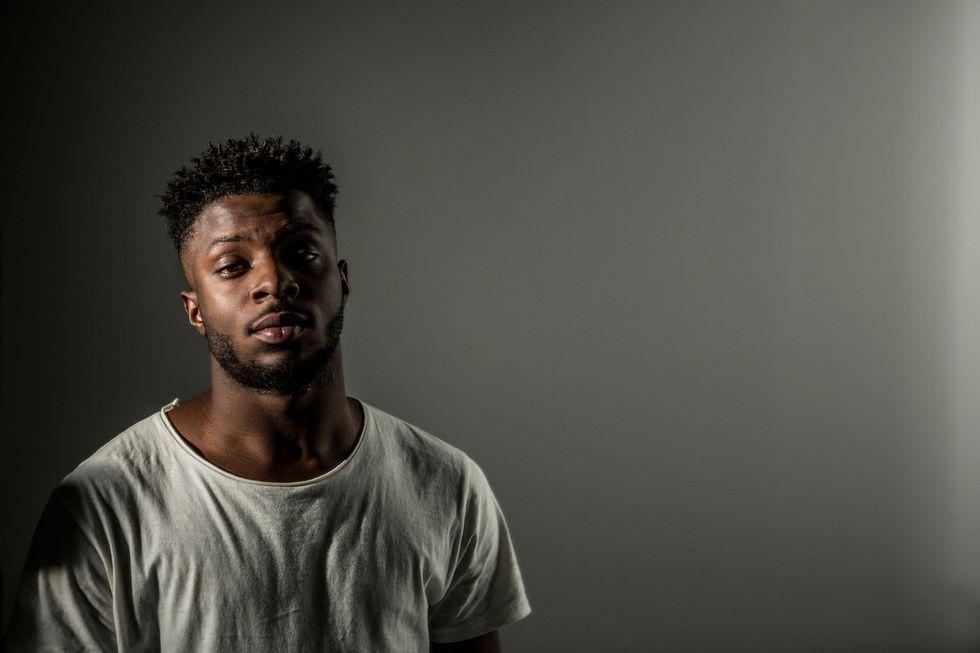
24-year-old rapper Isaiah Rashad struggles with the value placed on his own life as he is living, versus when he no longer is. The gratitude expressed to him is, as the lyrics suggest, near nonexistent, leading him to question the skyrocketing of approval once a person no longer breathes with the lungs everyone speaks about him with. The sophomoric ideologies littered in his first EP Cilvia Demo encapsulates what his adolescence was like, and, clearly, there was a lot of existential crises to be had. Do they really “only feel you when you pass away?” In David Bowie’s, Michael Jackson’s and Amy Winehouse’s case, sure. A lot of people are ironically drawn more to musicians after they literally can no longer make music. Why is so much value placed on dead artists, and, more broadly, dead people?
Apparently the dying light breeds more appreciation than even the most ardent of friendships. What is it imbeds a departure with an epiphany? How drugged up on dopamine are we during “happy” times that we forget to take a step back and perceive what we truly have? Sometimes, of course, the things that leave aren’t the things that make us happy. Or things we know personally.
It functions as this idea that what revolves around the word death is a negative connotation; death harbors “loss,” harbors “benightedness,” or “melancholy.” When you hear the word, the tempo in the room shifts as if the word itself were palpable and present and sucking the energy dry. Something clicks in our brain when the thought slithers its way through the curves of our thoughts and we say “Oh, this is sad,” almost as if we were giving respect to another’s tragedy. In many ways, though, we’ve become desensitized to it. The murderer on the loose is no more news than the next kind of tragedy. The issue maybe not be posthumous appreciation, but the condition which we decide to utilize it. Amy Winehouse died the day after attacks all over Oslo, Norway, yet Ms. Winehouse (who, if there was any doubt, is one of my favorite artists), got media coverage and an endless amount of sympathizers. The issue’s present here is desensitization of bloody massacres and near-idolization of celebrity personalities.
The quote often goes “You don’t know what you got ‘till it’s gone,” yet, I find myself more and more valuing every interaction, every encounter, every person, every place, every decision, and every song I listen to. The thought shouldn’t resonate with you after it’s ceased to exist. This life is too short not to allow some sort of love into your life. And not the love that’s sold in commercials by way of soft music and overused lines, not the love in movie scripts, not the love that couple in Instagram posts about everyday. I mean the cognizance that everything you observe and every person you meet is special in their own way, that the very idea that you, with your personality, with your life, are existing is a miracle in and of itself. These thoughts shouldn’t reverberate loudly in your head when you’re past a certain age. Appreciate what you are and get working on the thing you want to do. We want to blame nature when it’s said and done, but it boils down to how much we appreciate in the present. Not down the line.