The Hunchback of Notre Dame was one of those Disney movies that people just don’t like. Much like Atlantis or Brother Bear or Treasure Planet, when asked they’ll either say they’ve never seen it, seen it once, or just plainly didn’t like it; it’s in that weird rut of not-so-great films during the Disney Renaissance. They aren’t sure why they didn’t like it because they just can’t remember anything that happened in it besides that there was talking gargoyles, a man with a hunchback, and a dancing gypsy voiced by Demi Moore. What they don’t remember is the just about everything else. So here are five reasons why Disney’s The Hunchback of Notre-Dame isn’t as bad as you remember it.
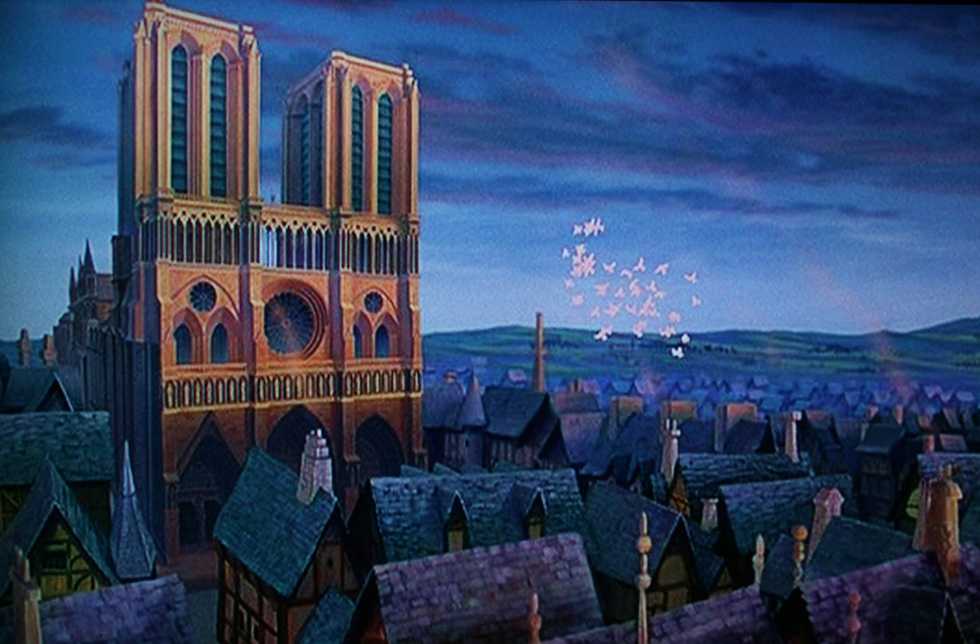
- It’s a technical marvel. The movie was very sophisticated for its time, and is still quite technically proficient today. Offering large crowds and a great blend of 3D with 2D animations it is definitely a spectacle to watch. Their large representation of Paris with the wonderfully recreated Notre Dame are marvelous and the effects are stunning. Some of the moments are even quite jaw-dropping - more specifically the end with it's quite epic fight.
- It has adult themes and a dark undertone. The story itself was based on Victor Hugo’s novel of the same name. While Disney took a lot of liberties with it’s source material, the movie still takes on major adult themes that are definitely beyond a child’s understanding. The main antagonist, Frollo, is immediately portrayed as a persecutor and murderer. Later he condemns the gypsy Esmerelda for instilling lust in him, even though it was he that sensuously smelled her hair - which is questionable in its own right. He tries to cover up all his sins by blaming them on others, or lying, creating stories that paint a very different picture - much like how he lied to Quasimoto about what happened to his mother and how she ‘abandoned him.’ Even the gargoyles in the Notre Dame argueably could be interpreted as being part of Quasimoto’s imagination since no one else truly sees or hears them doing so (although this changes in the sequel but more on that later).
- The music. While the whimsical song-and-dance numbers that make this just like most Disney animated films, the musical score is just as epic as its scope. The opening piece immediately tells you that this will be something special, with its bell-ringing, horn blaring, gregorian-chant humming sending chills down everyone’s spine.
- The voice-actors. While some of the voices are a little bit exaggerated, for the most part they portray their parts very well. From the talents of Tom Hulce as Quasimoto, who played Mozart in Amadeus, Kevin Kline as Phoebus, who was in Sophie’s Choice and A Fish Called Wanda, George Costanza - I mean Jason Alexander as Hugo, and the impeccable Tony Jay as Frollo with his grandiose vocals. Quasimoto sounds how you think he should sound without sounding too much like Igor; Phoebus sounds like a pompous and yet honorable soldier; George Costanza sounds like George Costanza; and Frollo sounds just as intimidating and righteous as he looks. And of course there’s Demi Moore as Esmerelda, which is just about as perfect of a casting call as they could make. Demi Moore and George Costanza. Need I say more?
- The children’s gags aren’t too childish and aren’t too often enough to mar the entertaining aspects of the movie. For the most part the children’s gags and humor are out of place and when they are there they feel forced. That doesn’t mean that some of the other light-heartedness is, just that the jokes aimed specifically for children are few.
There you have it. So go ahead and log onto Netflix, find it and add it to your queue.