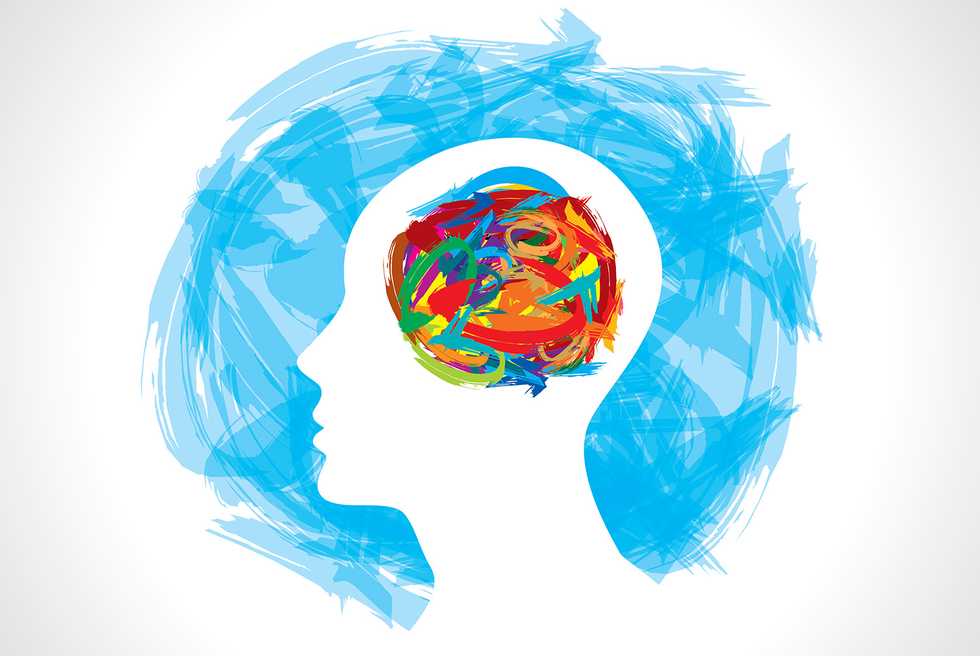
Day after day in the hallways, in the news, and on social media, I see and hear negative comments about mental health. Whether it's jokes about anxiety or schizophrenia, calling someone crazy or unstable, or scapegoating the mentally ill when tragedies occur, people with mental illnesses seem to get the short end of the social scale stick. Here are five quick reminders to keep in mind when talking about mental illnesses.
1. Having a mental illness isn't trendy.
It also isn't cute. Or fun. It's a very real and very serious problem that many people deal with, and it's awful to see people saying they wish they had a mental illness because obviously, they don't know someone with one.
They don't see the complete exhaustion even though you got twelve hours of sleep, the countless absences you take from school because of how unstable you feel, the lack of motivation you face while doing anything, the mental breakdowns you have over stressful situations, the panic attacks you have in the bathroom, the various therapy you go through, your countless medication changes until you find something that works, the way you isolate yourself from your friends and family and everything you love, the mood swings and random anger and sadness, and the many other 'cute' things associated with having a mental illness.
2. All mental illnesses are not the same.
Please, stop stereotyping. Having OCD doesn't mean you're just a clean freak. Having depression doesn't mean you're just sad and suicidal. Having anxiety doesn't mean you're just nervous. Having schizophrenia doesn't mean you're crazy.
People experience mental illnesses in many different ways; there isn't one set list of symptoms that everyone follows when they're diagnosed. When neurotypical people jokingly call themselves "OCD" when they suddenly clean, or "depressed" when they happen to be sad. This not only downplays the severity of these illnesses to make them seem like jokes, but it also reinforces these stereotypes.
3. Mental health can be as crippling as a physical illness.
Often, nobody will believe you. They'll tell you to just 'be happier' and that it's 'all in your head' and that 'medication isn't helpful' or some other garbage and instead tell you to do yoga or meditation or go outside or eat healthy, etc. In reality, it is nowhere near that easy. Eating more fruit isn't going to cure a chemical imbalance in my brain. Therapy and real medication from knowledgeable doctors will. Also, like with a physical illness, it is perfectly fine to seek help. It's perfectly okay to get treatment like therapy or medication that works for you. It's okay to be hospitalized until you work it out. it's fine to not feel fine.
4. The stigma has to end.
The worst part about the conversations surrounding mental health is the stigma. Many people get uncomfortable around the topic, because they don't know how to address it; they brush it off as a 'phase' or 'just being sad', when in reality, it's nothing like that. As someone who struggles with depression and has been hospitalized before, I've personally faced the stigma, especially internalized. It's incredibly hard to explain to neurotypical teachers and friends why I was absent from school because of my depression. It's hard to explain to people why I can't hang out because I'm too tired or because i have therapy. I was especially (emotionally) hard to explain to friends why I couldn't respond to their texts for two days because I was hospitalized for my illness.
5. The conversation needs to continue.
Mental health isn't something that needs to be silenced. The conversation needs to be one of open-mindedness, one of acceptance that allows people struggling to not feel ashamed in who they are, what they're going through, and how they feel. It's important to understand that mental wellness is as important as physical wellness; and, like physical illnesses, if mental ones are left untreated, help can sometimes be too late.
If you are someone with a mental illness, be proud of who you are with and without your illness; it doesn't define you.
if you know someone with a mental illness, all that I ask is that you be a little more understanding and kind towards them; you never know how much of an impact your caring actions can make.