
Back when Hollywood remained shrouded by the gilded allure of the Golden Age -- a bliss that would linger from the roaring 20's well into 60's -- very few people during this timeframe were willing to volunteer the assertion that television programming would be able to match, let alone eclipse, the creative prowess that was on display in the movie theatres. However, thanks to the ambition and tireless efforts from the likes of Norman Lear, Grant Tinker, Charles Dolan and countless other executives and auteurs, the televisual arts have been allowed to grow, and evolve over the years at unprecedented rates.
Now, with the 21st century still just beginning to live out the splendour of its youth, the success of premium cable (HBO, AMC) and online streaming services (Netflix, Amazon) has provided television auteurs with the proper platform to conceive works that -- combined with high production values, and the presence of acclaimed actors -- exude an aura so cinematic in their scope that now, even the largest screens in the largest theatres struggle to contain them. Here are five shows -- utterly unique and innovative in their style, visuals and storytelling -- responsible for propelling TV's status towards the zenith of entertainment behind the tube:
5. "Mad Men"

Created by Matthew Weiner after wrapping up his tenure as a staff writer for "The Sopranos" when the renown crime drama concluded in 2006, "Mad Men" took the television world by storm. A period drama that examined the social climate of late 1950's and 60's America, Weiner's masterpiece that aired for seven seasons stunned viewers with its groundbreaking visual and heavily stylized storytelling.
Aided by the foundation of sound and subtle writing, "Mad Men's" portrait containing all the adultery, sexism, homophobia and cigarette smoking that characterized early postwar America paved the way for it to become the first basic cable series to win an Emmy Award. Accruing a total of 16 along with five Golden Globes during its seven-year run.
4. "The Wire"

Drawing from his experience as a police reporter for The Baltimore Sun, David Simon adapted his novel "Homicide: A Year on the Killing Streets" into what would become "The Wire". With numerous characters and a broad world to encapsulate, the series didn't find its footing until the fourth episode of the first season.
Nonetheless, what continues to attract viewers to this drama is the realistic style Simon resorts to in his portrayal of urban life and dysfunctional institutions that govern law enforcement in Baltimore. Although the show only received 2 Emmy nominations during its six-year tenure, it is continually praised by TV buffs and critics for its uncanny novelistic approach to visual storytelling.
3. "Breaking Bad"
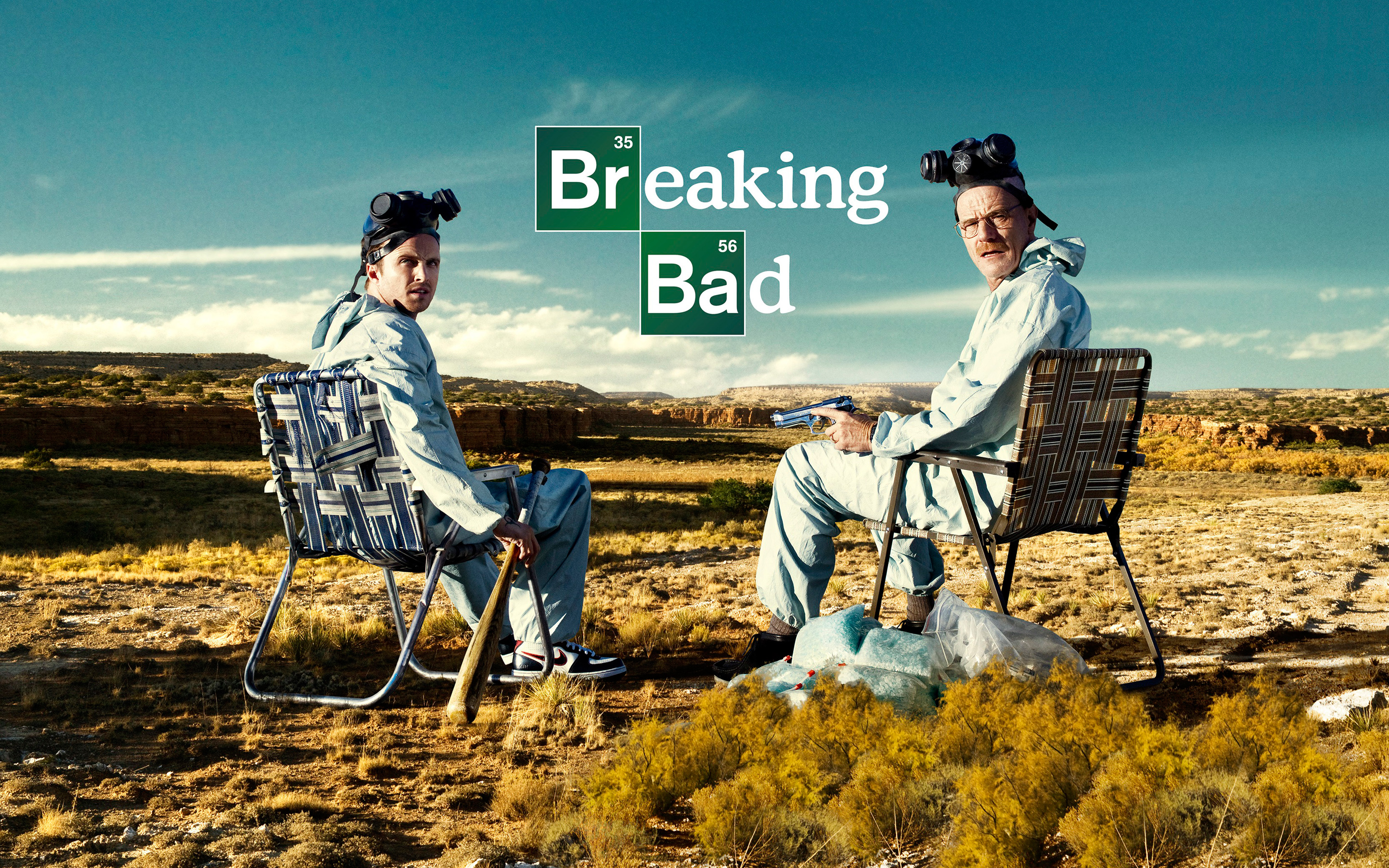
Wanting to create a TV series about a man in his fifties who resorts to a life of cooking crystal meth when he finds out he is dying of lung cancer, Vince Gilligan experienced limited success at first when he pitched the story to several studios including FOX -- for hesitant executives, a drama about a man aged well past his prime didn't exactly qualify as eye candy. Luckily, AMC, looking for a program to pair up with "Mad Men" decided to take a chance on what would become "Breaking Bad".
Gritty, lucid and laced with dark humor, Gilligan's crime thriller quickly became a hit with its performance far surpassing that of its period drama counterpart. With two Golden Globes, 16 Emmys, two Peabody Awards and two Critic's Choice Awards part of its crowded trophy cabinet, "Breaking Bad" currently sits at the top of The Guinness World Records as the most critically acclaimed Television series of all time.
2. "Game of Thrones"

When he began writing the books, George R.R. Martin was approached by executives on several occasions about turning what was then "A Song of Ice and Fire" into a movie, the novelist declined -- citing that it just wasn't possible due to the density of characters and story lines. However, in 2010, Martin decided to take a chance on David Benioff and D.B. Weiss when HBO convinced him to adapt the world of Westeros for viewers to watch as TV drama.
Since then, "Game of Thrones" has taken off, and has not bothered to look back as it continues to ascend the echelons of praise. Capturing a medieval world defined by deceit, corruption and political intrigue, this fantasy drama has amazed, stunned and tear jerked audiences of all stripes -- owing largely to the show's unpredictable nature through its tendency to kill off some of its most likable characters.
Nominated for a total of 110 Emmy Awards out of its six seasons, "Game of Thrones" has won 38 times, while receiving six Golden Globe nominations -- with Peter Dinklage winning its lone one for his work as Tyrion Lannister. It is also credited for inducing an astronomical increase in popularity towards the Fantasy Genre on television.
1. "The Sopranos"

For all of the success and prominence TV programming has had over the recent years, much is owed to "The Sopranos". Inspired by Francis Ford Coppola's "The Godfather", David Chase initially began shooting the series with the intent of transforming it into a feature film, but after some timely advice from his manager, the famed auteur opted to conceive the story as a TV drama.
Looking back, it seems like Chase was wise to heed such counsel. Airing on HBO in at the close of the 20th century, the impact of "The Sopranos" was groundbreaking and remains so to this day. Garnering praise for its acting, writing and directing, critics and audiences singled out the show for the artistic and mature content it introduced to its storytelling, particularly pertaining to controversial subjects involving mental health, gender roles, crime, and Italian-American Culture. Furthermore, "The Sopranos" is also credited with creating a new era in the mafia genre, digressing away from a more dramatized image of a gangster to a simpler, more realistic depiction.
Winning 5 Golden Globes and 21 Emmys, Chase's televisual tour de force is also responsible for launching the careers of Matthew Weiner and Terence Winter, both of whom served as staff writers and executive producers before they went on to create "Mad Men" and "Boardwalk Empire".