

Have you ever been meandering through the forest or frolicking through meadow only to be inconvenienced by the lack of restaurant or grocery stores nearby? Surely nothing could be worse than your camping trip being cut short by the rumblies in you tummy, which cannot be satisfied without a long trek back to civilization. Luckily for you, Mother Nature provides a bountiful expanse of yummy nutritious goodness that's just begging to end your starvation. While most outdoorsmen (or outdoorswomen) concentrate on hunting, fishing, and trapping to secure their nutrients, most ignore the easy catch of the native flora. This is because the majority are ignorant of which plants in their area are good for eating.
Whether you're looking to increase your self sufficiency, trying to eat more healthy foods, or simply looking for to acquire a new skill over the summer, being able to identify, gather, and prepare edible plants is a worthwhile accomplishment. Getting started will be difficult at first, but as you continue to gain skills in foraging, the great outdoors will look less like a whole bunch of useless green things and more like a whole bunch of useful green things. To start your journey and become the master forager that you were destined to be only takes 4 steps!
1. Become familiar with the region you're in.

Yes, this requires actually going outside. But never fear! Knowing all about the region you're living in is the first step to being able to thrive in it! The better you know your foraging area, the better you'll be at finding food! For instance, if you live in a humid, dry area, most of the edible vegetation that you'll be looking for will be near a water source. Most plants only grow in areas where conditions will allow them to flourish. So if you know where to look, finding edible flora will be that much easier!
2. Acquire the know-how via foraging field guide.

Read a book! As of now you are a complete noob in the ways of eating wild plants and not dying. The only way to change that is by reading an edible plant field guide, finding a mentor, or perhaps taking a self sufficiency class. Personally, I prefer the book because it allows you to go out on your own! These books can be a little pricey, so you might want to check out your local library or get it for cheap at my favorite book site - Thriftbooks. A good field guide will include everything you need: hundreds of drawings and pictures of edible plants, their poisonous lookalikes, recognizable characteristics, habitat descriptions, in-season plants, and instructions for preparation.
3. Practice!

As with any other acquired skill, practice makes perfect. I advise that at first you start out small, looking for recognizable greens in your own backyard like dandelions, primrose, and lungwort (another plus to foraging is knowing all the cool plant names!). In the beginning stages you'll have to carry your field guide around with you and get a feel for what you like, but eventually you'll learn to recognize the traits of your favorites and pluck them as a quick snack or save them for your pantry.
4. Be daring. Be cautious.
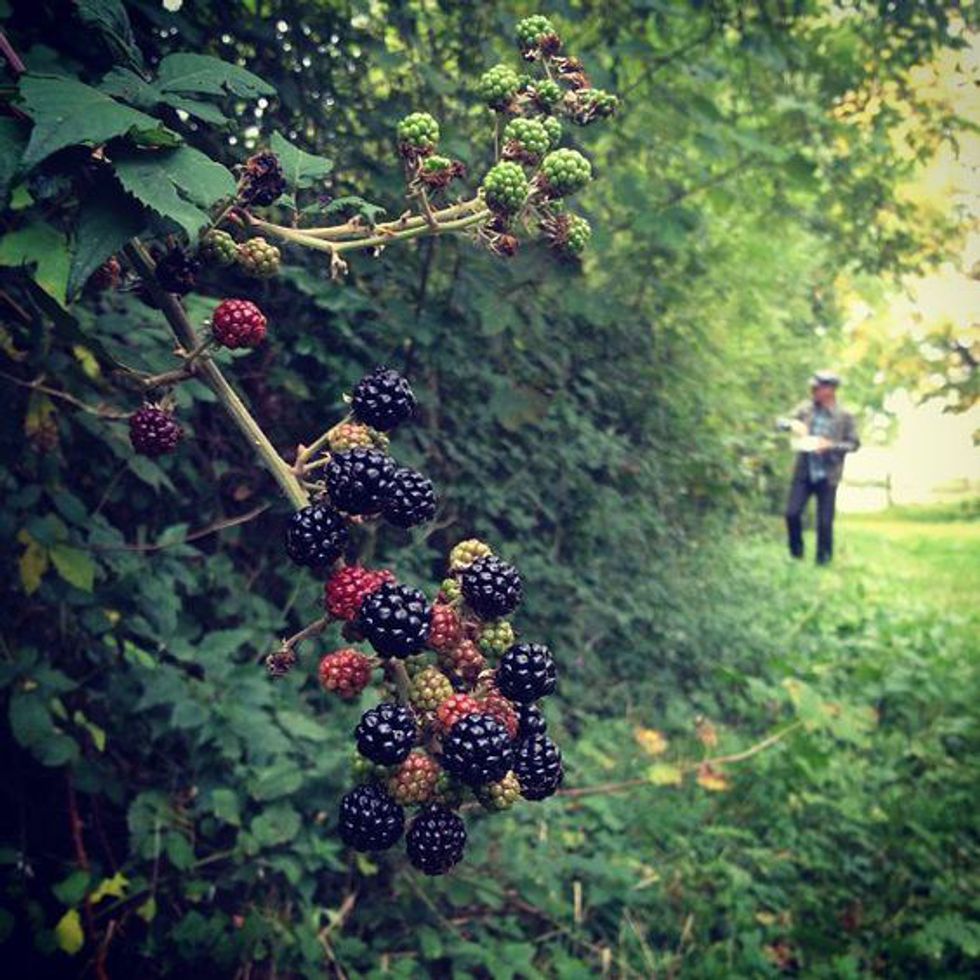
Question everything. If you're not completely positive that what you're about to put in your body is both edible and beneficial, do not eat it. You should be so adept in foraging that you have the same confidence in eating whatever you pick up as a 5 year old has in eating an orange. Nothing could be more stressful than making the decision to eat something that could potentially be fatal, so don't give yourself that chance.
Being able to identify wild edible plants is a great skill to have as well as a fun hobby. Along with free greens and new tastes, foraging allows one solitude and the opportunity to become closer to nature and to connect with natural world that we are apart of.
















