
Hollywood has always been at the forefront of social change in America. As a community of celebrities and influential members of American society, filmmakers and actors have routinely addressed and promoted societal change long before lawmakers and politicians even acknowledged that problems existed.
The 88th edition of the Academy Awards began under a litany of criticism as the lack of diversity was so apparent that it inspired the online movement #OscarsSoWhite. While the lack of diversity, especially the lack of recognition for black achievement in film in 2015, was certainly the elephant in the room for the night, the 2016 Oscars ceremony was able to address some aspects of social change that we've come to expect from Hollywood.
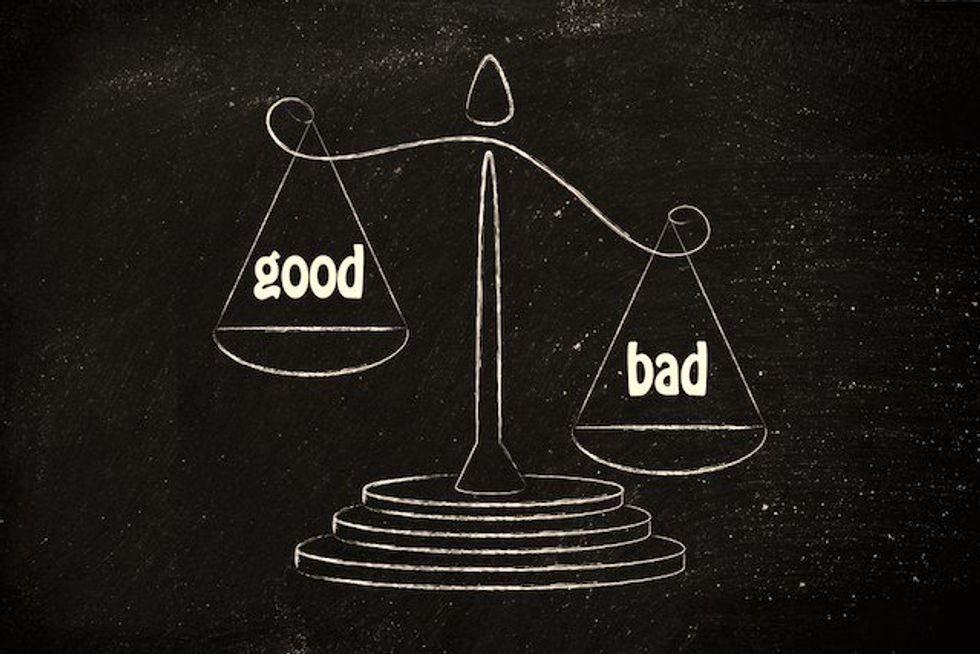
The Good
The 88th Academy Awards did feature several fantastic promotions of social change that we can all applaud. Early in the night, Ennio Morricone won his first Academy Award after decades of working in Hollywood. The Italian speaker was allowed to give his acceptance speech in his native language, with the aid of a translator, and was not rushed off the stage after his allotted time had ran out. Similarly, Mexican film director Alejandro Inarritu (who won his second Best Director award) and was allowed to continue speaking even after the music to cue him off had began to play.
Anhoni Hegarty became just the second transgendered person to be nominated for an Oscar, and the first in the past 40 years.
When Sam Smith's "Writing's on the Wall" won Best Original Song, he dedicated the win to the LGBT community.
During Leonardo DiCaprio's acceptance speech after winning Best Actor, he acknowledged the importance of nature and the natural world in his film "The Revenant" and highlighted that global climate change "is scientific fact" and that the issue needs to be addressed now if we wish to continue to inhabit this planet.
The Bad
The most obvious and frequently addressed problem with the Oscars was the lack of diversity. Films like "Straight Outta Compton," "Beasts of No Nation" and "Creed" were ostensibly snubbed ("Straight Outta Compton" was nominated for one award, while Sylvester Stallone, a white actor, was nominated for Best Supporting Actor for his role in "Creed"), and Idris Alba and Michael B. Jordan, who starred in "Beasts of No Nation" and "Creed," respectively, were not nominated for acting awards.
Lady Gaga's "'Til It Happens To You" was widely expected to win the award for Best Original Song. The song was written for the documentary "The Hunting Ground," which documents the controversy of rape cases being swept under the rug at college campuses in the United States, and takes the side of sexual assault and rape victims and tells listeners to consider what they have gone through.
Chris Rock as the host. Although he was announced as the host long before the nominations were announced and the race controversy began, having a black host who has widely been introduced to, and accepted by, the white community for his involvement in the Madagascar and Grown Ups franchises, seemed very pandering and like an attempt to seem inclusive and diverse in the face of harsh criticism.
The constant jokes about the race controversy.
The Ugly
In addition to the constant jokes about lack of diversity and how white the ceremony was, controversial figure Stacey Dash (famous for arguing to get rid of Black History Month and the BET and NAACP Awards) was brought out for a strange joke that fell incredibly flat and made for a very awkward 30 seconds, during which the audience was pretty quiet except for a few chuckles.
The choice of using Public Enemy's "Fight the Power" as a closing song for the awards show. The group formed in the 1980s to make music addressing the struggle of average African-Americans in America and how the media and politicians ignored their plight.
In the end, the Oscars was again able to address many of the social and political problems that our country is facing right now. Environmental awareness and transphobia, homophobia and other struggles facing the LGBTQ community were all addressed at some point or another. Thus, those with a larger voice than the ordinary citizen took advantage of this public platform to address and discuss the problems of minorities and crisis situation.
It was thoroughly disappointing to see how the diversity problem was addressed. Instead of addressing the problem, acknowledging that black achievements in film were snubbed this year and presenting a plan to actively address it in the future, the problem became the butt of a long running joke throughout the entire night. Everyone expected the lack of diversity to be joked about, especially with Chris Rock as the host, but it literally became the joke of the night to the point that the legitimacy of the problem was taken away and it was presented as a goof. Furthermore, the writing, use of hip-hop/black anthem music and overall presentation of the ceremony came off very forced and ignorant. The Academy is the entity that is capable of bringing about the changes and acknowledgements that they discussed and joked about the entire night, but played it off as if it wasn't their fault and that they stood in solidarity with the black community. It's fine to present yourself in that light, but not when it's your organization that has ignored their achievements and your organization that presented systematic oppression and racism as a gag joke.
The Oscars highlighted the progress that we've made as a country and our continued effort to bring about positive social change. The ceremony also was an example of how we are still not as progressive as we'd like to be. It showed the importance of all people, especially those with the ability to influence policymaking, to live everyday with a concerted effort to promote activism and encourage social justice.