An election cycle that is always simmering in today's 24-hour news cycle, reaches full boil on February 1st. On that day, the good people of Iowa will come together in the nation’s first vote to start the process of nominating a Democrat and a Republican to run for President of the United States. The Democrats started out with only two major candidates for President, Hillary Clinton and Bernie Sanders. The Republicans, on the other hand, began this process with as many as 15 candidates, although only three or four of them were ever really seen as being viable candidates. In an attempt to handicap the field a bit, this article will take a look at both races and seek to assess where they stand going in to Iowa’s caucus. Where referenced, polling information is gathered from polling website Real Clear Politics.
The field of Republican candidates has been extremely entertaining to watch. Whatever issues one may have with Donald Trump, it cannot be denied that he is the front runner. The magnanimous Trump is perhaps the best candidate in this race at manipulating the media and understanding the nature of using fame to bolster his campaign — a campaign that was seen by some as little more than a joke in the beginning has surged to a legitimate candidate, as Trump's polling numbers have risen steadily to a point where he is threatening to run away with the Republican nomination.
Another candidate that has seen his polling numbers surge over the last two months is Texas senator Ted Cruz. Cruz has seen his numbers climb from a fringe candidate to a legitimate potential foil to Trump’s campaign.
As Cruz’ numbers have risen, the candidate that has seemed to take the biggest hit has been Dr. Ben Carson. The soft-spoken doctor who enjoyed front-runner status for several weeks back in the fall has seen his numbers drop to the point that he is now a distant fourth currently.
A candidate that was expected to make a push after some strong debate performances, Marco Rubio has not seen the kind of surge that his counterparts have seen. Over the course of the campaign season, Rubio’s numbers have remained mostly steady, weighing in currently at a third best 11 percent.
Six short months ago, Jeb Bush was seen as the presumptive nominee, only to see his influence take hit after hit as Trump and Cruz chipped away at his lead to the point that it would take a minor miracle for Bush to win anything more than a few delegates here and there.
Going into Iowa, there is little doubt that Donald Trump will win the state in a walk.
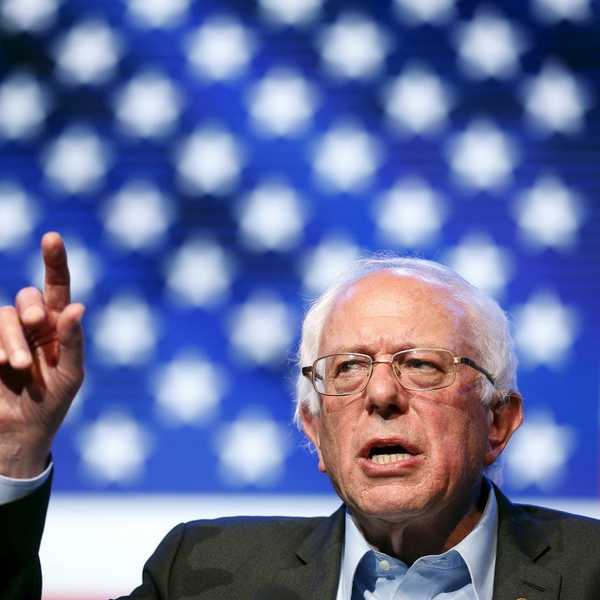
What was once expected to be a coronation for Hillary Clinton on the Democratic side has turned into a fascinating battle for the Democratic nomination. Bernie Sanders, once seen as a fringe candidate that would have trouble appealing to the base of the Democratic party, has ridden his strong performances in the Democratic debates to a virtual dead heat with Hillary. Sanders has smartly positioned himself as the alternative to what has always been seen as the mainstream media’s choice, Hillary Clinton. A CNN poll of Iowa voters conducted from the 15th to the 20th of January has actually seen Sanders pull ahead of Clinton by eight percentage points: 51 percent to 43 percent. With a margin of error, this most recent of polls has the race in Iowa a dead heat between the two candidates.
The third competitor for the Democratic nomination has been Martin O’Malley all along, although he seems destined to drop out and see himself being considered as a possible Vice Presidential candidate for whichever of Sanders or Clinton secures the party’s nomination. It is entirely reasonable to believe that the Democratic race will begin the day that O’Malley drops out, as the race could very possibly be determined by who his supporters migrate to once he leaves the race. As we roll into Iowa in about a week, the edge should probably be given to Hillary, if only on the strength of her political machine — but it is genuinely too close to call, and Sanders could easily see himself riding a two-state winning streak after New Hampshire votes the next week.
The always unpredictable nature of American politics takes center stage for the next ten months, as America gathers to elect its 45th President. Beginning on the first of Fenruary, the pace of the election will become increasingly hectic, specifically through March. By the end of March, 43 primaries will have been held among the two parties and a clearer picture of who the nominees will be should be gained.