

It is true that we yearn for recognition, the advent of social media illuminates our desire to be acknowledged by the other like never before. I am not against social media, its hard to dismiss how the technology has revolutionized communication and enabled the sharing of all kinds on a global scale. However, I can’t help but feel as though we are looking to online platforms to fulfill needs they simply cannot address.
In chapter five, titled Lordship and Bondage, of his most influential work The Phenomenology of Spirit, the 19th century German Philosopher, Georg Wilhelm Friedrich Hegel, argues that we become aware of ourselves through the recognition of others.
The ideas he sets out in chapter five have shaped thought on gender relations, colonial relations and various other fields. Though perhaps not directly related, his ideas about self-consciousness to me seem to shed some light on how we relate to each other in the age of social media.
The Master-Slave Dialectic
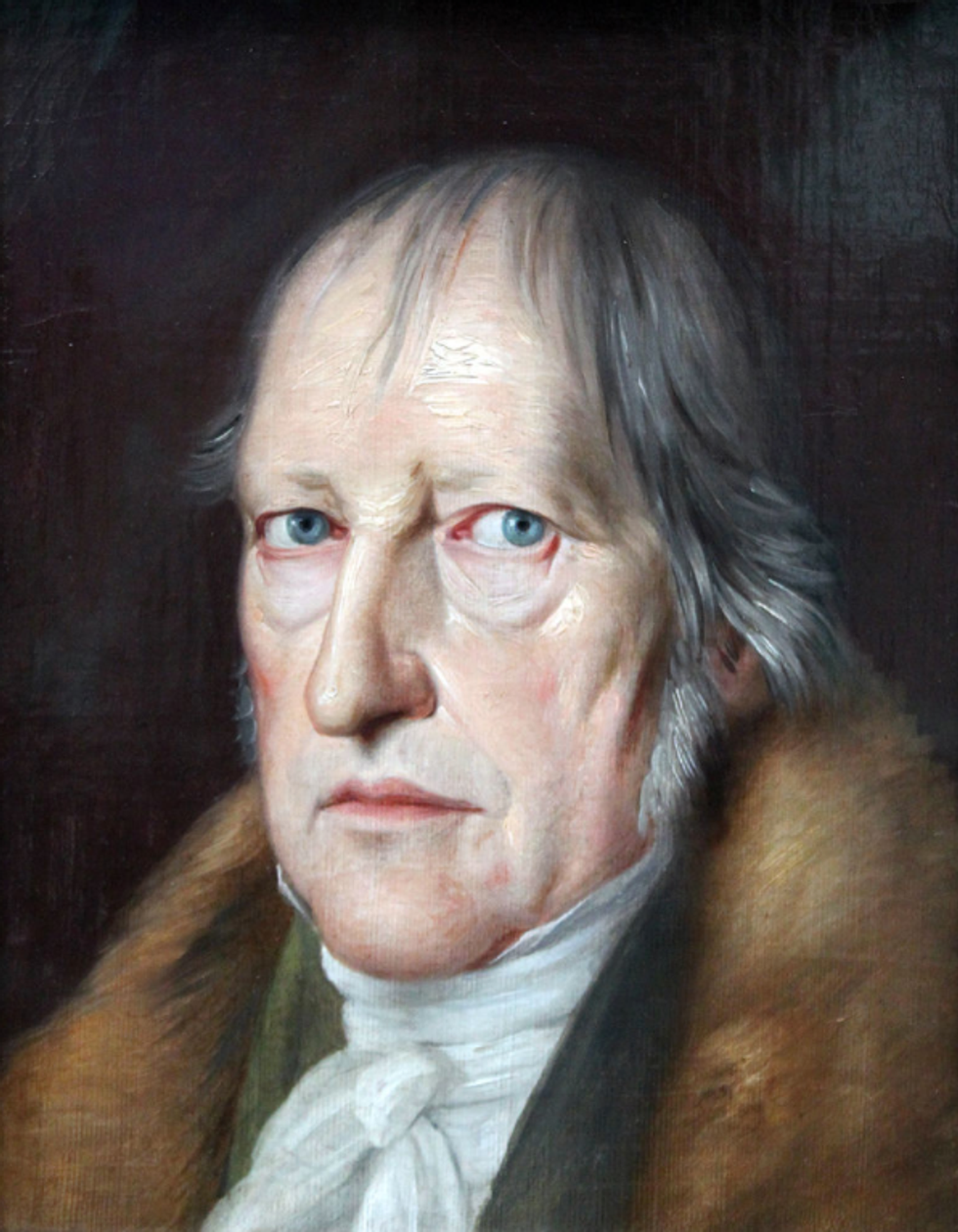
The German philosopher (pictured above) offers what most believe to be a metaphorical explanation of how we come to self-consciousness and in a larger sense how ideas evolve.
What distinguishes humans as truly self-conscious is that we step away from mere sense perception. We use reason to makes sense of what we perceive and thus make objective claims about the world.Yet we need the acknowledgement of other self-conscious beings in order to justify our claims. However, conflict arises from the quest for acknowledgement.
According to Hegel, when two conscious selves encounter each other their singular focus on receiving recognition results in neither being willing to concede and provide acknowledgment.This is Hegel’s famous Master-Slave Dialectic. A struggle for recognition occurs as two selves attempt to exert dominance over each other.
They cannot kill each other as neither would achieve recognition therefore eventually one must fall and assume the status of slave whilst the other becomes a master. This state is unstable as neither can become self-conscious.
The slave becomes an object without freedom whilst the master cannot gain a true reflection of themselves as the slave, for fear of death, cannot give the master an honest account of what he or she is truly like.
Self-consciousness can only occur when two equals acknowledge each others’ status as a conscious being, thus in the end the slave must revolt and overcomes the master. Only then the two are able to acknowledge each other and become self-conscious.
Click to watch a video summary of The Master-Slave Dialectic
Social Media and Self-Consciousness
From Facebook to Snapchat to Instagram we capture and curate moments of our life in order to update the hundreds and perhaps thousands of consciousness that we exist, we are conscious. This phenomenon to me seems an extension of our struggle for recognition. Whether or not you find Hegel’s ideas convincing, it's undeniable that we seek approval from other people as it gives us meaning and a sense of belonging.
If we buy into Hegel’s explanation of self-consciousness, social media cannot offer us the acknowledgement we long for. Social media posts do away with the complexity, our anxieties, insecurities, our angry outbursts, loneliness, exasperation, our fear of failure. We render ourselves objects that lack depth and trade in true recognition for likes.
I imagine that Hegel would say that we cannot get the recognition we need as online we are not conscious beings but self constructed representations. How can we receive an accurate reflection when we distort our own image? Here we might not be any better than the master, surrounded by yes men.
This may seem melodramatic, but even if we don’t buy into Hegel’s ideas we still can’t gain true knowledge on what somebody is like through social media posts. This only arises through the exchange of ideas, real dialogue, when two selves truly interact, which often times encompasses conflict. This by all means can happen online but not through manufactured posts and images.
I cannot deny the benefits that social media brings yet there is much anxiety surrounding it. We might simply be searching for the wrong things on online platforms. When socializing becomes less social and when approval becomes addictive something has gone awry. Perhaps if we let ourselves be more vulnerable, share more thoughtful ideas than ideas of ourselves we want people to approve of, we might be more conscious of each other.
Having said that, the ways in which we interact across social media is far more complex than I let on; they vary vastly and I must confess that I don’t fully represent all aspect of myself online. Nevertheless, the technology that plays a rapidly increasing role in our lives is still relatively new and can evolve in ways we can’t yet imagine.
Given the rising rates of social media related anxiety, perhaps future social media outlets will prove to be spaces where we might stop chasing approval and gain self recognition, an arena where we might become self-conscious equals.

















