*Also one quick note: This article is purely my opinion. While I know that there are many flaws with the show, I simply point out, in my observation, the most glaring and egregious fault of the series. Also, for those who don't want to be spoiled or triggered by some of the content of this article, there are major plot points mentioned in this article that may make some feel uncomfortable.*
I know, I know. Another article about "13 Reasons Why". As someone who is an avid user of several forms of social media, I'm well aware of the controversy surrounding this show, and the many flaws that have been pointed out all across the Internet.
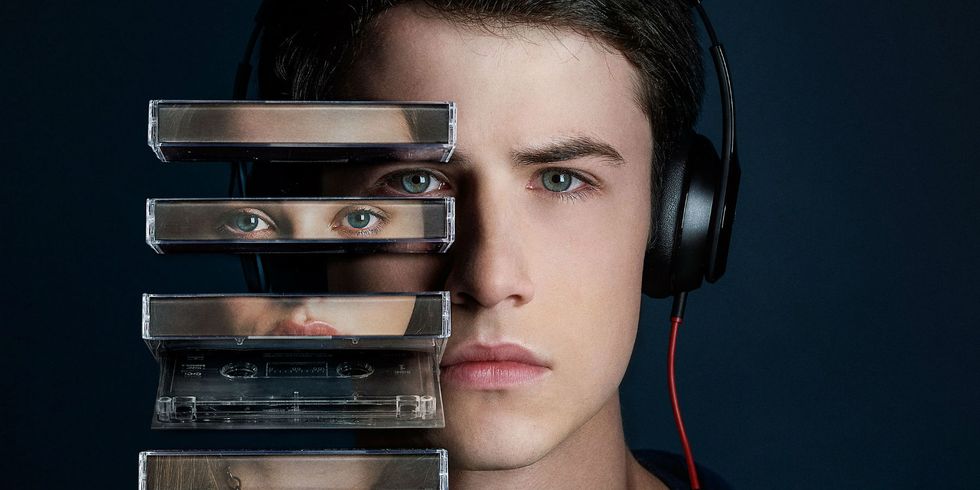
For those of you who don't know, "13 Reasons Why" is a book-turned-Netflix series about Hannah Baker, a girl who commits suicide and makes a series of tapes calling out each person from her life who drove her to kill herself. The show is mainly told from the perspective of Clay Jensen, a former classmate and co-worker of Hannah's. The tapes are acted out through a series of flashbacks, with Hannah, played by actress Kathrine Langford, narrating the moments that caused her to end her life.
Let me first start off by saying that I thoroughly enjoyed many aspects of "13 Reasons Why". It was very well-produced, had a diverse cast, and really drove home the message that our words affect others.

And, like every TV show, the series had flaws: Many believe the show romanticizes suicide, was too graphic in depicting rape scenes, and didn't do enough to warn people about the intensity of the depiction of Hannah's suicide. I personally found myself becoming nauseous and dizzy as I watched Hannah take her own life, thinking "Am I really watching a girl kill herself in a Netflix series?"
But even beyond the graphic nature of the show, there is one glaring flaw that I cannot let go since I finished the series earlier this week: the complete absence of mental health awareness.
All throughout we are told by multiple characters that Hannah was "over dramatic" or "killed herself for attention", and while those are very realistic viewpoints of people in society, there was hardly any mention of clinical depression or anxiety as a cause for Hannah's actions.
It was clear that towards the end of her life, Hannah Baker was not only suffering from depression, but also Post-Traumatic Stress Disorder from being raped by Bryce, another teen who was one of the most popular students at Hannah's school. The show made it very apparent that Hannah was suffering mentally, from changing her appearance abruptly (she cuts off all of her hair), and limiting her social interactions (she quits her job at the movie theater, where she works with Clay). These are both textbook signs of depression. Yet it is never addressed, even as Hannah is discussed after she has passed.
Multiple other characters show clear signs of mental illness following Hannah's death, including Clay, Jessica Davis, and Alex Standall. And while that could be intentional and show the ineptitude of the adults around them, however with 13+ hours of a show meant to dramatize a fairly bare-bones novel, surely some time could've bee taken out to address depression and anxiety, and many of the instances that had the perfect segue into a discussion about mental health either fell flat or sent the entirely wrong message.
Take the character of Skye for example. She is shown as having cuts on her wrists, but when confronted by Clay, she merely shrugs it off, saying that unlike Hannah, she cuts herself instead of committing suicide because she's not weak.
It's sentiment like that that is depicted over and over again in "13 Reasons Why", and while some characters who have this viewpoint are realistically portrayed, the fact that there is no push back from any other character, especially the adults of the show, is highly unrealistic. In a world where mental health awareness is growing in popularity, "13 Reasons Why" failed to seize the opportunity to explicitly show the causal link between Hannah's depression and her eventual suicide.
The message of "13 Reasons Why" is clear and well-intended: your words matter, so treat everyone with kindness. But the show failed to show a major aspect of why those words meant so much to Hannah Baker, and it wasn't because she was sensitive or over-dramatic. It was because she was a girl who was not only bullied by the kids at her school, but that her feelings of hopelessness and anxiety were only heightened by her mental illness.
Now more than ever, mentally ill youths need media with representation so that they don't feel like outcasts. "13 Reasons Why" had the opportunity to explicitly portray a mentally ill main character, but instead, Hannah Baker was reduced to an attention-seeking drama queen.