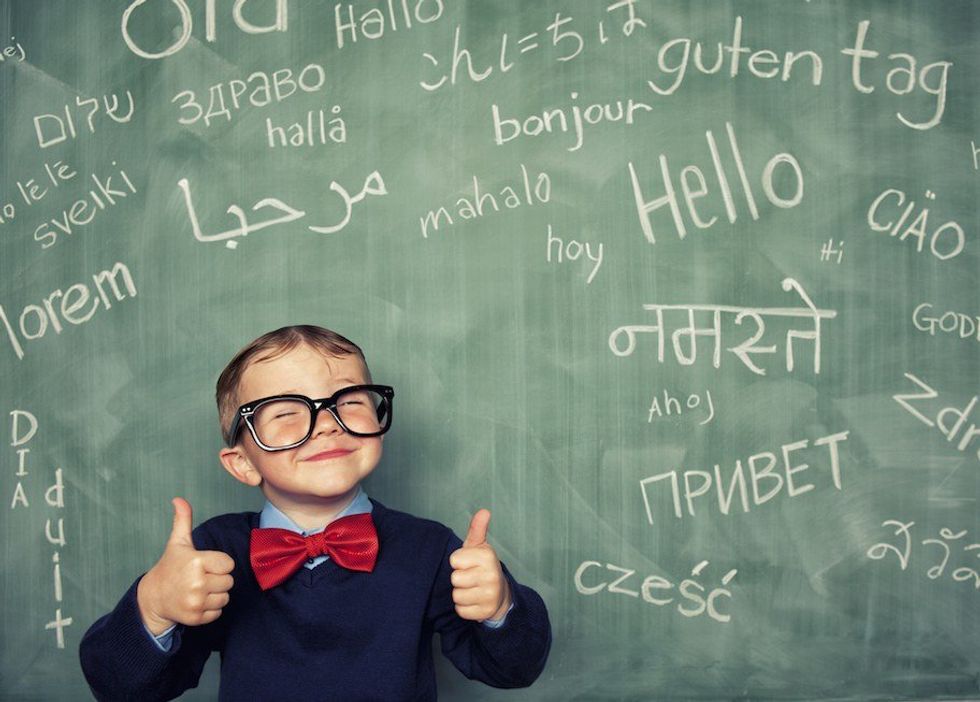
It is a common occurrence in schools around the world that students learn new languages. For most European countries this is done in elementary school when it is arguably far easier to learn a language versus learning it when you are older. Unfortunately, American students are only offered language classes in high school and college. These are the stages of learning a new language later in life.
1. "This is going to be a fun new experience!"
You are full of optimism and are ready to take on this new obstacle. This will, however, probably be crushed the moment you open the textbook.

2. "I have no idea what letters are anymore..."
You open the textbook and you suddenly can't remember what letters are. They become these weird markings that you have to decipher to figure out what the heck is going on. (This goes extra if you are learning a language that changes the sound of the letter from what it usually is in English).

3. "I can't even remember English grammar! How am I supposed to remember this?"
Why can't every language just use the same grammar rules? That would make everything so much easier. As someone who constantly uses comma splices (if you look through this article you will surely find some), I can attest to the annoyance that comes from having to learn a whole new set of grammar rules.

4. "This language was a bad idea. I should have taken that other one."
To quote the talented Mary J. Blige, "They're telling me the grass just might be greener on the other side.
But I don't wanna take a chance on dirt when I got grass even though the grass has died. " You are always going to feel that a different language will be easier than the one you're taking right now, but I assure you that at least one person in the other class is thinking the same thing about yours.

5. "I'm never going to be fluent."
This feeling comes after you have been learning the language for a few months and you still don't have even a basic grasp on it. It can be disheartening but don't give up because you probably know a lot more than you are giving yourself credit for.

6. "This is useless... Most people speak English, right?"
This is a common mindset that a lot of Americans fall into. While there are a lot of countries that make a strong attempt to teach all their students English, don't make the mistake that the world has to cater to you and the language you speak.

7. "The only thing I get on exams are tears."
It is incredibly discouraging when you think you are going to do well on a test, but only get like a 75 on it. Sometimes it feels that no matter how hard you study, you're never going to do well on a test.

8. "I can kind of understand when people talk in this language now."
When your teacher gives instructions or you overhear having a conversation in the language, you feel a sort of happiness when you realize that you can understand pieces of what they are saying (and from there you can usually piece together the full sentences and fully understand what they are talking about.)

9. "My playlists are starting to include songs in this language."
Whether it is from your teacher playing music in class or you taking it upon yourself to immerse yourself in the culture, you have begun to jam out to some songs that aren't in your native language even if you don't fully understand.

10. "I watched a movie in this language and barely had to use the subtitles."
Picture this: You're browsing Netflix, but you can't find anything that you want to watch. You decide to peruse the foreign films in the off-chance that you'll find something interesting. You then come across a film that is only available in the language you have been learning (but with English subtitles of course). As you begin to watch it, you become more and more aware that you hardly even need the subtitles. A sense of pride washes over you.

11. "I can do this."
You have overcome a lot to get to the point that you feel comfortable in this language. Your test grades have improved and you are speaking more in class. You worked really hard to get to this point and you deserve to feel proud of yourself.