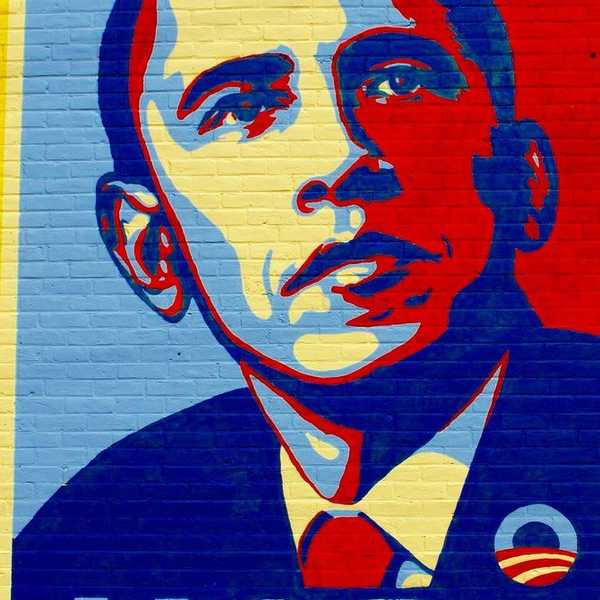

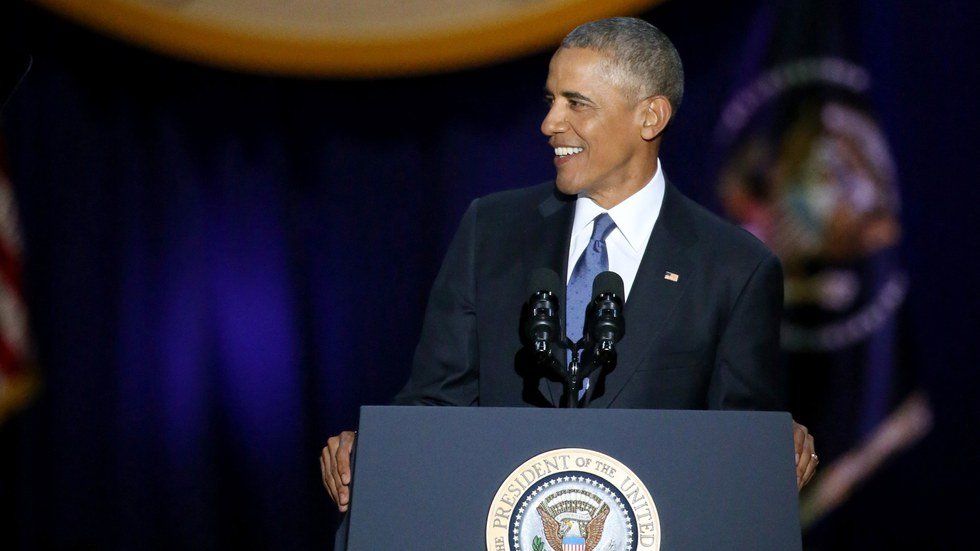
On January 9, 2017, President Obama gave his farewell address in Chicago. His speech was moving and brought me (and I’m sure many others) to tears. Here were some of his best quotes from that speech.
The full transcript of this speech can be found here.
1. On change
“This is where I learned that change only happens when ordinary people get involved, get engaged, and come together to demand it.
After eight years as your president, I still believe that. And it’s not just my belief. It’s the beating heart of our American idea - our bold experiment in self-government.
It’s the conviction that we are all created equal, endowed by our creator with certain unalienable rights, among them life, liberty, and the pursuit of happiness.
It’s the insistence that these rights, while self-evident, have never been self-executing; that we, the people, through the instrument of our democracy, can form a more perfect union.”
2. On progress
“So that’s what we mean when we say America is exceptional. Not that our nation has been flawless from the start, but that we have shown the capacity to change, and make life better for those who follow.
Yes, our progress has been uneven. The work of democracy has always been hard, contentious and sometimes bloody. For every two steps forward, it often feels we take one step back. But the long sweep of America has been defined by forward motion, a constant widening of our founding creed to embrace all, and not just some.”
3. On potential
“Our youth and drive, our diversity and openness, our boundless capacity for risk and reinvention mean that the future should be ours.
But that potential will be realized only if our democracy works. Only if our politics reflects the decency of our people. Only if all of us, regardless of our party affiliation or particular interest, help restore the sense of common purpose that we so badly need right now.”
4. On solidarity
“Understand, democracy does not require uniformity. Our founders quarreled and compromised, and expected us to do the same. But they knew that democracy does require a basic sense of solidarity - the idea that for all our outward differences, we are all in this together; that we rise or fall as one.
There have been moments throughout our history that threatened to rupture that solidarity. The beginning of this century has been one of those times. A shrinking world, growing inequality; demographic change and the specter of terrorism - these forces haven’t just tested our security and prosperity, but our democracy as well. And how we meet these challenges to our democracy will determine our ability to educate our kids, and create good jobs, and protect our homeland.
In other words, it will determine our future.”
5. On service
“That, after all, is why we serve - to make people’s lives better, not worse.”
6. On goals
“We can argue about how to best achieve these goals. But we can’t be complacent about the goals themselves. For if we don’t create opportunity for all people, the disaffection and division that has stalled our progress will only sharpen in years to come.”
7. On empathy
“Going forward, we must uphold laws against discrimination - in hiring, in housing, in education and the criminal justice system. That’s what our Constitution and highest ideals require. But laws alone won’t be enough. Hearts must change. If our democracy is to work in this increasingly diverse nation, each one of us must try to heed the advice of one of the great characters in American fiction, Atticus Finch, who said, ‘You never really understand a person until you consider things from his point of view… until you climb into his skin and walk around in it.’
For blacks and other minorities, it means tying our own struggles for justice to the challenges that a lot of people in this country face - the refugee, the immigrant, the rural poor, the transgender American, and also the middle-aged white man who from the outside may seem like he’s got all the advantages, but who’s seen his world upended by economic, cultural, and technological change.
For white Americans, it means acknowledging that the effects of slavery and Jim Crow didn’t suddenly vanish in the ‘60s; that when minority groups voice discontent, they’re not just engaging in reverse racism or practicing political correctness; that when they wage peaceful protest, they’re not demanding special treatment, but the equal treatment our Founders promised.
For native-born Americans, it means reminding ourselves that the stereotypes about immigrants today were said, almost word for word, about the Irish, Italians, and Poles. America wasn’t weakened by the presence of these newcomers; they embraced this nation’s creed, and it was strengthened.
So regardless of the station we occupy: we have to try harder; to start with the premise that each of our fellow citizens loves this country just as much as we do; that they value hard work and family like we do; that their children are just as curious and hopeful and worthy of love as our own.”
8. On politics
“Politics is a battle of ideas; in the course of a healthy debate, we’ll prioritize different goals, and the different means of reaching them. But without some common baseline of facts; without a willingness to admit new information, and concede that your opponent is making a fair point, and that science and reason matter, we’ll keep talking past each other, making common ground and compromise impossible.”
9. On democracy
“Which brings me to my final point - our democracy is threatened whenever we take it for granted. All of us, regardless of party, should throw ourselves into the task of rebuilding our democratic institutions. When voting rates are some of the lowest among advanced democracies, we should make it easier, not harder, to vote. When trust in our institutions is low, we should reduce the corrosive influence of money in our politics, and insist on the principles of transparency and ethics in public service. When Congress is dysfunctional, we should draw our districts to encourage politicians to cater to common sense and not rigid extremes.”
10. On common ground
“We weaken those ties when we allow our political dialogue to become so corrosive that people of good character are turned off from public service; so coarse with rancor that Americans with whom we disagree are not just misguided, but somehow malevolent. We weaken those ties when we define some of us as more American than others; when we write off the whole system as inevitably corrupt, and blame the leaders we elect without examining our own role in electing them.”
11. On the future
“That’s why I leave this stage tonight even more optimistic about this country than I was when we started. Because I know our work has not only helped so many Americans; it has inspired so many Americans - especially so many young people out there - to believe you can make a difference; to hitch your wagon to something bigger than yourselves. This generation coming up - unselfish, altruistic, creative, patriotic - I’ve seen you in every corner of the country. You believe in a fair, just, inclusive America; you know that constant change has been America’s hallmark, something not to fear but to embrace, and you are willing to carry this hard work of democracy forward. You’ll soon outnumber any of us, and I believe as a result that the future is in good hands.”