

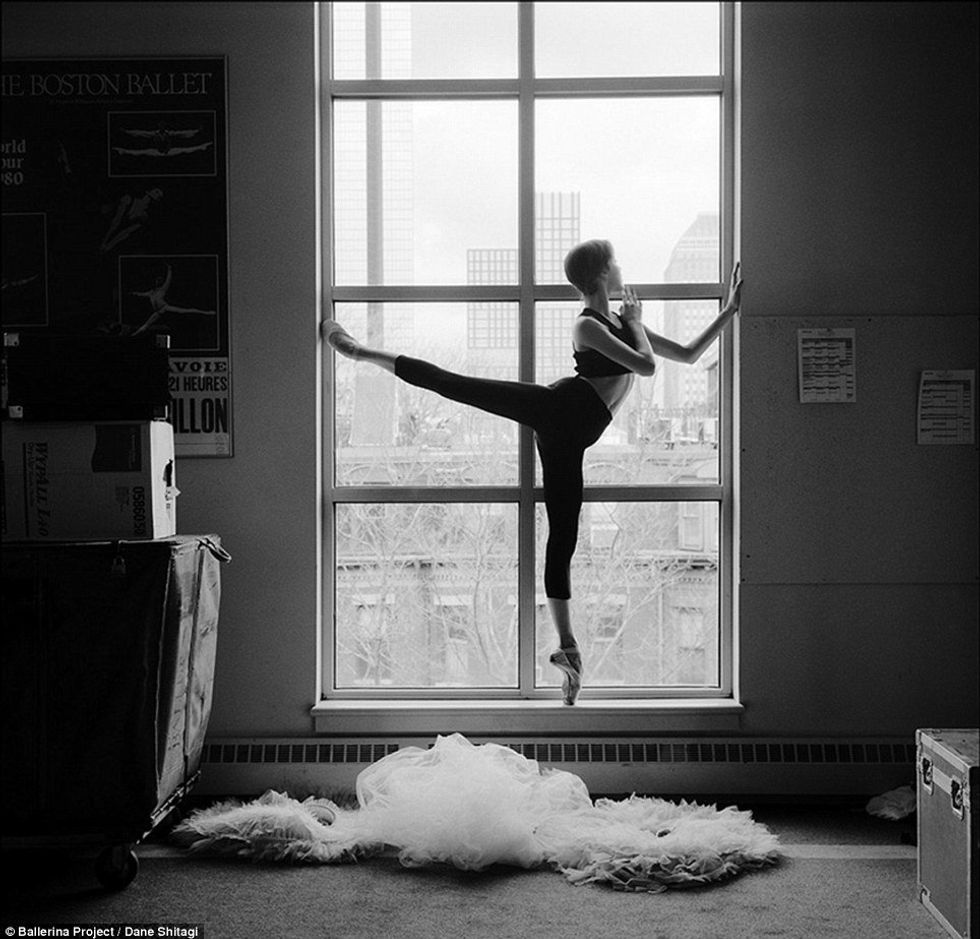
We as humans are passionate people. Each and every one of us has the capacity to love to the deepest capacity, to the point where a single thing can be the center of our whole world. We move through live searching for our niche so that we can cling onto it and let it direct the course of our lives. For some, it's a sport in which they dominate. For others, it's the gentle brush strokes of paints across a canvas, or the exhilaration that accompanies reaching the peak of a mountain and getting that perfect view. The possibilities are nearly endless.
However, as is the nature of our lives, we do not always stick to our passions as we should. Sometimes the practice becomes too tedious, or we get distracted with the more trivial aspects of life. It happens all the time. It feels like it's been happening to me for years. It can be debilitating, and while the only cure-all would be the development of unyielding determination, there are things you can do to get back into the swing of things.
1. Get back to the basics.
Besides being a great way to refine skills and break bad habits, returning to the basics of your passion serves as a reminder. When you started practicing your passion, there was a reason why. You had a moment way far back when you knew you had found something you loved. So returning to that set of circumstances can initiate that feeling once again and encourage you to move forward. If you think you can remind yourself of your love some other way, try that, but going back to the beginning mimics your surroundings of the time, and therefore your thoughts may mimic how you felt back then.
2. Read a book.
My grandmother once bought me a copy of Writing Down the Bones by Natalie Goldberg to encourage my love for writing. The book connects ideas of Zen to the practice of writing. It's a beautiful book that inspires me to write every time I pick it up. My hands are practically itching to be in contact with the keyboard. Whatever your passion is, there's a book out there to match it. Whether it's an autobiography by an expert in that field, a self-help book, or an instructional handbook, reading about your passion has a way of inspiring you. Movies, television shows, and TED talks can also function in the same way.
3. Change your environment.
You likely have a space where you practice your passion; the same old field you've been practicing on for years, the desk you always write on, or the corner where your easel sits. Having a space like that is great, but if you find yourself no longer loving your passion, try going somewhere else. Fresh spaces have a way of renewing the mind. I recommend a calming space where your mind feels at ease. I usually use quiet cafes, or I go sit under a tree during a nice day.
4. Listen to music.
Music is a powerful force. It can influence your emotions rather easily. So listening to music is a good way to inspire yourself. I often use the Electronic Concentration playlist on Spotify. It's soft electronic music that blocks out distractions around me while not distracting me from my work. If your passion requires focus, try instrumental music so that there are no lyrics to cling to. If your passion is physical, find music that pumps you up. Also, if you can, use headphones instead of speakers. They allow the music to be more submerging, and overall more effective.
5. Take a break.
Now, let's be perfectly clear; there's a difference between taking a break and quitting. This is not quitting. It's simply giving yourself some space. Skip practice every now and then. Let yourself spend time with friends instead of practicing your instrument in your room. Everybody needs a break every now and then, and sometimes the best way to get back into your passion is to miss it. Just be cautious. Don't let yourself take too many breaks, otherwise you're essentially quitting.
6. Visualize.
Depending on your niche, you likely have a dream to match it. That dream, in and of itself, is a great motivating factor to continue working. Close your eyes and imagine yourself at the top; winning an Oscar, becoming a member of a ballet company, or getting that book published. It's a simple, yet effective, way to jolt yourself into action.
7. Reflect on your success.
Everybody wants to quit every now and then. It's natural to want to give up. To fight off these feelings, reflect on your history with your passion. When did you start? Why did you start? What accomplishments have you achieved? Have other people acknowledged your hard work? Use those thoughts to push forward. Remember that you've put in all of this work and achieved so much already. You wouldn't want that hard work to go to waste.
8. Talk to someone.
There's no shame in expressing your doubts. Talking with other people is a great way to get the weight off of your chest, and they will likely have words of encouragement. You can talk to almost anybody; a teacher, a coach, a parent, or a friend. Their insight can really change your mindset.
9. Set goals.
Setting goals is imperative with most hobbies, but it's arther easy to brush them off. I recommend telling a coach or a friend that you have set this goal for yourself. That way, when you feel like giving up or you're not putting in the work that you should, you have someone to remind you of your goal. When you reach your goal, make a new one. Keep pushing forward.
10. Reward yourself.
In late elementary school, we had this program called Fun Friday. For the last hour of school every Friday, a multitude of activities were put on in different classrooms. However, if you didn't get your work done, you weren't allowed to go. Even one missing assignment got you sent to study hall. Naturally, this was very motivating to students. None of us wanted to miss the opportunity to have another recess or do a cool arts and craft project. Reward systems work, and there's no shame in establishing one of your own. Pair rewards with your goals, and you'll likely get more work done. The bigger the goal, the bigger the reward.






 man running in forestPhoto by