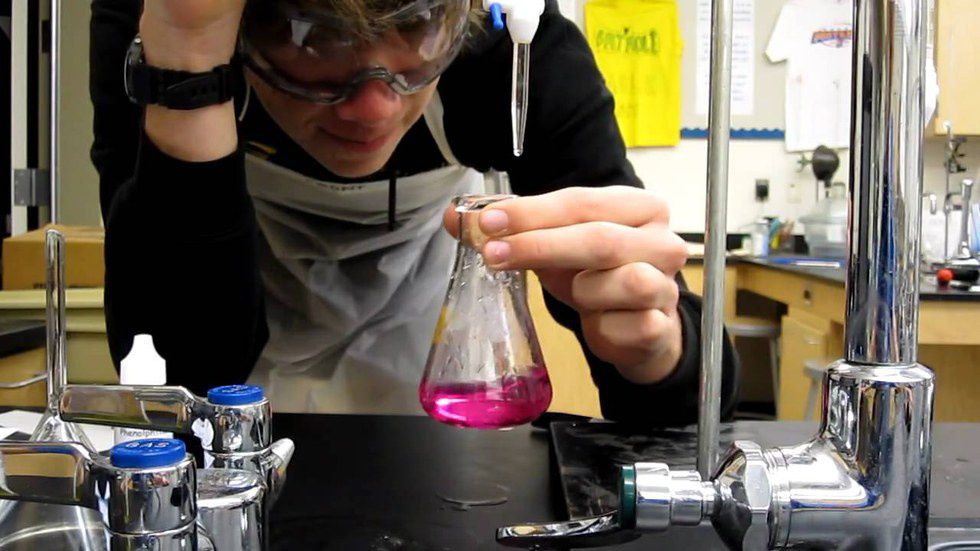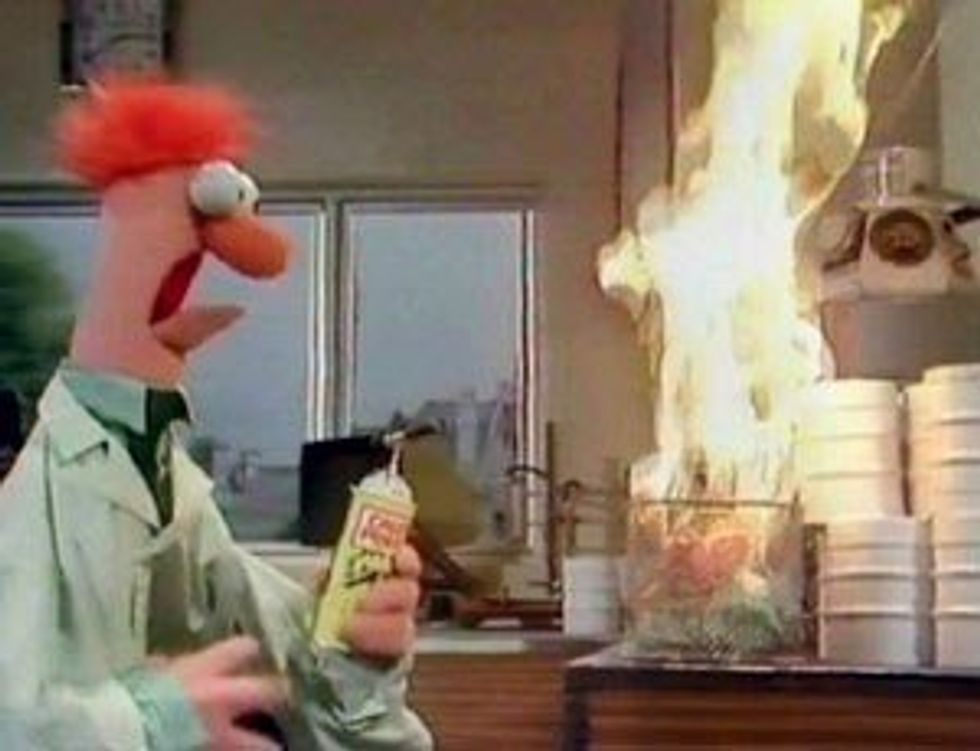
For many science and engineering students, chemistry lab is Hell’s Kitchen. It defies the laws of probability, and whatever can go wrong will, with complete certainty, go wrong. They say that science is based on replication. Why on earth, then, did your experiment to determine the molar mass of magnesium give you an answer of 31.56 instead of 24.305 like your lab manual says? If this is you, then perhaps some of these unfortunate situations have plagued you in semesters past.
1. You’re that kid that always takes the full four hours to finish the experiment.
Nothing went right. You overshot the endpoint on every titration. Your product never crystallized. Your data has a standard deviation of ±200 percent. The rest of your class left 45 minutes ago, and now it’s just you working as your professor and the lab TA stare at you, waiting to go home.
2. Everyone just assumes that the sound of broken glass came from your bench.
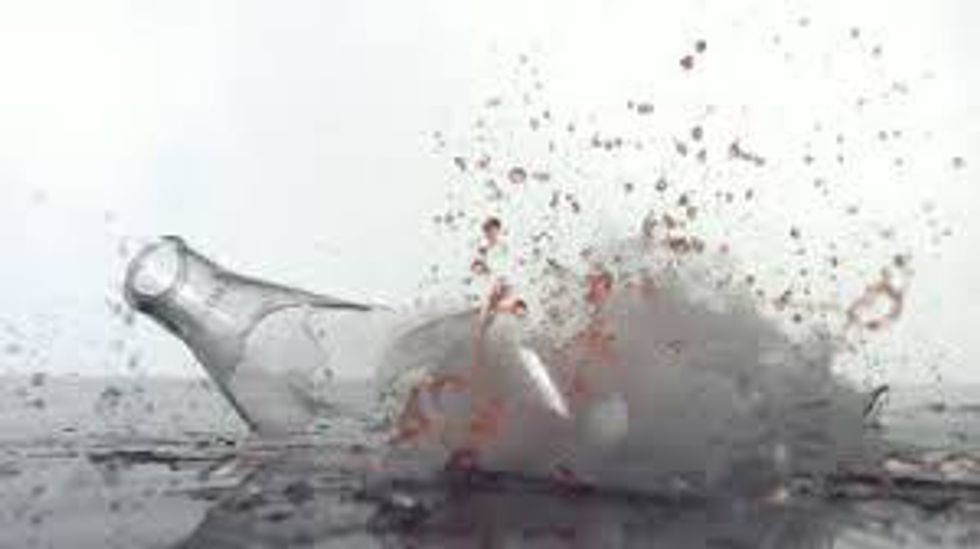
You are the reason lab fees are so high. You have consistently broken at least one piece of glassware every lab this semester. From pipettes to beakers, you’ve shattered them all, and the TA is sick of having to search through the stockroom to find you another one.
3. You forgot to empty your pockets before entering the NMR room, and the magnetic field wiped out your ID card.

The 25 Tesla magnetic field produced by this bad boy of an instrument is more than enough to wipe clean all the little pieces of plastic that run your life. You won’t realize your blunder until you trudge back to your dorm and get denied by the card scanner. You desperately try to negotiate with card services for a new card, going so far as to explain the basics of nuclear magnetic resonance spectroscopy, but you still have to cough up the $25 for a new one. Even worse, your Panera card doesn't work either!
4. You mistakenly wear a sweater to lab and light the sleeve on fire.

Clearly you didn’t listen to the safety video at the beginning of the semester, and the image of the dummy engulfed in flames wasn’t memorable enough for you. Oh well, at least you’re making things more interesting for your classmates with your pyrotechnic display.
5. You go through an entire three-hour long synthesis procedure only to get to the last step and realize that you forgot to add one crucial reagent.

You're hit with the crippling realization that the contents of your beaker are completely useless to you. Which would be more trouble: doing the entire experiment over again or going to the administration building to get a change of major form?
6. Water got in your reaction in an orgo lab.

H2O: the enemy of organic chemists the world over. Humans love the stuff, but for some reason, a single drop of it can seem to tear any organic molecule to pieces. Good thing its freaking EVERYWHERE. This is why there’s no crying in chemistry; it’ll get in your reaction mixture and just ruin everything, prompting still more tears. What a vicious cycle.
7. You forget to bring your goggles every week.
The one thing that you can’t do chem lab without. Each week it’s the same story. You have to rummage through all the labs in the science building until you can find a pair of long-abandoned goggles that belonged to some student who probably has a wife and kids now. They're so scratched up and the elastic band is so stretched out that it’s probably just as effective to do the lab with your eyes shut for protection.
8. You leave the lab for five minutes to go use the bathroom, and somehow your reaction catches fire.
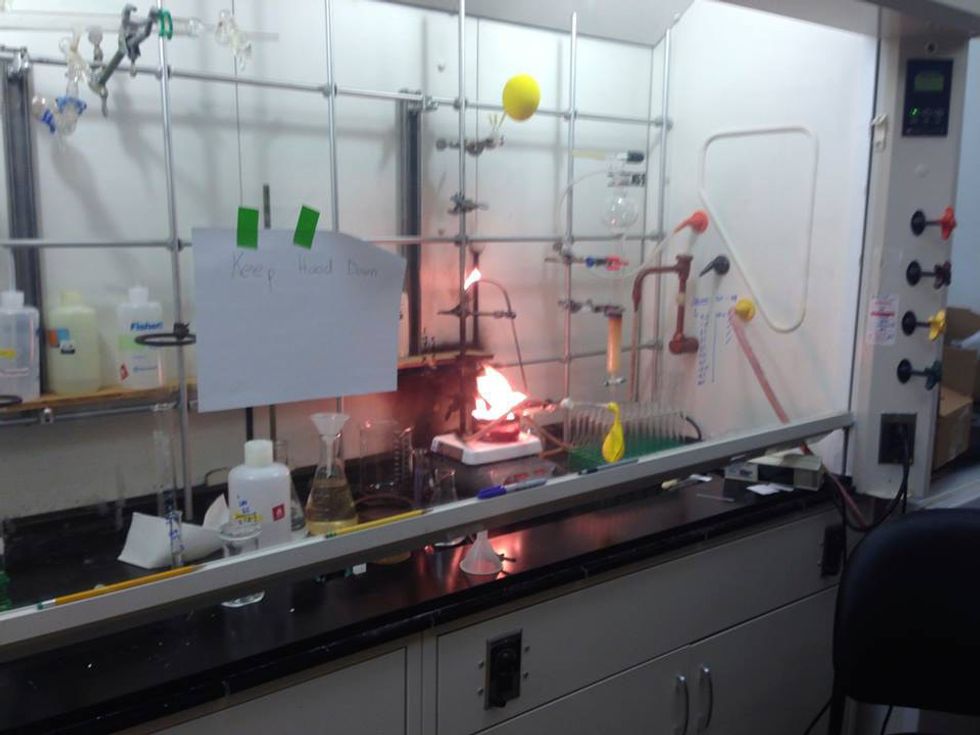
If this isn’t an obvious sign that the chemistry gods hate you, what else is? Why is it that no one can seem to find the fire extinguisher ... ?
9. You drop the precious sample that you have labored for three hours to create.
It’s just not fair. Everything seemed to be going so well. Every reaction went to completion, the finished product looks exactly as the lab manual describes, and best of all, nothing caught fire! But just as you’re walking over to the balances to weigh your sample, you trip over your own feet, and the vial goes flying across the room and smashes to pieces on the floor. You look pleadingly at your professor, vainly thinking he can make this disaster better. He just shrugs his shoulders and says, “Well, I guess you’ll have to start over.”
10. Overshooting the endpoint for the fifth titration in a row.