

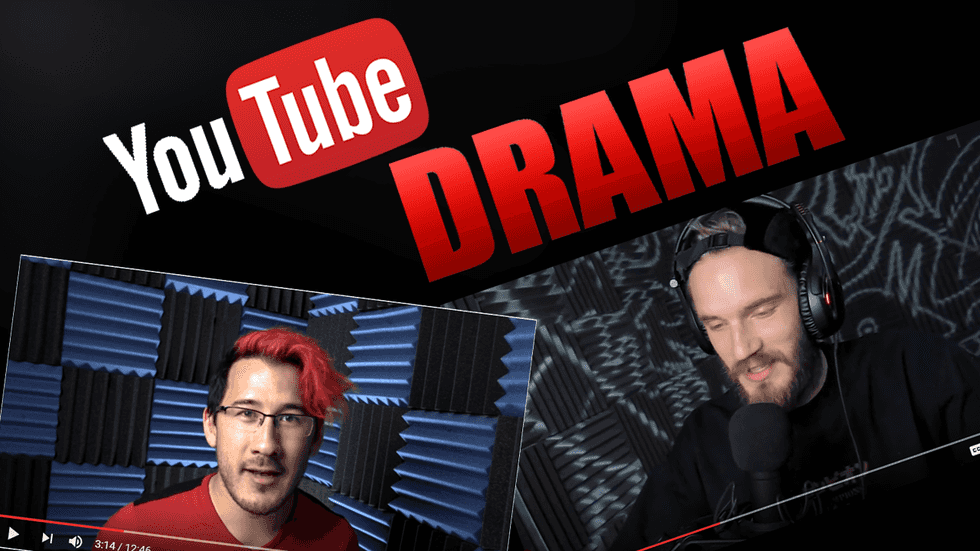
“YouTube Drama” is the latest in a long line of terms used to describe the ever evolving landscape of the world’s number one video streaming site.
The “drama” came to a head earlier this month when YouTube gaming giant Toby Turner (Tobuscus) was accused of mental abuse, drug abuse and rape. DramaAlert was the first to begin reporting on April Fletcher’s (AprilEfff) accusations posted to Tumblr. Not only did she say Turner drugged her and engaged in nonconsensual sexual acts, but wrote, “…I am NOT the only one who has experienced the abuse from him.”
The ensuing flurry of videos that hit YouTube trolling for views caused two of YouTube’s top content creators, Felix Kjellberg (PewDiePie) and Mark Fischbach (Markiplier), to chime in with their takes on how the site and culture surrounding it have changed.
Talking about what they called “YouTube drama,” both seemed to have a similar underlying message. YouTube has changed. It’s no longer the tight-knit community of organic content creators that we saw in the mid- and late-2000s. YouTube has instead taken on a very Hollywood-esque culture of said content creators capitalizing on the misfortune of and rumors about others to get views.
Fischbach labeled it as a “self-fulfilling cycle of pessimism,” in which people are after influence, money and viewers. Careful not to blame them for it, Fischbach simply pointed out that real people have a tendency to be trampled underfoot in such a culture.
Kjellberg was a little more aggressive in his own video, saying the YouTube of today has, “created this mob mentality where everyone is so on edge, and everyone is so ready to attack their next target.”
This shouldn’t come as a shock since the big channels on YouTube with 10 million plus subscribers are shaping up to be the celebrities of tomorrow. The “drama” does, however, mark the end of an era.
YouTube isn’t a lottery for the commoner looking to make his or her mark on the internet anymore. With success came an influx of money and it’s changed the game. This fact accompanied with viewers favoring the most vicious attacks and disparaging rumors are dragging online society down into the gutter.
Though this is something that the public is used to—through media like Hollywood tabloids and network TV in general—it’s new on the internet because it, YouTube especially, is now mainstream and boldly etched into the face of pop culture.
As YouTube’s top creators become celebrities to more and more people, there are multitudes of channels looking to ride their coattails under the guise of journalism. Imagine a world where a million little TMZs were trying to squeeze every possible view out of every possible rumor instead of one big one. Now stop imagining because that emotional wasteland is now reality.
















