

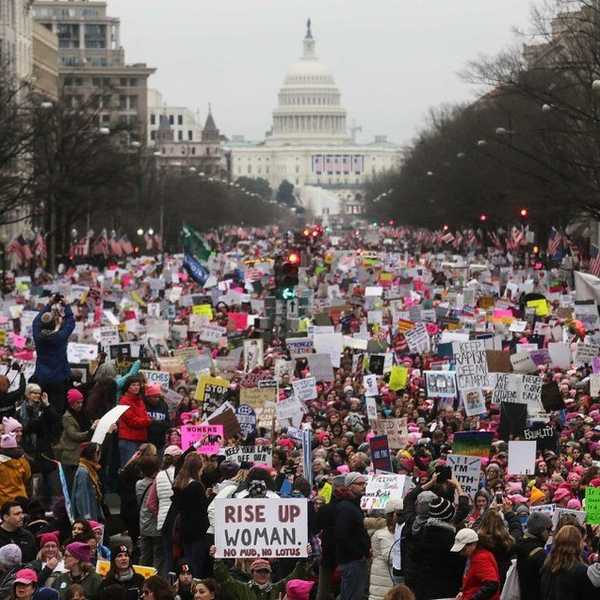

When I first heard of feminism at about thirteen, I thought that feminists believed women were superior to men. I thought this because in the media, I saw women bleeding free in riot, angry free-the-nipple advocates making headlines, and many negative connotations tied to the word “feminist”. I wrote off feminism for a while believing it was maybe just something I didn’t understand or couldn’t relate to. I had no anger toward men like these women seemed to, so maybe it wasn’t for me. It wasn’t until there was a hashtag trend of #WhyINeedFeminism that I saw so many other women talking about pay wage gaps and being rape victims speaking on issues that could very likely affect me and the women I love. I took the initiative to look it up myself. I found feminism is not fight to be superior to men nor is it an excuse for women to be overcompensated for the past of being patronized. Feminism is the stand for women’s social, economic, and political equality to men. Then I decided to look into it more.
I began to look up all of these issues and the numbers blew me away. No wonder all of the women on TV seemed so angry when I had seen them, this reality has exists and hasn’t gotten recognition. Feminists are now screaming for a voice. It became clear that as women, we fall behind socially, economically, and politically, as we are over sexualized, underpaid, and we don’t have as much political power as our male counterparts. 9% of rape victims are men, the other 91% being women. According to US Department of State Trafficking in Persons Report 2005, approximately 80% of the 600,000-800,000 people trafficked across international borders each year are women and girls. The U.S. Bureau of Labor Statistics 2010 informs that white women are paid 78%, black women paid 64% and hispanic women are paid 54% of what white men are paid, given they all have the same job. Only 20% of women serve in United States Senate, and 19.93% serve in United States House of Representatives. Although these are only a few statistics, they show to prove a lot about the inequality among the sexes. These numbers, although seemingly severe, have actually been slowly improving with time, showing to prove the inequality was much worse than it is now.
In learning all of this and becoming conscious of these numbers, I learned more and more how important feminism was to me and should be to not just women, but everybody. It’s a necessary movement that needs attention. Ultimately, the strongest foundation of feminism is the support from woman to woman. It’s important we uplift one another and encourage each other to go for a job even though we know an older man is going for the same one. It’s important we all believe in everything we are capable of and to always desire gradual and strong progress for all women until the numbers change and equality is achieved. We need feminism in 2016 and it’s important that we come together to support one another regardless of our differences even if the difference is that she doesn’t believe in feminism at all.















