

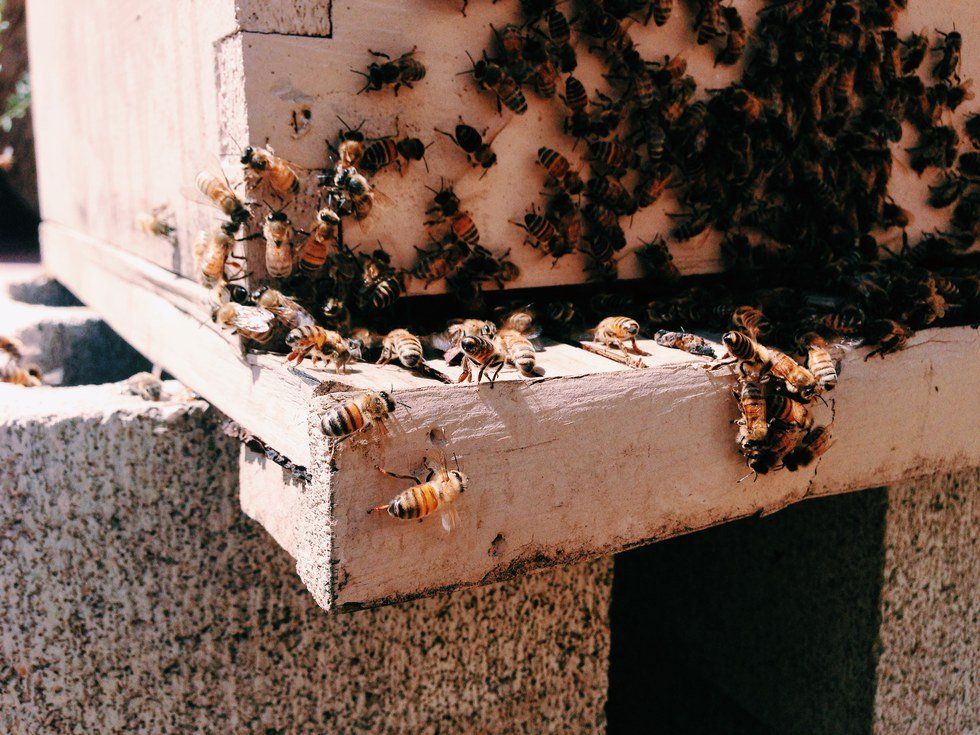
If you were to ask any member of my family, they would all tell you that I am terrified of bees. When I was young, to my own disgust, I was stung one too many times while playing on the swing set. So I never thought very fondly of them. But after witnessing what seemed to be a miracle, my entire outlook on our little black and yellow friends has changed.
I have been working in my university's organic garden since the start of the summer. The garden is filled with a variety of plants and veggies, but is also home to a small, rescued hive of European honey bees. The bees had been in the garden since a fellow student and friend, Katie Simpson, did the wonders of establishing the hive the previous summer.
With all odds against them in one of the coldest places in the country, our little colony survived the brutally cold Gunnison, Colorado winter, and have been thriving since the first signs of spring hit the valley. By the time we all began our services in the summer, the bees had already been working away. Building honey combs, pollinating the garden and increasing their numbers, the hive had improved 10-fold.
About two weeks ago, however, I started to notice the bees began outgrowing their hive. At night, when they would all tuck in closely together, some of the bees were spilling out the sides of the hive. Noticing their overpopulation, we (the fellow students and I who intern in the garden) began thinking about how we could potentially help them. But on Friday morning, in the ironic midst of discussing the overflowing box, a low humming sound began to rise from the hive.
The bees had started to swarm.
Not to freak anyone out, this was not exactly what you may think and was definitely nothing like how I had always pictured a swarming hive of bees. When bees "swarm," about half of the hive abandons their home in search for a new one. The bees were so focused on finding somewhere new, they relatively disregarded us as we watched them in awe.
The garden was buzzing. Easily a thousand bees were dashing through the air, and somewhere among them flew their queen. We followed the swarm, hoping that they would land somewhere close by. After about 10 minutes of sending silent signals between themselves as to where they should go, the bees decided that a nearby bush would suffice as their humble abode.
After bees swarm, they are extremely docile and non-aggressive, so we were able to get a closer look, as they had entirely consumed the area of one of the branches. Because the bees had contentedly decided to stay so close, we planned an attempt to move them into a bee box and place them in a new area of the garden. With a few phone calls and some much needed help from a neighborhood beekeeper, we acquired the tools we needed to move the colony to a more long-term home instead of a dying bush next to the college dorms.
About two hours after the original swarm, we went back to begin collecting the bees. We had soaked the new hive in sugar water to ensure the bees would be attracted to it. The box we used is called a Langstroth Bee Box, a design most commonly used in commercial beekeeping. These boxes are devised to easily extract honey, tend to the combs and prevent killing a large amount of bees in the process.
Once the hive was soaked, Blaine, our beekeeper extraordinaire, began trimming the extra branches around the main group of bees to make them easier to access. He then clipped off the main branch and, while spraying the bees with the sugar water, gave the branch a shake and plopped the bees onto the hive.
Typically, when a bee keeper moves a colony, they will move the queen bee individually, and the others will simply follow where she goes. But because this colony was so big and they had swarmed out of their hive, there was no telling where the queen had settled in the enormous cluster.
This being the case, it was a bit of a struggle making sure she herself made it into the hive. Blaine continued to gently scoop handfuls of bees onto the box until we could be sure that the queen bee was inside. We were able to tell that the little lady made it when the worker bees started guarding the entrance of the hive and slowly started moving down between the frames of the box.
Finally, we were able to move the hive back into the garden. After the box was placed, we watched. We were looking to see how they would behave in their new location. If they would leave the hive, if perhaps we didn't manage to get the queen or if the queen decided to leave herself, swarming the hive once again. With a lot of love and hard work from our crew, we had made our best attempt at helping the bees settle into their new home.
Since the queen bee had laid eggs for a new queen bee to take over the previous hive, we hope to have two wonderfully buzzing beehives in our little garden. After witnessing our lovely colony's little adventure, I can say that I have a new appreciation for bees. I hope that after reading this, you have not only learned something new about our sweet honey bees, but also got a little taste of just how wonderful and unique they actually are.