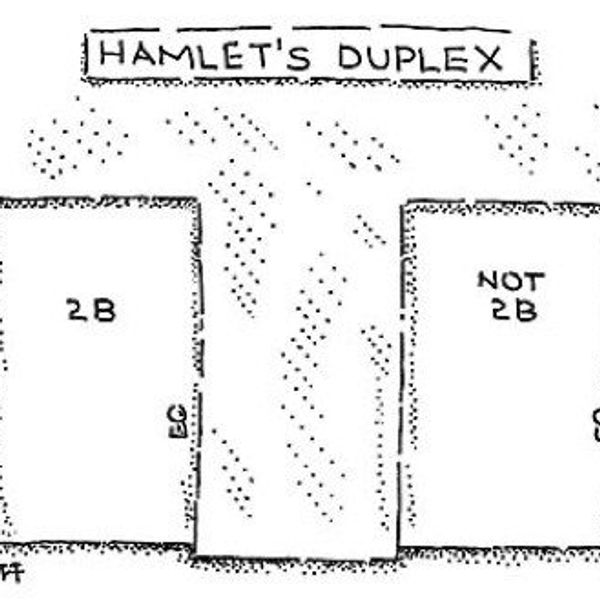
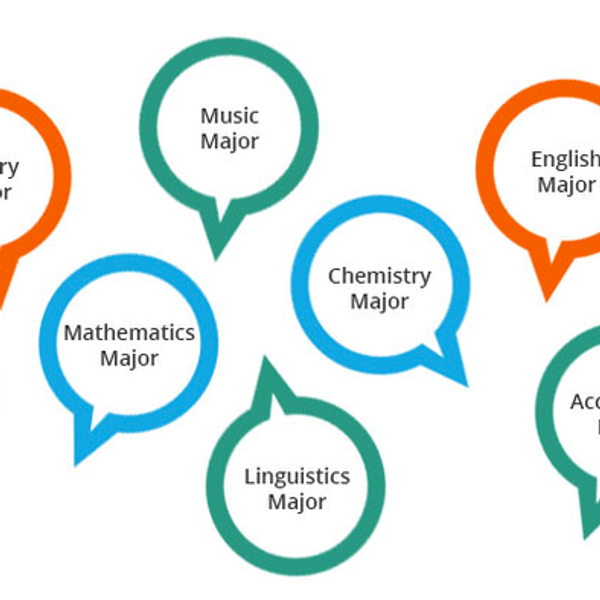
As college students, we are taught to select the right answer. However, the test that I, among other students, are continually bombarded with, yet cannot seem to pass, is:
“So what are you studying in college?"
My answer, sometimes with slight variation to add any illusion of legitimacy I can invent, is always “communications."
During my first experience meeting my ex-girlfriend's family, this looming question would deteriorate my entire ethos.
Meet the Parents
Surrounded by a family comprising self-made, pragmatic engineers, my communications degree was anything but noteworthy .
One family member shared her son's experience. He, like me, had pursued communications as a career, but failed miserably to find a job. For this, I felt, the family resented the son wasting his educational opportunity.
Their grandparents, who aspired to create a foundation for future generations, fueled their drive with pragmatism and education. Subsequently, a majority of them pursued engineering as their career.
Whether mechanical, mathematical or biochemical, a STEM degree has, and still does, ensured job security, sustainability and a good income. All qualities that my major might not ensure.
After enduring a medley of insincere optimism, and general disapproval of my misplaced ambition and opportunity, my girlfriend looked as ashamed as I felt.
My girlfriend turned to me, and inquired skeptically, “What are you gonna do with a Comm degree, anyway?"
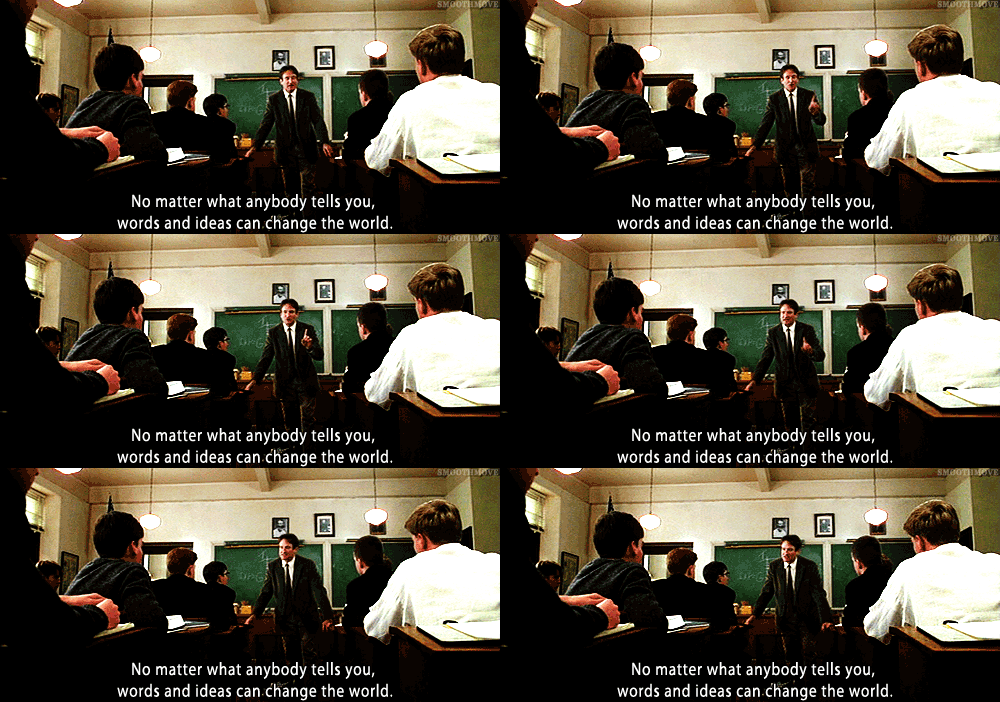
Her passive disgust, along with that of her family, crushed my self-efficacy and young optimism. While discouraged, I never forgot the moment that sparked my creative and artistic aspiration. As said by Robin Williams in The Dead Poets Society:
“We don't read and write poetry because it's cute. We read and write poetry because we are members of the human race. And the human race is filled with passion. And medicine, law, business, engineering, these are noble pursuits and necessary to sustain life. But poetry, beauty, romance, love, these are what we stay alive for... that you are here; that life exists, and identity; that the powerful play goes on and you may contribute a verse; that the powerful play goes on and you may contribute a verse. What will your verse be?"
I am not afraid of death, but I am afraid of work.
Whether it meant speaking publicly, writing or even film making, to me, I knew I wanted to have a voice. A voice that would be heard by an audience who can hate, love or agree with it; but most of all I wanted to inspire, connect, move people.
Whether we consider ourselves a collection of atoms formed by sheer chance or as special beings put on earth for a purpose, we all conceptualize the world around us to make sense of experiences we deem meaningful.
The technological and scientific advances that have undoubtedly improved our lives are worthless without reason for their use. I remember my old Toyota Camry not by its engine size, stock or build, but by the memories with friends while driving.
I do not condemn the engineers, doctors or lawyers out there who love their career, I condemn those compromising their own fulfillment and self-actualization, motivated by the fear of failure to pick the conventional path.
Unlike Robin William's words, your car, your house and your loved ones will perish. Is the comfort of a six-figure salary worth a lifetime of the mundane, static work when death is inevitable?
YOLO: the Modern Distortion of Carpe Diem
While often used to affirm moronic behavior by ego-boosting jerks, the phrase "YOLO" is a hip reminder of this unavoidable truth. However, I find this mindset incomplete. Often millennials perceive it as a justification to diffuse responsibility and embrace hollow gratification.
In contrast, throughout Dead Poets Society, Robin Williams reiterates “Carpe diem," which means "seize the day."
Unlike misguided millennials, the historically recurring saying should encourage us to take an active role in conquering, immersing and creating the world we want to live in. Life gives us opportunity, the most valuable and innate possession.
What is this kid talking about?
Perhaps I am just another naïve, privileged, self-proclaimed philosopher who really has no authority to impose life advice. But I find it unceasingly beautiful that I exist, express and explore what moves me — ideas powerful enough to create a movements and change the world.
I need movies, music, literature and any form of art itself, not to survive, but to thrive. Countless films, television series and pieces of literature have entertained me and challenged my own perception of the world.
But until you reject the fear of criticism, ego-dependence and conventional methods we often find comfort in, you may never challenge yourself enough to discover what you live for.
Whatever I end up dedicating my life's work to, I hope it feels as fulfilling as writing this article, which may not reach more than 50 people.
I think therefore I am, I write therefore I am heard. And that itself is fulfilling enough.
Kelsey Boyd contributed to this article.