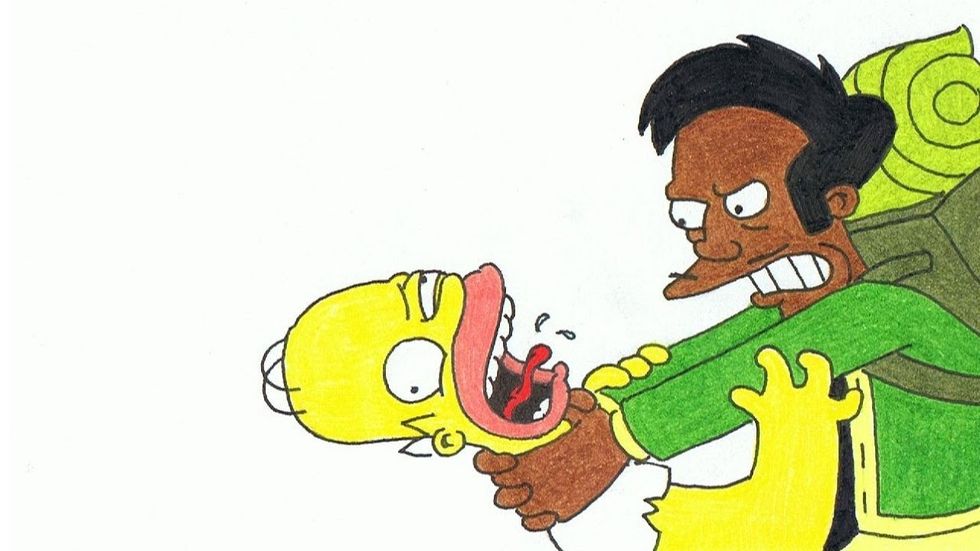
On Sunday, April 8th, The Simpsons issued their response to the furor surrounding the character of Apu, in the form of a scene between Marge and Lisa.
In summary, they seemed to say that Apu and his accent, stereotypical as they are, probably weren't going anywhere from the show and that the furor was simply the fault of today's audiences being too 'politically correct'.
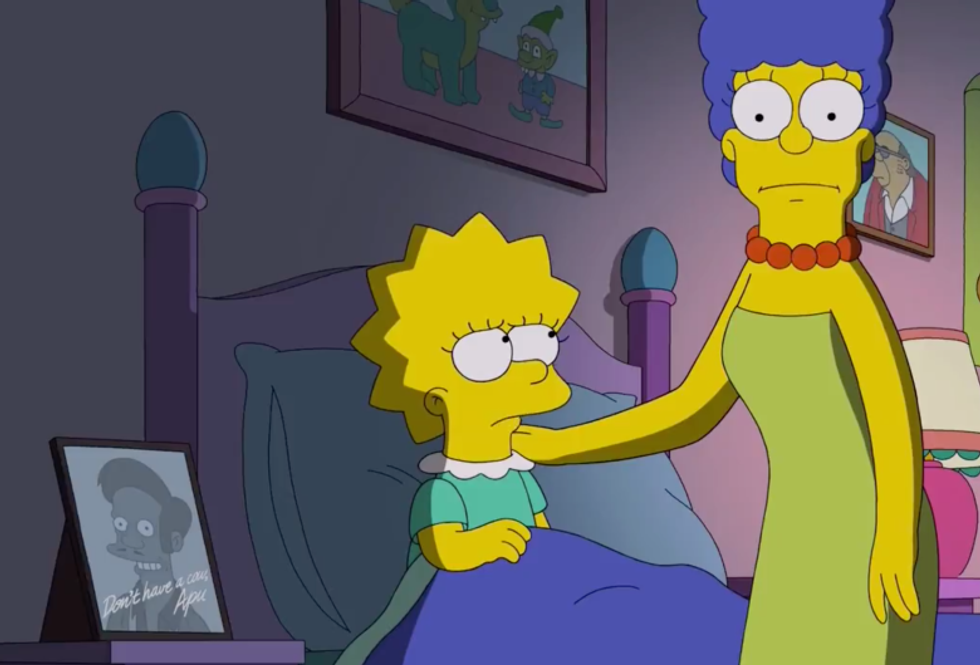
Photo: Fox/Matt Groening
In 2017, comedian Hari Kondabolu made the documentary, The Problem with Apu, demonstrating how the only Indian on the show was a gimmick and stereotype, whose portrayal affected the lives of many Indian Americans growing up.

Photo: Slashfilm.com
This raised many questions - one of which was surrounding the problem with accents themselves.
When is it that an accent becomes problematic and when does it not?
Many today seem to confuse the tool with the carpenter's intention.
What do I mean by that?
Well, an accent is a tool. On the most fundamental level, it is a technique of speech, influenced by different cultural and linguistic backgrounds. When an accent is used in a show, it serves a purpose which is determined by the creator's intention.
Many conflate the accent with the intention of mockery and stereotype, which creates a larger problem of entirely rejecting accents as a whole.
Apu, in the Simpsons, is a problem, because his accent is stereotypical and exaggerated, but also more so because the only purpose of that accent is to make Apu funny. The accent is the butt of the joke. With "Thank you, come again" having been made into a meme, even though the phrase has only been said by Apu 8 times in 30 years, it is clear that Apu's purpose in the show is nothing more than fuelling cheap laughs at the expense of the Indian immigrant identity.
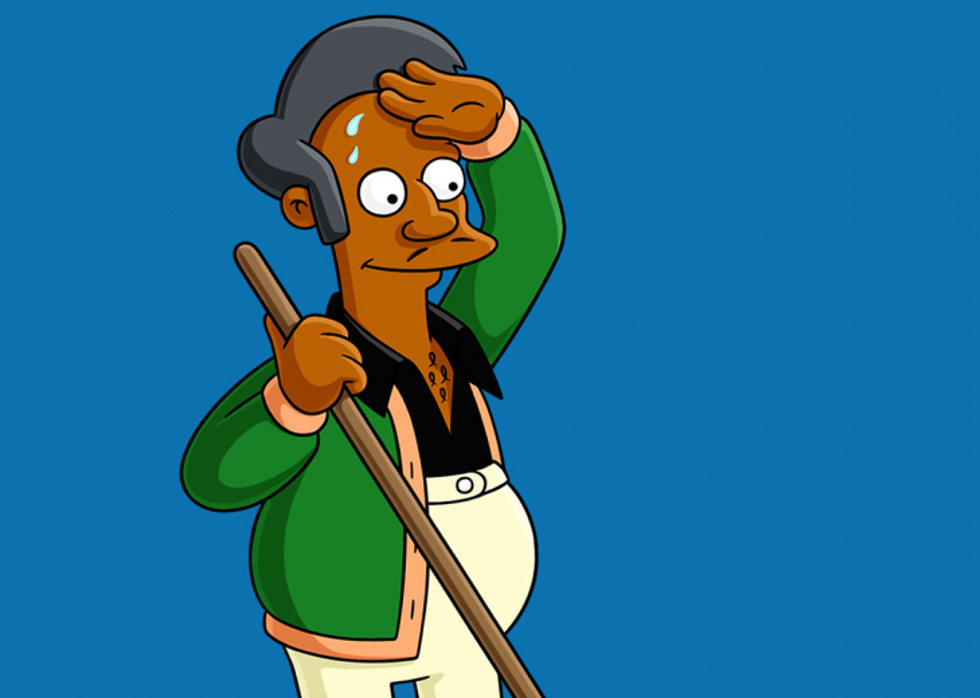
Photo: Newstatesman.com
Apu's accent is not authentic - it is voiced by a White actor (Hank Azaria) who loosely based it on Peter Sellers' character Hrundi V Bakshi from The Party (1968). And that is another problem.
Accents have the power to give authenticity to a character when done precisely and with respect. They can show a character's struggles to communicate, fit in and be vulnerable - something many immigrants from around the world have had to deal with in America.
Dismissing the use of accents as inappropriate as a whole is therefore problematic. It denies immigrants their right to authentic representation on screen.
Instead of getting rid of accents as a whole, we must question why and how accents are used. We must be observant and critical. We must be able to differentiate between the authenticity of the accent and the intention behind its use. If an accent is authentic and is used to make a character believable, his struggles legitimate and his humanity respected, then there is nothing wrong with the use of that accent.
It is only when the accent does nothing except to be funny because it sounds so strange to the non-immigrant ear, that it becomes a tool for mockery.
So how then can accents be used in comedy without being reduced to a tool for racial stereotypes?
The answer lies in how the comedy as a whole derives and drives its humor.
Comedy and humor are rooted in truth. The truer the jokes are, the funnier we find them. This is why using accents to be funny are hugely problematic. They are only found funny by the majority at the expense of the ethnic minorities. Accents, when exaggerated, distort the truth and only appeal to the perceptions the majority have of how these minorities speak. They appeal to the majority's 'true' experiences with minorities, which depend on the majority's memories of how minorities speak, instead of actually how many minorities speak and may really struggle to communicate in English or, more specifically, American-accented English.
That is why, even in comedies, if accents are used, they must be authentic and serve to make characters real - how we really find them in our society today. Once that is established, the humor can be derived from these characters' authentic struggles rather than their ethnicities or identities.
Take for instance Fresh Off The Boat. Constance Wu, who plays 'Jessica Huang, spoke to Time about how the show makes sure that the accents are never the butt of the joke.

Photo: Hollwoodreporter.com
Here's an important excerpt from her interview that I found must be noted:
CONSTANCE WU:
Some people are like, “Oh, stereotypical accent!” An accent is an accent. If there were jokes written about the accent, then that would certainly be harmful. But there aren’t jokes written about it. It’s not even talked about. It’s just a fact of life: immigrants have accents. Making the choice to have that is a way of not watering down the character and making it politically correct. It’s choosing authenticity over safety, and I think that’s bold.
Accents simply provide authenticity to the characters and make their stories real. That way, we see the characters as
It is time that we push for authentic stories that we find funny instead of simply funny stories. If we as audiences demand a higher level of comedy, the producers and writers will respond. Often writers and producers choose to include funny accents in funny shows because they see that as a sure-fire success at ratings. They are sure that viewers would find them funny.
You see, it is easy to write a one-dimensional character with a stereotypical accent, but it is difficult to write an authentic, fleshed out person. Why? Because the latter requires research and effort at understanding who that person really is. The white producers and writers will have a lot more work to do if we demand that of them and it is clear that they will not put in that effort unless we as audiences change our preferences. If we show them that we've grown up and are no longer going to tolerate cheap, racist humor then they will have no option but to change.
But at the same time, if we want quality representation of minorities on screen, then we cannot do away with accents. We must instead demand that they be used for the right purposes.
Let us then fight for legitimate and authentic representation of immigrants on screen. Let's give accents their respect back and see them for what they are: reflections of the diversity of experience among us. Let us value that and let us yearn to and see how they affect genuine human communication and connection instead of simply laughing at how they might sound.
There is nothing wrong with accents. But everything wrong with how they're mostly used today.