
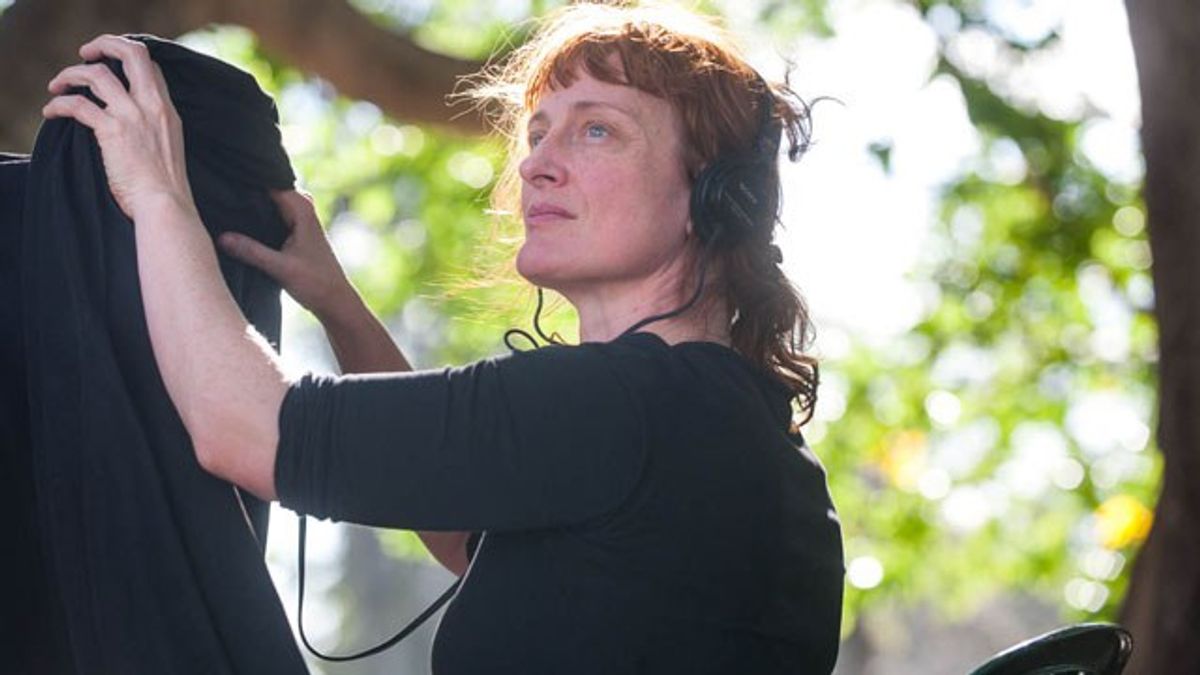
When one thinks of a “film director,” they might think of Alfred Hitchcock, Steven Spielberg, or Quentin Tarantino. All of these greats have made their mark on the world within a large, highly competitive industry. But what people might not be thinking of are women directors.
I recently posted a list of my favorite modern directors, and I noticed something alarming: I did not list any women. One reason for this might be because I can think of very few women directors, and, for the women I can think of, they haven't made very many films. I wish this was not a reality, but I simply not seen many films directed by women, which is, ultimately, a shame for me, as I love watching movies.
I went looking for the "best directors," trying to see if any women would show up, in order to discover new films that I should see. But, this proved to be a harder task than I thought. In fact, on most “top fifty directors” lists that I looked at, there is not one woman to be found.
Although directors like Hitchcock, Spielberg, and Tarantino should be on the “greats” lists, there should be some women as well. However, there are not many women are even able to get their films out to a wider audience. In 2012, only 9 percent of the top 250 films were directed by women, which may be an indicator that the talents of women directors are not seen by a public audience. This may be due to the fact that most women are directing independent films, which are not always played in mainstream theaters.
This frightening realization is something that should not be ignored. There are many women who have bright and innovative ideas that are not being shown on a large scale.
Take the Australian horror film, The Babadook, for example. While it might not have been as well received by audiences, it is highly acclaimed by critics with a 98% on Rotten Tomatoes. The film took the horror genre to a new level with its new perspective on grief over a loved one, making it one of the most thought-provoking horror films of the modern era. It is a film that shows that the horror genre does not only have to be full of guts and gore; it shows that horror can go deeper into a person’s psyche, and can explore characters in a brilliant way. It also features a strong female lead by actress, Essie Davis, who brilliantly played a single mother struck by the loss of her husband. But, sadly, The Babadook is not as well known as it should have been. Because it is an Australian independent film, and it was only released to 80 theaters, it made less than $1 million domestically. By not being available to everybody, and not being as well publicized as other horror films, The Babadook was unable to achieve the amount of success that it should have received.
And, to be honest, the only reason that I saw The Babadook is because it is on Netflix. Before hearing from the critics, I had never heard of or taken notice of The Babadook, as I had never seen it publicized in theaters or through advertisements.
The Babadook is one of those horror films that should have made director, Jennifer Kent, a household director name. Kent’s interesting and haunting ideas were massively overlooked, but these ideas show that women do have amazing ideas that need to be acknowledged.
Luckily, there is Kathryn Bigelow, the first and, so far, only female director to win the Academy Award for Best Director. She won for The Hurt Locker, a dark and gritty film about dangers of war, and how war can affect the soldiers in the field. However, only three others have been nominated for the award: Lina Wertüller, Jane Campion, and Sofia Coppola. But there are plenty of women that should be acknowledged by the Academy and by audiences worldwide. Some of these women directors include: Lisa Cholodenko, director of The Kids Are All Right, Mary Harron, director of American Psycho, and Ava Duvernay, director of Selma. All of these women directors created films that are thought provoking and each of these films have received acclaim, but none of them were nominated.
While there are plenty of male directors that have extraordinary and incredible talent, there are also plenty of female directors that can change and impact the industry. They should be acknowledged worldwide, and they should be taken more seriously because women do have creativity and creative ideas that can still be loved like films directed by men. I’m not saying that we should ignore directors like Hitchcock or Tarantino or Spielberg; I’m saying that women should have a voice as well. They can make a difference in the world; we just have to give them the chance.
For a full list of films directed by women click here.For more sources on the low representation of women in film click here and here.

















