
You probably have seen a Severe Weather Watch or Warning. Most of the time you don't think anything of it and continue on your day. But, I believe all watches and warnings issued by the National Weather Service should be taken seriously until proven otherwise. When a weather watch is issued, you should think about what you would do if a warning is called. One suggestion is making sure that you have what is known as a go bag. The reason for this is you could have to be self-sustaining for 72 hours until emergency response personnel can reach you. Many times watches could yield no warnings but other times they could be the difference between life and death.
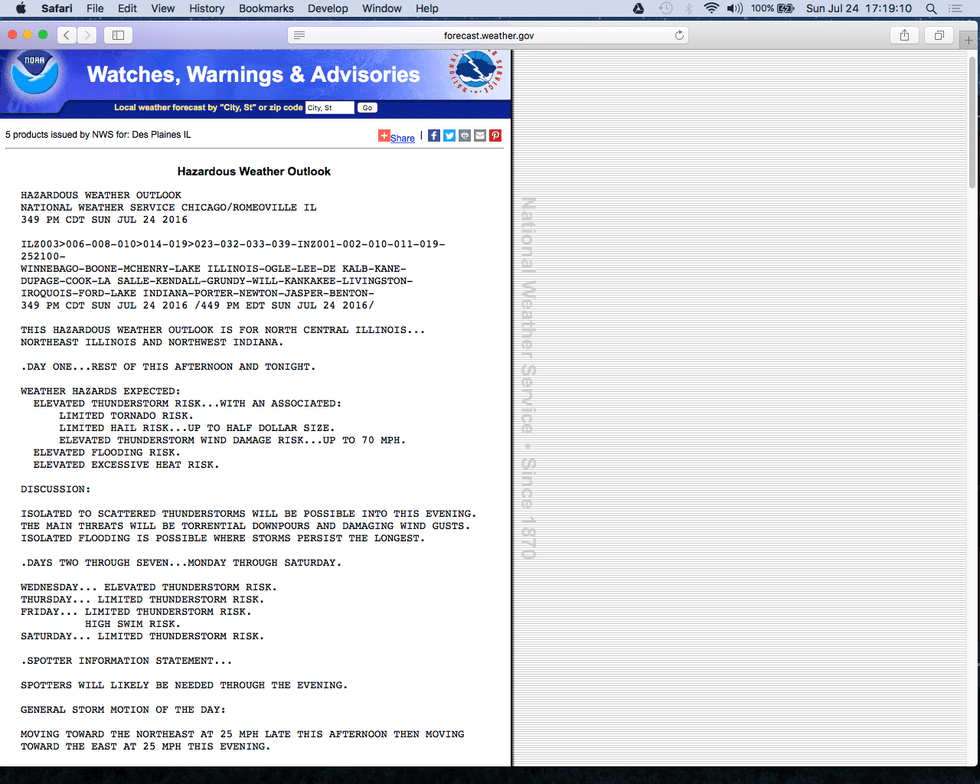
When a warning is issued, they will most likely appear on mobile smartphone weather apps such as; Weather Bug, Weather Channel, and AccuWeather. A few other ways to get warnings is Tornado, an app made by the Red Cross, or from your cell phones from a system known as the Integrated Public Alert and Warning System (IPAWS), or in the case of WIU a text message and a phone call. When a warning is issued, take immediate action to protect yourself, your family, your friends, and your property. You should read the watch or warning in its entirety as it will explain what risks are possible (watch) or are indicated either by radar, trained weather spotters, law enforcement, Emergency Management, and much more (warning). Every day your local National Weather Service office will issue a Hazardous Weather Outlook forecast it will explain the weather of the day and what risks are expected for that forecast area. They can be found at NWS.gov and typing in your zip code. But the best way to stay ahead when a warning is issued is to get a weather radio which can be found at major retailers or online.
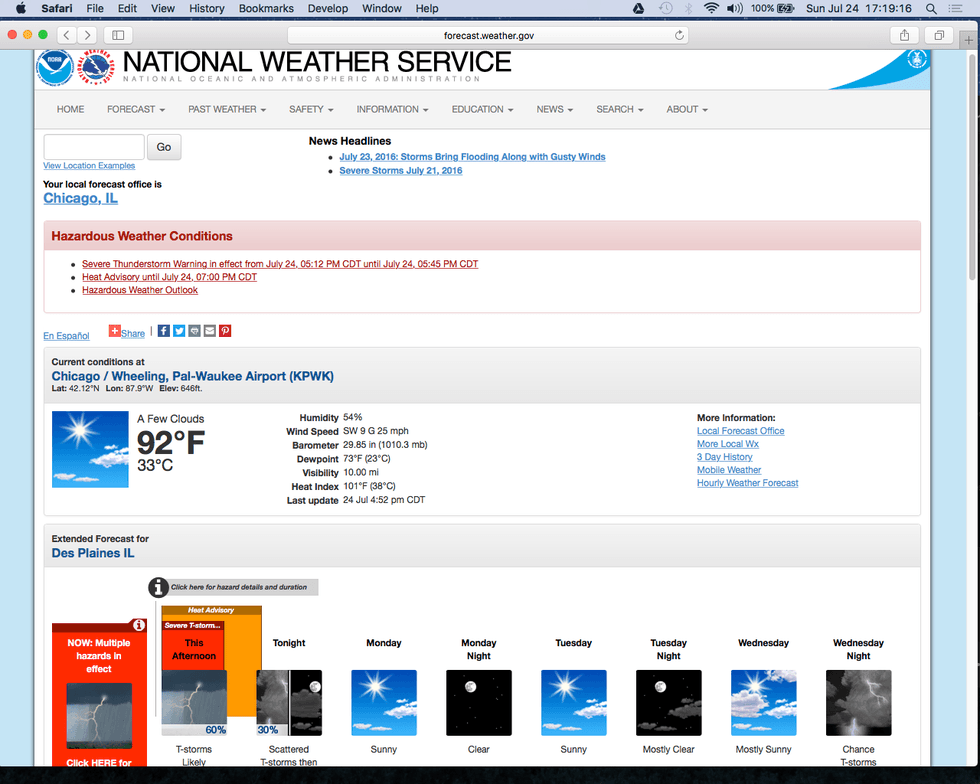
Below is what the forecast page and what a Hazardous Weather Outlook looks like.