
First, let me say: I’m not some gung-ho recruiter trying to make you give up your pen, brush, camera (etc.), to join the All-American gun orgy out of some perverse patriotism. I’m a young, bright-eyed college student, full of dreams just like yourself.
As a matter of fact, I’m trying to show you something that will give your work the added flavor that your peers just won’t have. That is, IF you follow this advice correctly, and IF you possess the discipline to follow through. If you think you’re up for the task, then read continue reading. Maybe, joining the military is the next best step to take when pursuing your artistic aspirations.
Training and Experience:
Now, I’m not saying you should join the military, see what it’s like to kill a man, then use the blood on your hands as inspiration for your creative endeavors. You don’t even need to fire a weapon at another human being throughout the duration of your service. The military has a multitude of surprising jobs that are tempting for any prospective candidate. You can be a psychologist, radio repairman, even a damn entomologist. Any job available in the civilian world, the military employs it and will train you.
We don’t want mish-mosh promises that any recruiting Sergeant can conjure.
So, how does this help our art? What do we gain from working with the Army?
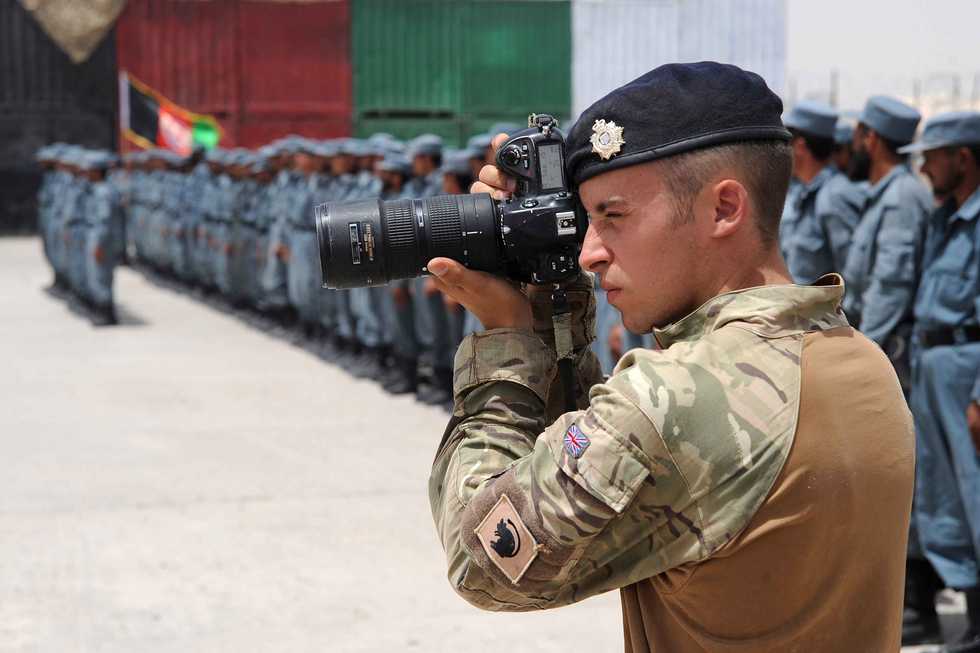
Well, for starters an artist may get an MOS (Military Occupational Specialty) that links to their vocational pursuits. For instance, a hopeful cinematographer can be a combat videographer, following units into the fray while capturing the intense, real moments that others with a similar drive wouldn’t have the opportunity to participate in until much later in their career.
A graphic designer might be put to use creating diagrams or presentations for mission briefings. There’s an entire department of journalism within the military’s Signal Corps. If you choose one of these specialties, you will be shipped out to Advanced Individual Training. Depending on your desired profession, this will vary from a couple weeks to a year of intensive schooling.
This is excellent for Officers, who’ve already received education in their field, but would like to learn more about applying their craft, and the people who are already enlisted but prefer to jump into the action ASAP. The courses will likely be geared more toward the Army’s needs, but the knowledge you gain from this instruction and the experience from the projects will be indispensable when you eventually decide to separate and pursue your passion in full force.
The army will instill in you a nigh, unbreakable sense of discipline. In Steven Pressfield’s The War of Art, the author suggests that the reason so many artists fail or give up is that they lack the tenacity to wake up every day and commit to their projects.
There is no quitting in the army. You are obligated to follow through with your job or else you face harsh repercussions. After your time is up, you’ll be leaving the service with knowledge and understanding of how to commit to something. This thought formation will translate from your military specialty to your civilian dreams, and you’ll be that much closer than the competition to achieving your goals.
Time and Money:
Ah, The infamous “How are you going to make money?” question, that so many elderly relatives and nervous voices in the back of your head beat you down with.
Look no further, Uncle Sam’s got your back. Sure, you won’t be living in luxury. Depending on your status, be it an officer or enlisted soldier, you will be paid varying amounts from 20,000-60,000. I can already feel some of you recoiling after reading those numbers.
Don’t worry too much about your salary’s sum... all that money is yours. Where a typical civilian would have to pay for: water, food, electricity, and other utilities, for those living on base, all necessities are covered by the army.
Even if you choose an apartment near your station, the army will supply you with an extra allowance per month to cover living expenses. That removes that giant financial burden from your back, like a scalpel to a long overdue cyst. This system is in place to allow more of your free time, energy, and thoughts to be shifted toward what’s really important to you.
This brings me to my next point: the military is a job just like any other, and with it comes scheduled work time and leisure time. When they are not deployed, the soldiers will be scheduled from nine to five, Monday through Friday. This leaves the afternoon and weekend open to the individual’s fancy. This time is when an artist can practice their craft. It’s no different than having a regular job, with added benefits.
Disclaimer:
You should remember a few things if all of this seems appetizing. The military is not a joke. In order to enjoy this personal security and development, you must deliver on your end. Regardless of your job, other people, even their very lives, will depend on you.
When you're on duty or deployed your life belongs to those in your unit, and they expect you to stand shoulder to shoulder with them, braving whatever deadly force they must face. It will be tough. Service will demand your peak physical, mental, and emotional performance. It is not for everyone.
Make sure that your obligations are fulfilled first, and then after, well I can’t wait to see what beauty you’ll bring to us.
There are scores of successful artists who spent time in the military. Writers are the most famous of this type, from Novelists like J.D. Salinger and Ernest Hemingway to journalists like Hunter S. Thompson. Beyond the numerous historical instances of reverence after the army, many current and recently discharged artists have offered work based on their experiences and those of their comrades. If you're interested in any of this contemporary art go here: http://www.history.army.mil/books/wot_artwork/wot_...

















