


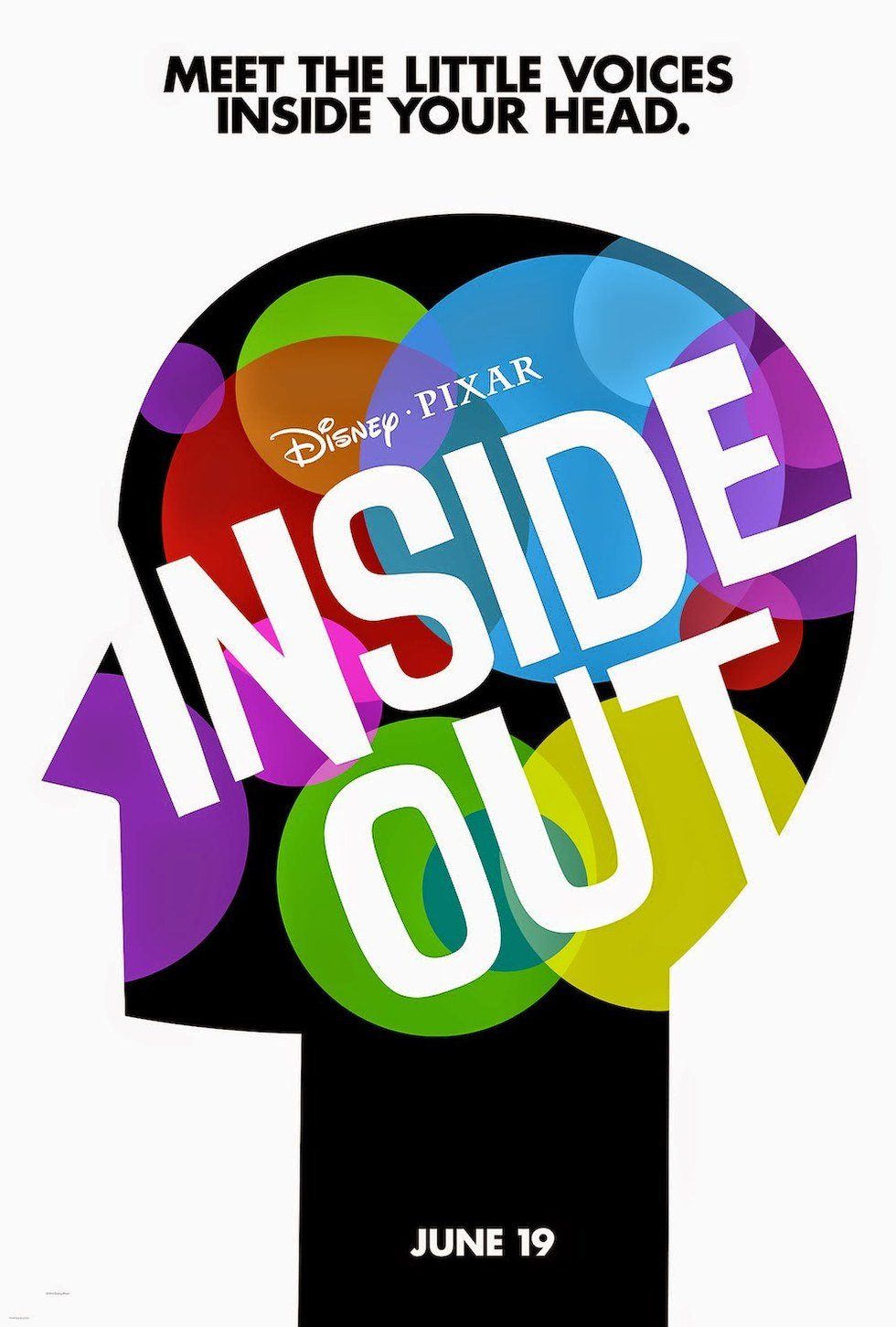
Pixar has gone meta - in the best way possible. "Inside Out," Pixar’s latest creation, centers around a young girl named Riley and the roles played by the five core emotions in the brain throughout the various ups and downs in her life. Joy (one of the five emotions whose name is self-explanatory) seems to run the show, always stepping in to take over when any of the other four emotions get too carried away. But when a disastrous turn of events takes emotions Joy and Sadness away from Riley’s control center, Riley has to operate with only Fear, Anger and Disgust until they can return.
Without Joy, Riley’s life is forever changed. The once happy, cheerful and optimistic girl she was becomes moody, resentful and bitter. And though we believe that the absence of Joy is causing her attitude swings, in the end, we realize that without the concurrent role of Sadness, Joy has no meaning. The entire film proves the cruciality of sadness; it is impossible to appreciate the good things in life if we have no low points to teach us just how precious those moments are.
The culture of our society today condemns the expression of sadness, labeling it as weakness. If a girl is overly emotional, she is too fragile; and if a guy is overly emotional, well, is he really a man? We scrutinize the expression of sadness to the point where it is unacceptable to feel anything but happiness in public all the time. And there is a fine distinction between feeling sadness and expressing it. It is acceptable to say that we are sad but not show that we are sad, and Pixar, through "Inside Out," reminds us that it is not only okay to express sadness, but more than that, it is healthy to do so.
The end of the film is emotionally bewildering in that it is one of the saddest happy endings I think I have ever experienced. Pixar, using whatever magic they so clearly possess, not only showed the lesson they wanted to teach on screen, but really made me feel and experience that essential combination of joy and sadness too. The lesson really hit home for me in that I, along with so many other people, tend to immediately replace sadness with optimism, taking the silver lining instead of taking time to think about the negativity. And while optimism is a great thing, it is still important to allow ourselves to truly feel sadness every once in a while when we really need to, if only so that it can remind us to appreciate happiness later on.
Sure, it may be animated and typically targeted toward a younger audience, but this film is set to make the biggest impact on adults who understand the larger conflict between Joy and Sadness. Somehow, Pixar made "Inside Out" more than a film—it is a truly moving experience.
















