You might have noticed a “trend” in Disney movies in recent years. They’ve made quite a few live-action remakes of their animated films, and apparently, they’re nowhere near finished – various sources have reported as many as nineteen upcoming live-action Disney remakes of previous animated Disney films, including Mulan, Dumbo, and Peter Pan. The list in the video I linked in the previous sentence also includes live-action spin-offs of previous films, including stories about Cruella de Vil, Tinker Bell, and Chernabog (the demon in Fantasia – yes, he has a name).
In my online communities, I’ve heard a resounding “Why can’t they make something new?” sentiment regarding these live-action remakes. And I should admit, for a while I agreed. Before Beauty and the Beast came out, I told one of my friends, “I don’t know why they’re redoing all the stories they’ve already done. I’m still going to see it, of course.”
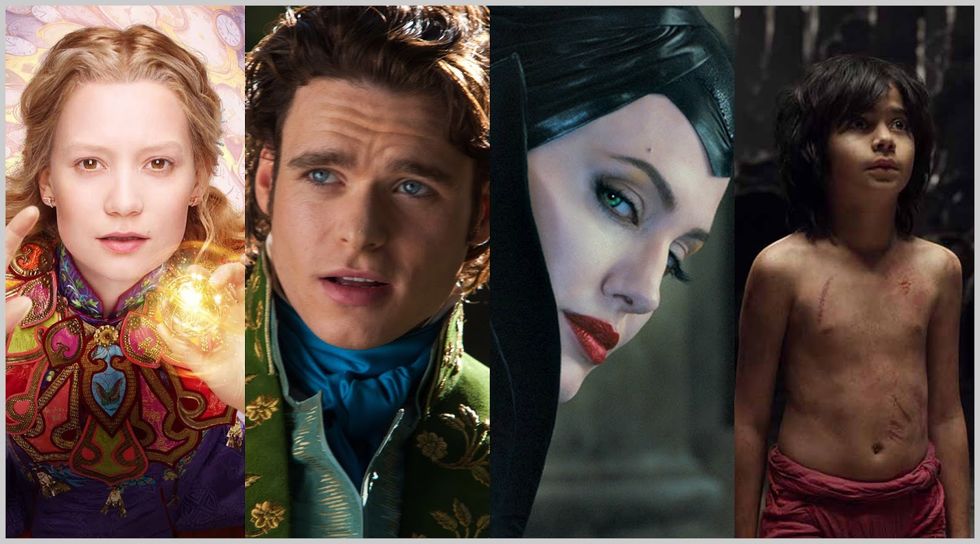
And, of course, I did go see it. I loved it, too. Just like I loved the recent live-action remakes of Cinderella and The Jungle Book and Alice in Wonderland. And if the box office results or critics’ statements are anything to go by, people on the whole loved it, too, despite their requests for Disney to do “something new.” How could that be?
Here’s something I realized recently: nearly all beloved Disney movies are remakes of something. “Cinderella” and “Beauty and the Beast” are fairy tales. Mulan and Pocahontas are the stars of historical legends. Bambi and One Hundred and One Dalmatians are novels. Taking stories that have already been told and telling them again in a slightly different way – that is, adapting stories – is what Disney does best!
And when Disney takes a story that has been told before, puts it in a new medium, and changes the story to fit contemporary social norms, we love them. We go see them. We bring our kids to them. There’s a prevailing idea in American society that we’re all about the new, but it’s evident that we love adaptations. The stories that are most loved today are the ones whose content has survived the longest – and they survived because they were loved.
The creative challenge in adaptation is finding the balance between changing details to fit new contexts and keeping what was loved about it. The characteristics and events that audiences find realistic, relatable, and acceptable changes from generation to generation, but there are parts of a beloved story that no writer dares leave out for fear of losing its essence. The new live-action versions Beauty and the Beast and Cinderella have the spectacular transformations that enchanted people who heard it orally and dazzled people who saw the animated film. However, the romances and family lives of both princess protagonists are handled completely differently from the previous versions. The result is a combination of the familiar and the new, and each film affected and entertained me as much as an ostensibly original film would.
I say “ostensibly original” because it’s nigh-impossible to write something completely original. So much has already been done – and if you write something that’s unlike anything that’s ever been seen before, how will anyone understand what you’re saying? The “need” to tell an original story can, therefore, be incredibly frustrating for a writer. The true art of storytelling is finding something new to say with things that have already been done. In its adaptations, Disney is a little more blatant about it than most. They don’t present their work as if they’re telling you something new, but inevitably they do say something new, mixed in with the old. That’s what adaptation is, and that’s what Disney does: they make beautiful films that are both familiar and new, and it’s a joy to continue to see them.