
Detroit is an urban wasteland. Can we get this very publicized information out of the way first? That statement has such a strong connotation to “diseased” that the conversation becomes pessimistic entirely way too quickly. A key factor in any community is the ability to create partnerships and continue the conversation. Detroit is a ripe example of how the arts are playing a vital role in community expression and healing.
In 2013, The city of Detroit was navigating the largest Chapter 9 bankruptcy of its kind: An estimated $17 billion. City assets were taken under advisements, including the Detroit Institute of Arts. The emergency manager at the time, Kevin Orr, sought to monetize the museum which housed work by Rembrandt, van Gogh, Caravaggio, van Eyck and Breughel. In this very real example, the community rallied to raise more than $800 million from foundations, private donors and the State of Michigan. Along with a 10-year millage tax levied in Wayne, Oakland, and Macomb counties, the DIA was able to survive and become a private non-profit corporation.
The rallying cry is a thing of beauty, and is not solitary in its occurrence. Foundations, funds and partnerships with such names as The Kresge Foundation, Knight Foundation, McGregor Fund or College for Creative Studies’ Community Arts Partnership maintain vital resources for area communities to celebrate their ideations of life. Ultimately, what Detroit has to show for this is a culturally vibrant landscape for the arts which also provides space for experimentation.
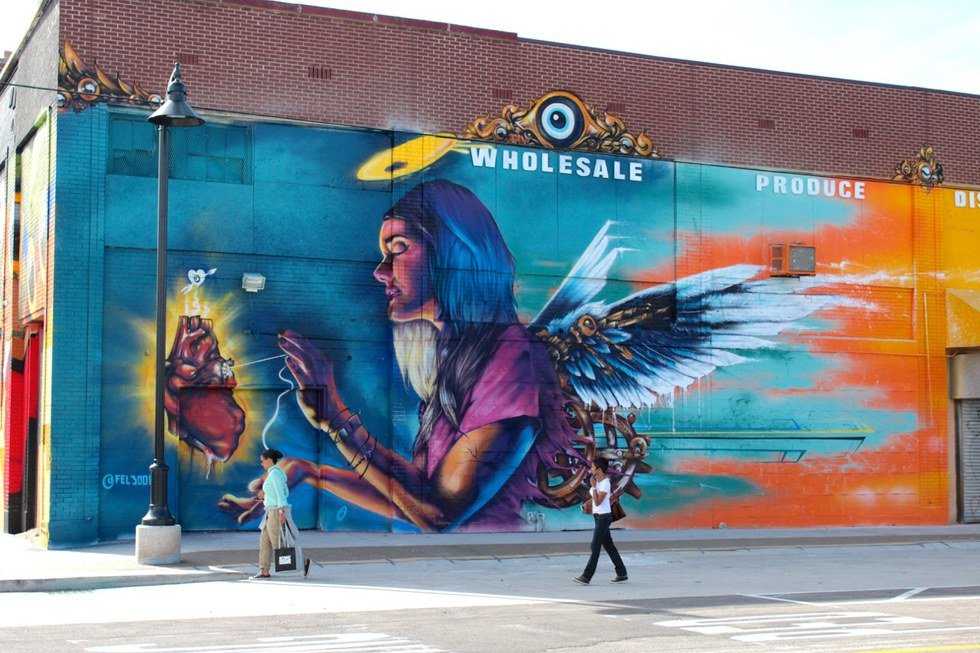
Beyond the formalities of institutionalized art, the colors of Detroit are readily seen on any building where a spray can has touched. Graffiti can be an eyesore. However, this form of expression also provides highly visible content that can just as easily inspire as offend. Detroit pieces are no different—places such as The Eastern Market neighborhood of Detroit even showcase many graffiti artist’s work as well (as being home to the Red Bull House of Art).
Traversing the city will only increase your exposure to the rich artistry present. Whether it be large-format murals stretching the height of buildings or painted basketballs courts near Campus Martius, you'll recognize that the city is not quite the "wasteland" anymore (as it had been popularized).
The sense of community is strong, yet the wounds being repaired have been decades in the making. Something I have quickly come to learn about Detroit is the sense of maintaining an individual's contributions, even when the going gets tough.
















