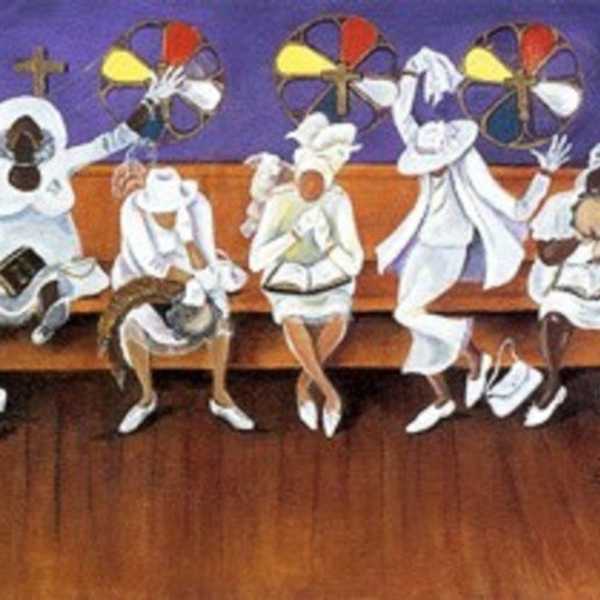

If you grew up going to church as a kid, you probably remember the Sunday morning routine. You were most likely forced to wake up early and put on some fancy clothes that you always dreaded wearing while rushing to make it to Sunday school on time. As you walked in, you could see the sanctuary glowing with the beaming candle lights and hearing the echo of the piano player practicing for the upcoming service. You sat in wooden pews and reached to search for the hymn in the hymnal book placed in front of you as the service began. The choir filled the front of the pews all dressed in equally colored robes. There was no such thing as electric guitars or basses that filled the walls of the sanctuary. Everything was traditional, consistent, and expected; You pretty much knew every aspect of that Sunday morning in consecutive order.
It seems the more modern our culture gets, churches have started responding to the newness of it. We often like to call these contemporary churches "hipster" churches. They often brew special trade coffees and make espresso drinks throughout the services. Fluorescent stage lights brighten the room rather than candle lights. Jeans and even Chacos can be considered acceptable church wear. Bulletins are handed out less with the increase in leather-bound journals. Hymnal books are almost nonexistent with the newer worship songs displayed on screens hanging from the ceiling. Heck, your church might even have their own bumper stickers and social media sites.
With the modernism of churches growing at an incredibly fast rate, there's been some conflicting thoughts on what new practices are acceptable. Many have debated that modernism in churches is objectionable -- almost offensive. They may claim that it takes away from worship and makes the church more "worldly."
Some people fully support the idea of churches growing in their appearance. They might think that it can attract different types of people and express new forms of worship.
Whichever side you lean toward, we have to think of a bigger picture when wrestling with this idea. The Lord accepts all forms of worship; Nature and the Earth itself are apparent images of God's glory and they do practically nothing. When we hum that song played in service, it's worship to God. When we work hard at our jobs or in our classes, it's adoration to the one who gave us the ability to work hard.
A dozen people in the Middle East gathering in a basement to praise God is worship. A few people huddled up in a dorm room to study the Bible is worship. A few hundred people in a traditional sanctuary for a church service is worship. Thousands of people in an auditorium singing praises to God is worship.
We all have our preferences in the way we choose to honor God. But, we can't shoot down others in the way they connect with God the most. He made us all so divinely unique; I personally think it's amazing to see how creative the Lord is when making each individual persons' interests and desires.
I believe that these categorizations of faith is all human-made beliefs. If you're reading straight from the Bible, it's called worship to Jesus Christ. Whether you do that with a KJV version, ESV, or a random Bible app you downloaded, it's all the same scripture we're reading.
We as a universal church can't allow trivial differences to separate us. The Lord shows us an example of how He wants His people to have fellowship with one another in Acts.
They devoted themselves to the apostles’ teaching and to fellowship, to the breaking of bread and to prayer. Everyone was filled with awe at the many wonders and signs performed by the apostles. All the believers were together and had everything in common. They sold property and possessions to give to anyone who had need. Every day they continued to meet together in the temple courts. They broke bread in their homes and ate together with glad and sincere hearts, praising God and enjoying the favor of all the people. And the Lord added to their number daily those who were being saved. (Acts 2:42-47)
In this passage, there's no significant style of worship pointed out. Each person in union focused on serving God and each other. This is the way we were meant to be as one church and one body of believers. Yes, we should always be on guard for false prophets and doctrine. As long as we are following the Lord and His Word, we shouldn't let other problems divide us.
So when you find yourself judging that person for coming to church with jeans on or sigh when hymns are sung instead of contemporary songs, remember what our true purpose is as a church and who may be experiencing God better by changing up the style a little bit. The one way we can nip out our differences is to agree that we are all praising one infinitely great God who is greater than any disagreement we could ever have.