
179 days. 26 weeks. Just over four months. That is how much time is left until August 5th, the opening day of the Rio 2016 Summer Olympics. I clearly remember the aura of excitement the country felt seven years ago when we were awarded the bid; I remember watching a video of thousands of patriotic and optimistic Brazilians grouped on Copacabana beach standing in front of a large screen watching the 121st International Olympic Committee. According to my grandparents, who live in Rio, an enormous sound was heard as the committee’s president announced Brazil would host the Summer Olympics, the first South American country to ever do so. One could feel the national exhilaration.
In 2009, our country was in a very different position than it is now. Our economy was growing and it was forecasted to shoot off; the middle class and standard of life were increasing; we ranked first amongst the Big Four. The Economist wrote an article stating our biggest challenge would be hubris. Oh, what a different time.
Fast forward to seven years later and you meet another nation: we are going through our worst recession since the early 20th century; it is the first time since the Great Depression that we have had two years in a row with a decreasing GDP; there is an ongoing process of impeachment against our president, whose approval rate is of 12 percent; prices for our key commodities have all gone terribly south. I could go on. It is very painful to write these facts about a country, my country, whose light shone so bright only a few years ago.
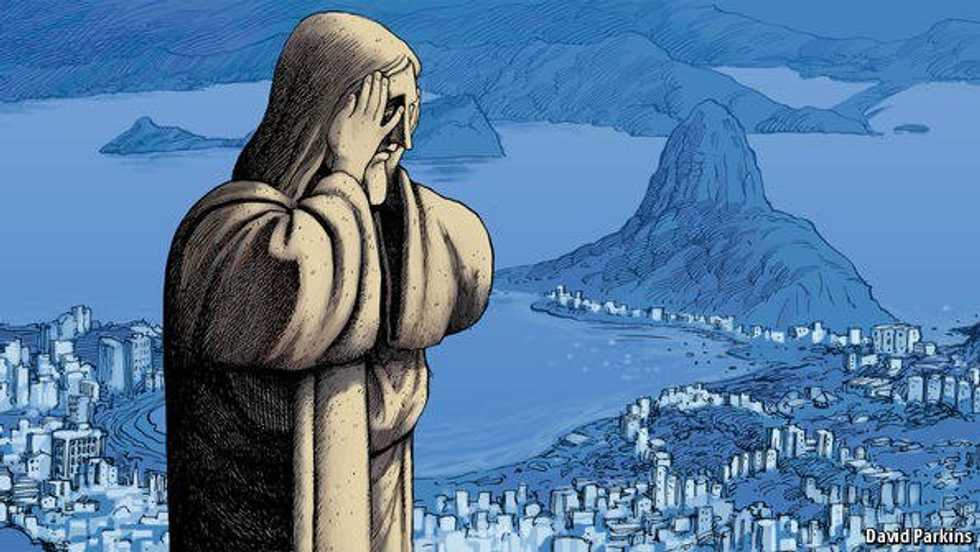
To host the Olympics is to hold a badge of honor and recognition, and it is supposed to be a madly thrilling event. Then why does Rio 2016 feel like an incredible weight on our shoulders? Why does it feel as a burden we have to get through?
Since August of last year, the cost of the Olympics has risen by $100 million. It is estimated that the full price tag of the event is of 39.1 billion Reais (about $9.9 billion, since the national currency has devaluated to a record low). Meanwhile, public hospitals are failing to provide basic and necessary services due to lack of funding; the Zika epidemic has become a public health emergency; the price of oil, one of Rio’s principal commodities, has dropped by 60 percent; the inflation rate is of a staggering 11 percent.
The controversy stands as the majority of the population believes the amount of money being funneled into the Olympics could be far better used to diminish a series of problems. How can a luxury such as the games, and all that they encompass, be afforded when the nation’s debt has been rated as “junk”? Bodies of water have yet to be cleaned, subway lines have yet to be completed, all in order to welcome the world to our lands later this year.
Is it even worth it? There is no badge of honor to be worn right now, nor are we looking to gain international respect. We got that a few years ago; now we have to show the world that we can bounce back from the catastrophic political and economic climate we are in and redeem ourselves. That, however, is not being achieved by hosting this year’s Olympics.