

March 21, 2005: 16-year-old Jeffrey Weise living on an Native American Reservation in Red Lake, Minnesota shot and killed his grandfather and his grandfather's girlfriend before driving to his high school, killing seven others, then turning the gun on himself. Total deaths: 10.
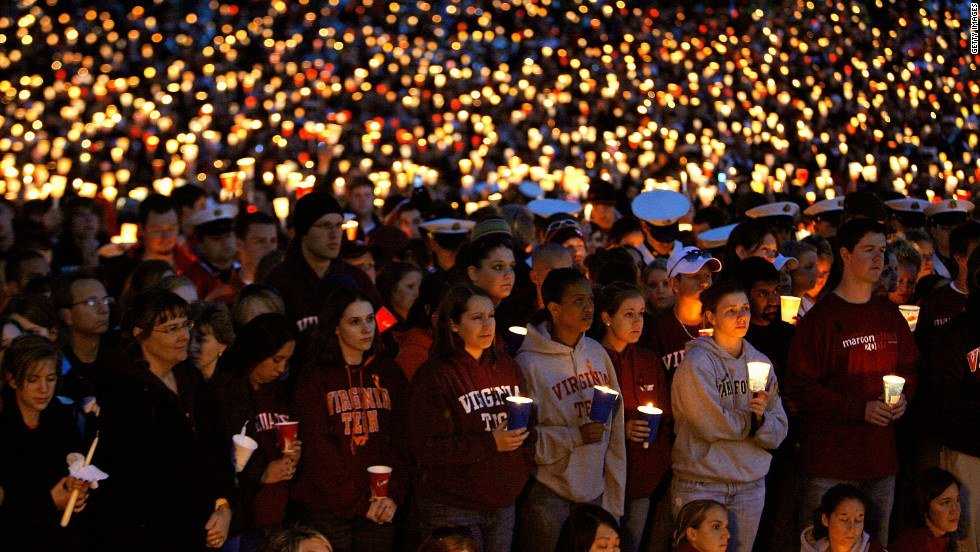
April 16, 2006: Seung-Hui Cho, a senior at Virginia Tech University in Blacksburg, Virginia opened fire two separate times on campus, two hours apart. He shot and killed 32 and injured 17 with gunfire all before committing suicide. Total deaths: 33.
Oct. 1, 2015: Christopher Harper-Mercer, a 26-year-old enrolled at Umpqua Community College in Roseburg, Oregon, shot and killed the professor of his writing class along with eight other classmates. Harper-Mercer injured nine others during the shooting. Detectives had shot and injured the shooter, before he turned the gun to his own head. Total deaths: 10.
In the year 2015 alone, there have been 52 school shootings in the United States, 21 at universities and colleges. As of October 2, there have been 294 mass shootings in the United States in 275 days of 2015. Since the Sandy Hook Elementary School shooting in 2012, there has been on average a school shooting every week.
When our parents drop us off at college for the first time, there is some sort of an unspoken conversation between us. We are expected to be responsible, to do our own laundry, to stay on top of our school work but above all, to stay safe. Parents drop their children off at school every morning, where there is the expectation that their children will be safe in the presence of their teachers and peers for roughly seven hours at a time. No one drops their kids off in the morning thinking to themselves, 'I hope there's not a shooting today,' but with the frequency of these shootings comes the chilling reality that these thoughts are becoming ordinary and routine, infiltrating our thought process too often. Schools are transforming from institutions full of opportunities for personal growth and development to shooting ranges for the individuals that commit these tragedies.
Gun control lobbyists argue that banning firearms will automatically reduce murders and, pro gun followers insist that banning guns will cause more crime than safety for Americans. There is not a legislative process that can solve the normalcy of gun violence that has been instilled in so many of our minds. How do I, as a college student on a college campus, push the all-too-real thoughts and possibilities of a shooting happening on any given day, to the back of my mind? The irony about all of this, is that the answer doesn't start with gun control. In order to begin the movement against school shootings, we need to educate Americans. The problem doesn't start with guns, the problem is rooted at being societal.
The coverage that disasters have gotten over the years has gone above and beyond many of our initial expectations. Acts of terrorism have been caught on tape, riots have been aired live on television, and footage of shootings have been more accessible and available to us as technology has developed. This overexposure to violence has put a serious strain on our ability to process violence effectively in our minds. We, as a nation, have become desensitized to violence and it is deteriorating our cultural perspective on tragedies such as mass shootings. Clearly this desensitizing isn't affecting all of us, because not everyone is committing these terrifying tragedies. We, as Americans, need to change our focus. Change isn't going to come from countless forums and strikes about our stances on the gun control issue. We need to educate people. We need to change our area of focus from glorifying heinous acts that we see in movies, on television, and in video games to showing the difficult and harsh realities that these types of violences bring. Stop shining light on the fact that these horrible acts continue to occur, but how you can stop them.
Change needs to happen, and this is where we start.
















