Though “cover” songs come from a somewhat insidious origin, the practice of creating new versions of songs has evolved from merely exploitation into a legitimate musical pursuit. Several artists have not only simply “covered” a song, they have made it their own. The first example that leaps to my mind is Jeff Buckley’s immortal, intensely intimate interpretation of Leonard Cohen’s “Hallelujah.” Whereas Cohen’s version employed choirs and synths to lend a hymnal triumph to his monotone, prayerful vocals, Buckley sings the song like a man alone and desperate. The entire song features only Buckley’s quiet, angelic voice and his guitar. In a piece written about Buckley for Time Magazine, Josh Tyrangiel wrote: "Cohen murmured the original like a dirge, but ... Buckley treated the ... song like a tiny capsule of humanity, using his voice to careen between glory and sadness, beauty and pain... It's one of the great songs." Buckley’s version has become far more famous than Cohen’s original, and has spawned innumerable other covers, most of which have imitated Buckley’s version rather than Cohen’s.
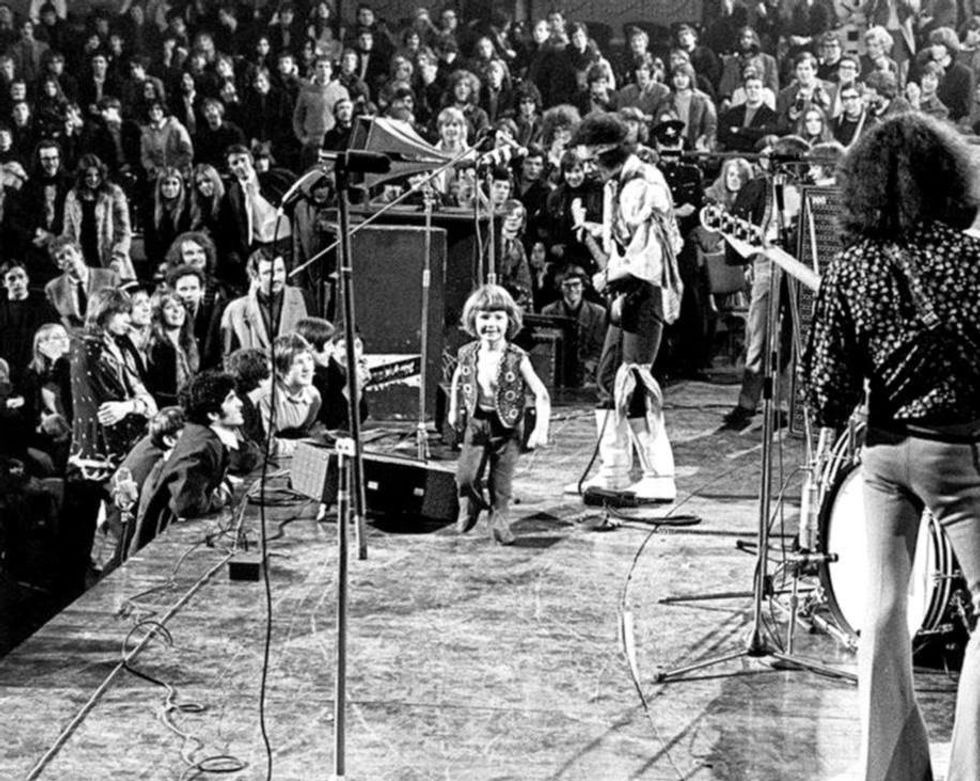
Buckley’s cover of “Hallelujah” was a pure form of individual, artistic expression. It was not merely a “cut and paste” job, it was practically a whole new song. The same distinction applies to Jimi Hendrix’s version of “All Along the Watchtower.” The song, written and first recorded by Bob Dylan, was, in its original form, an acoustic strummer with little to no bombast. Hendrix took the song and turned it into fierce, driving psychedelic rock anthem, complete with thumping riffs and wailing guitar solos. The new version of the song belonged entirely to Hendrix, in an artistic sense. Dylan even admitted that Hendrix’s version of the song exceeded his original vision. In a 1995 interview with the Fort Lauderdale Sun Sentinel, Dylan commented that: "It overwhelmed me, really. He had such talent, he could find things inside a song and vigorously develop them. He found things that other people wouldn't think of finding in there. He probably improved upon it by the spaces he was using. I took license with the song from his version, actually, and continue to do it to this day." Dylan recognized that Hendrix had taken his song, and made a version that was entirely his, and even managed to find things within the song that Dylan could not. Its fitting that Dylan performs the song in Hendrix’s style; it implies a kind of collaboration, a collaboration certainly not found in the exploitative covers of songs written by black artists in the 1950’s. Hendrix, in a sense, “completed” the song. This is the standard cover songs should have to live up to.
But, in contrast, John Lennon’s weak, powerless 1975 collection of rock and roll oldies covers (titled, quite unimaginatively, Rock n’ Roll) was done entirely to fulfill legal obligations. Though Lennon did manage to produce a solid, somewhat original cover of Ben E. King’s “Stand By Me,” the majority of the record reeks of unoriginality and work done merely to fulfill a legal obligation. It was certainly a far cry from the Beatles version of “Twist and Shout,” a song originally written by Phil Medley and Bert Berns and then first made famous by the Isley Brothers. The Beatles’ cover version of the song has become far and away the most famous, because it was imbued from start to finish with the qualities that made the Beatles world-conquering musicians: ecstatic energy, rich harmonies, and Lennon’s raspy, urgent voice.
I think what matters most in the discussion on cover songs is the intent of the artist covering the song. An artist lives to express him or herself, and sometimes a musician finds that a particular song speaks so much to him/her that they must make it their own in order to express themselves. This was not the case with the bastardized, stolen black songs recorded by the likes of Pat Boone. The artist must take a degree of responsibility when deciding to, or agreeing to, produce a cover version of a particular song. Artists must ask themselves: why am I doing this? Do I believe I can make a version of this song that is entirely my own? What are my motivations? Am I going to make a carbon copy of a song that, at the end of the day, really contains nothing of myself? Am I doing this purely for money, or to get people to think it is originally my song?
If the artist is willing to take personal responsibility when he/she chooses to record a cover song, then the legal aspect of the debate can be, to some degree, made obsolete. Just like Dylan admired Hendrix’s version of “All Along the Watchtower,” the musician who originally recorded a song will feel honored, humbled and pleased to hear another musician’s version that has been infused with originality. It means that the original musician’s work has touched someone else’s life to such a degree that it has become part of them, and this influence, this ability to communicate to the soul’s of other people, and touch them, is the ultimate goal of any self-respecting artist. Similarly, the artist who is considering making a cover version of a song should ensure that the original artist has not had his/her work robbed from him/her, because the respect they have for the artist’s work should compel them to make sure that the original artist has been compensated.
At the end of the day, it is the artist, by staying true to what it means to be an artist, who can negate the negative effects that can come from the practice of covering songs. The original version should be respected and preserved, and any new versions should be filled with the soul of the artist doing the re-interpretation. If these responsibilities are met and respected, the original artist will be compensated and given credit, and the world will receive the gifts of different ways of looking at a certain song.