
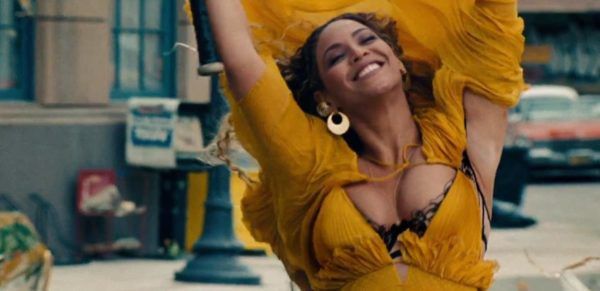

I'm not going to talk about “Becky with the good hair” in this, because well, I honestly don't care if Beyoncé is talking about Rachel Roy (who?) or my best friend whom only my dad calls Becky (hey, Becca!). Instead, I’m going to talk about the less overt, however all-too important issues that Lemonade addresses—mmm, scratch that: I’m going to try to talk about them. Sure, there's a great deal to be said for the Beyoncé/Jay Z marital mess to which Lemonade refers over and over again—and don't get me wrong, I loved every minute of it... lyrics like, "You know I give you life/And if you try that shit again, you gon’ lose your wife," paired with the image of Beyoncé throwing a ring at the camera gave ME life. And even though I’ve never thrown a ring at anyone, either threateningly, to break up my marriage, or otherwise, I can relate to the emotion of that moment.
Anyway: I digress. There are more important issues at hand here.
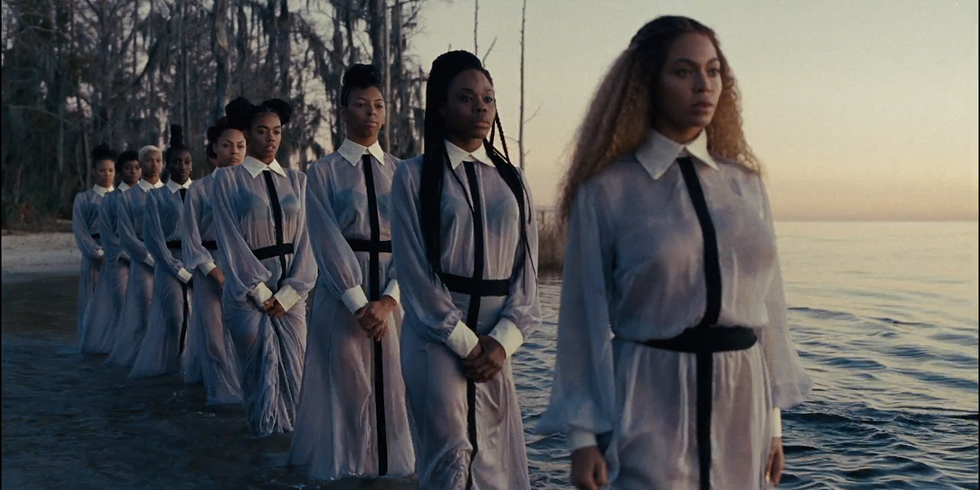
Lemonade is, at its core, a raw and thoroughly personal statement from the Queen. With the release of the album—a 12 track piece of lyrical genius paired with music videos and offset by a series of chapters whose titles materialize and just as quickly, disappear from the screen—Beyoncé lets us into her inner circle more than ever before. She unfolds a whole lot of what seems to be bottled up pain, grief and even exultation—and just when you think she's brought us through the ringer and we can breath again... she turns on her heels ("6 Inch" heels, to be exact), and drags us right back through the mud. So much of the album is about the black woman—her struggles, her triumphs. At one point in the song "Don't Hurt Yourself" (the same song from which the aforementioned lyrics came) Beyoncé quotes Malcolm X, saying: "The most disrespected person in America is the black woman. The most unprotected person in America is the black woman." At a few different points during what I feel should really be referred to as “the visual experience”, Beyoncé levitates, breathes under water, and in a whisper, proclaims: “I can wear her skin over mine.” At first, it seems pretty clear: Beyoncé is threatening Jay Z and his alleged lover. But on upon a second and even third (yeah, I'm really into this Lemonade business), is she? Or is this a proclamation of all the built up frustration and disgust she's felt towards society and its seeming reverence for white women? Was Jay Z's alleged lover white? (Looking at you, Rachel Whatever). Is it both?
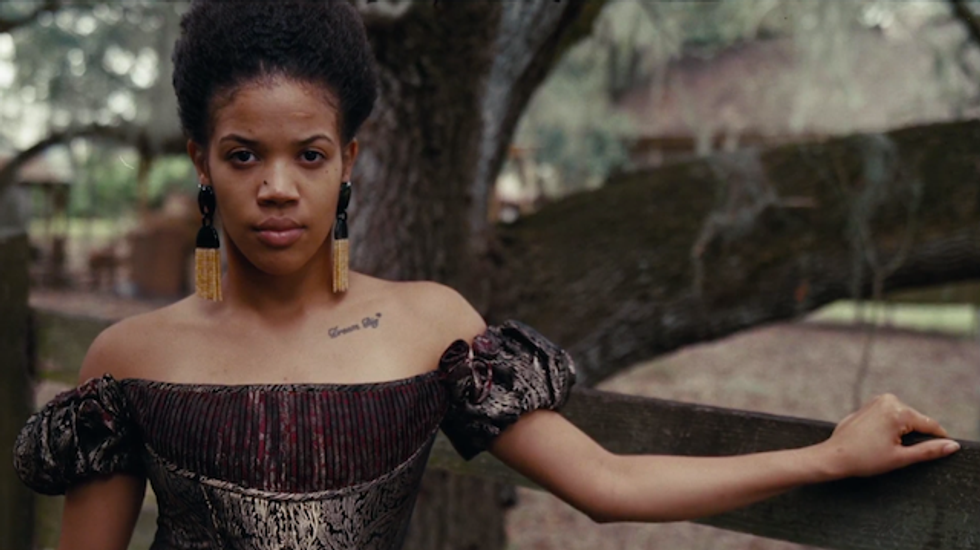
Another piece of the puzzle that is Lemonade is the album's setting, which is mostly that of the old south. The viewer is presented with images of plantation houses, sprawling porches, and swamp lands. These landscapes are accompanied, of course, by Beyoncé 's angelic voice, speaking, rapping and singing everything from melancholy piano ballads to hardcore gospel. The choice of setting seems an obvious, however haunting one, especially when paired with stills of black women wearing ornate and traditionally Southern Gothic gowns. The women look stunning. But in the immediate aftermath of this beautiful imagery, a conscious, or perhaps unconscious evocation of these women's ancestors and their counterparts—otherwise known as slave owners—appears. When was a black woman of old ever sitting down on a plantation, never mind while wearing a full petticoat and kitten heels? And in the south no less. It’s an uncomfortable image and thought to take in for the introspective white viewer. And, guess what? It’s supposed to be that way.
Now, if Beyoncé did have that thought—and let’s assume she and her brilliant marketing team did—did she really think it was only going to touch people the millions whose skin color is of a certain shade? I think too much of Beyoncé and what she’s done for women to let myself believe that. And again, it’s entirely possible, if not likely, even, that she did release this with the intention of reaching the black community in particular. If that’s the case—fine by me! I still get to listen and watch and feel a kinship with this beautiful thing by the name of a refreshing beverage ("Lemonade" is also a reference to African Americans' realities living in the old south, but don't worry, I won't get into that). But to say explicitly that this work of art is specifically NOT for people of a lighter skin tone is almost to encourage a division of peoples in and of itself. And hey—maybe I’m totally wrong and that’s exactly what Beyoncé was trying to do... I don't know her life. But in this instance, I’m going to stick to my guns and say that Bey is too smart, and too loyal to people—to the human race at large—for that.
















