
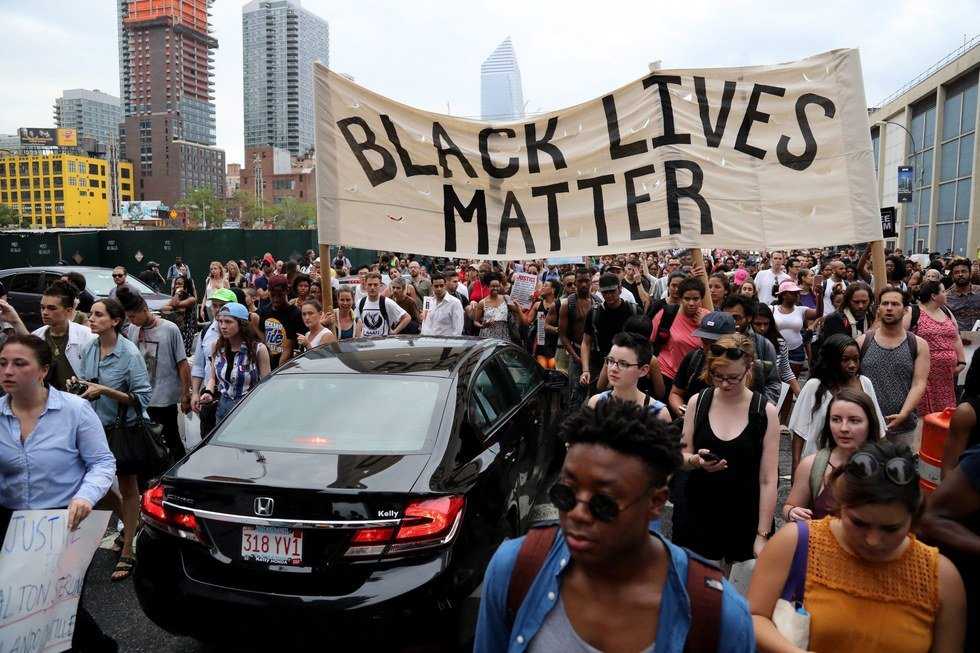
On Thursday, five police officers were killed and seven were injured during a peaceful protest in Dallas. The protest was centered around the deaths of Alton Sterling on Tuesday in Louisiana and Philando Castile on Wednesday in Minnesota, and a call for greater police accountability and more action in curtailing police violence against black people.
It’s difficult to discuss the Dallas shooting, because we need to mourn the deaths of those five police officers, sworn officials who were doing their duty, while realizing the potential blowback this massacre could have. In an interview with BuzzFeed, several leaders of the Black Lives Matter movement expressed fear that this could set the movement back, and that there could be repercussions against activists.
The shooter, Micah Xavier Johnson, is believed to have been operating solo, and we have to remember that. We have to remember that this was a peaceful protest, that this, what Johnson did, is not what the Black Lives Matter movement is about. It is not, as some people might believe, that only black lives matter, or that white lives matter less. It is a call for equality, and a call to recognize the systematic oppression of black people by the police. And while it seems callous to recall that in the wake of the deaths of those police officers, we must not forget.
We must mourn the deaths of those police officers—DART Officer Brent Thompson, Dallas PD officers Patrick Zamarripa and Michael Krol, Michael Smith, and Lorne Ahrens—as we mourn Philando and Alton, but we must not forget what has led us to this moment. We must not let grief or anger wash away the knowledge that greater police accountability must be achieved. We must remember that.
Johnson was full of anger, but that is a different kind of anger. That is the anger that leads to violence, the anger that burns everything in its path, the kind of anger that does not see solutions. You can be full of anger—righteous anger—and not act like Johnson.
We must remember that we can hold two beliefs at the same time, we can be pro-Black Lives Matter and that does not mean anti-police. Do not let people confuse you or make you think that the two are mutually exclusive. This was a tragedy, yes, but the continued targeting of black people by the police is also a tragedy. The two don’t cancel each other out.
And as an ally, I need other allies to remember what we need to do. We need to be respectful; we need to be vocal, because to be silent is to take the wrong side. We need to respect the experiences of black people in America, and we need to make this not about us. We will never fully know what it feels like to be a black person in America—but that shouldn’t stop us from offering our full support. Acknowledge the immense privilege that being white has given us. Be vocal, be angry on behalf of those who need our friendship and voices.
We live in a country that is marred by police brutality and gun violence. We need to make that stop, and to make that stop, we need action. We need laws. We need change.