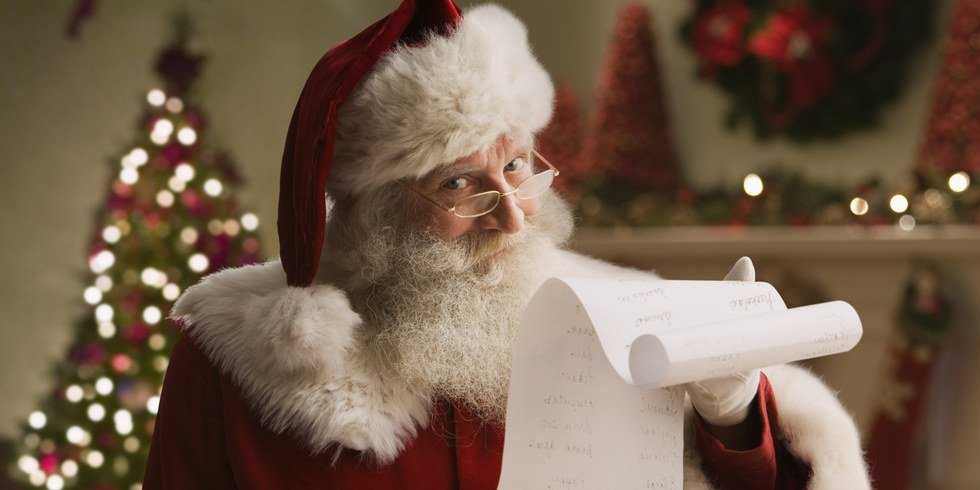
The Christmas season is upon us. Time to hear about the non-existant “war on Christmas” and people getting upset about public nativity scenes. Honestly we should just copy and paste the same stories next year because nothing will change. However, more this year than in past years, I've been seeing a lot of things about whether or not it is right to teach children about Santa Claus. The question is that why should we tell kids not to lie all while we're lying to them about a man who gives presents but asks for nothing in return? But to me, I don't think we're lying. If we remove Santa from Christmas, we're taking away the exact theme of the holiday season, and also making children face a cold, hard reality that they just do not need to know about yet. So, as has been asked many times before, why do we have the Santa Claus myth?
Kids
overhear more than you would think. Children will, not on purpose but
just as background noise, hear their parents' hushed voices asking
each other if they will have enough money for Christmas this year.
Don't try to say that your parents raised you to not “want”
anything for Christmas, because that is not how children's minds
work. But also, hearing that your family doesn't have money to have a
“decent” holiday doesn't mean “we'll have money again, just not
right now” to a kid. It means the family doesn't have money at all
– maybe not enough to eat, maybe not enough to drive, maybe not
even enough to have a house. Believe it or not, children know that it
takes money to do all of those things. So if we stop the Santa Claus
myth, countless children will not have anything, not even a pair of
socks, for Christmas – because they will know the present donated
by the church is really not from “Mom and Dad” but from that old
lady who sits five rows ahead of you. They don't get the idea of
community help, so they would not understand why a stranger would
help them out this year. By the church putting “From Santa” on
the gift tag, the child can have the hope that even when money is
tight and all hope seems lost, there is still someone who will give
them something to open on Christmas morning.
Beyond
the idea of giving a name to the charity received on Christmas, to
stop telling kids about Santa Claus will only ruin the childhood
innocence and wonder that they require. Really, for the majority of
children in America, they look up to Santa Claus because he does not
care how much money you have, how you live or where, your race or
religion. He simply loves everyone, not unlike young children. They
will go up to anyone and talk to them – whether that is a good
thing or not is a matter of debate – as if they trust anyone. The
concept of a man living away from the world, simply delivering
presents one night a year, is an easy sell on children, and sparks
their own imagination of who they think Santa is. In today's world of
war, death, and hatred, if we do not allow the kids to have someone
who is above all of that, then we are telling them too early what the
world is truly like. Kids can handle being told there is no Santa
Claus more than being told flat out that people their age are being
killed in Syria. To keep the kids from being afraid of their future,
we've given them a character who will always be there as a childhood
icon.
Honestly,
I don't get why I have to write this. Really, people are arguing
whether or not it is even right to
tell the children about Santa Claus, only to reveal the truth later.
If science proved there was no God, would we stop telling people
about religion? No, because while we would know it is not real, it
still gives them a bond and a tie to something bigger than
themselves. Kids want to tell Santa what they want for Christmas
because they see him as a trustworthy figure – telling a priest or
councilman they only met that one time would be too much. And we need
to remember that we are not lying to the kids at all. We are simply
telling them a myth, a story that we grew up with. The entire world
joins in because deep down, we all know that if anybody needs a
character they can love and are dependent on arriving to their house,
it might as well be Santa. They need it, and really, we adults need
it too. The idea that somebody can be so giving and caring without
any reason is just a perfect ideal to strive towards in the holiday
season, no matter how old you are.
When
people see a struggling family, they jump in to help. They become
Santa Claus. When we stop and throw a dollar in the red bucket
outside the department store, we become Santa Claus to somebody. We
are not lying about him to the children – rather, we are giving the
feeling of goodwill and love a physical form for kids to understand.
They cannot speak to a feeling, but they can speak to Santa. To this
day, I still believe in Santa Claus. When my three-year-old niece
asks me, I can say honestly that yes, there is a Santa Claus and not
only do I believe in him, I've seen him. Because when I see people
volunteering to ring a bell in the bitter cold, donating hats and
scarves to the homeless, or even simply hugging each other at the
airport when they come home for Christmas, I see somebody who is
another's “Santa.” I believe that he is an ideal we should strive
towards in the Christmas season, if not the entire year. To remove
Santa Claus from Christmas would remove the embodiment of the holiday
altogether.