Launching not only the first shuttle into space but also the first person to orbit Earth, the Soviet Union laid the path for decades of space exploration to follow. Their achievements were milestones that the cosmos became much more tangible and possible. To reach the current era of space exploration, we have made bounds and leaps in research and development; however, most can argue that the age of exploration has remarkably slowed, having already reached the moon. With snapshots of the current state of astronomy, it is up to you to decide for yourself.
1. Two days, one solar system and four planets
 ABC recently held a live stargazing event, called the Zooniverse project, that aimed to find exoplanets -- a planet that orbits a star that is not in the Sun's solar system. The event lasted for 48 hours while over 7,000 participants searched the skies for new planets. "The results are astonishing," according to Oxford University professor Chris Lintott; nearly 90 new planets were discovered with four, in particular, stealing the show. As a part of their own solar system, the four planets are larger enough to be considered super-Earths, twice the size of our own Earth, yet they were confirmed to be uninhabitable for humans. The orbit so closely to their sun that the orbits last three to 13 days.
2. NASA is funding new proposals

Under the NASA Innovative Advanced Concepts program, NASA been funding smaller groups of individuals with unique and some somewhat radical projects, and it has been doing so for the past couple of decades. Only recently has it funded 22 new proposals which will receive $125,000 from NASA for the nine months, and projects that continue to show promise and feasibility will be granted funds for two more years and can receive up to half a million dollars. Some of the current projects include spacecraft to pull apart asteroids, agriculture in soil from Mars and other more advanced experiments.
3. China's approach to space technology
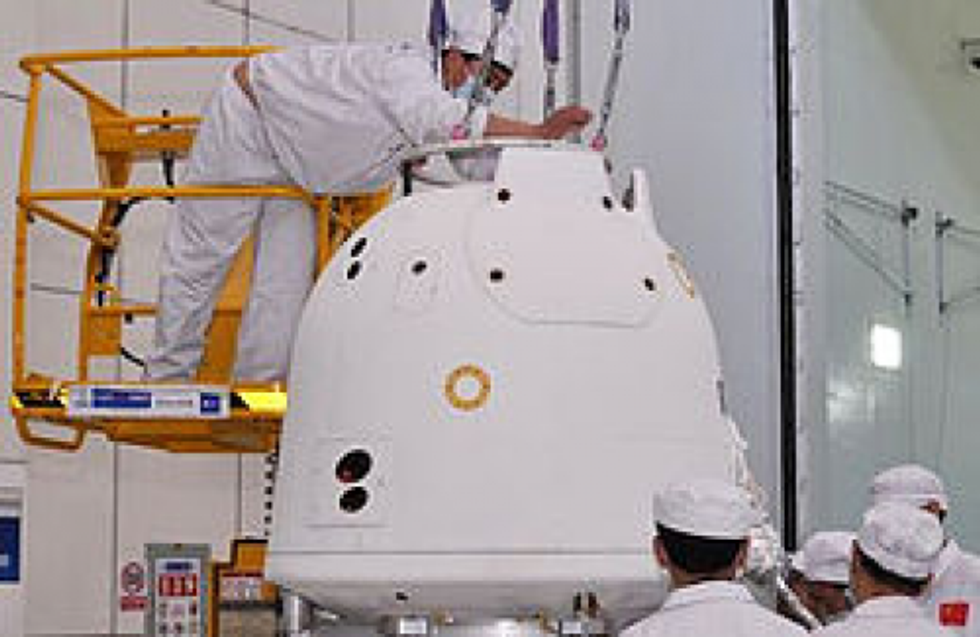 The secretary general of the China National Space administration spoke last week on April fifth at the Space Symposium, detailing China's aggressive space plans and revealing the high probability that the plans will be conducted. According to the secretary general, their goals include collecting samples from the Moon next year, collecting soil samples from Mars and sending 30 new satellites into orbit. The Chinese government is already in the policy-making process to allow these projects and has joined in over 100 space corporation agreements. He says that "we're on track," so the wait begins till we hear more from Chang'e-5 and Chang'e-4 and their missions in the next couple of years.
4. NASA's plans for Mars
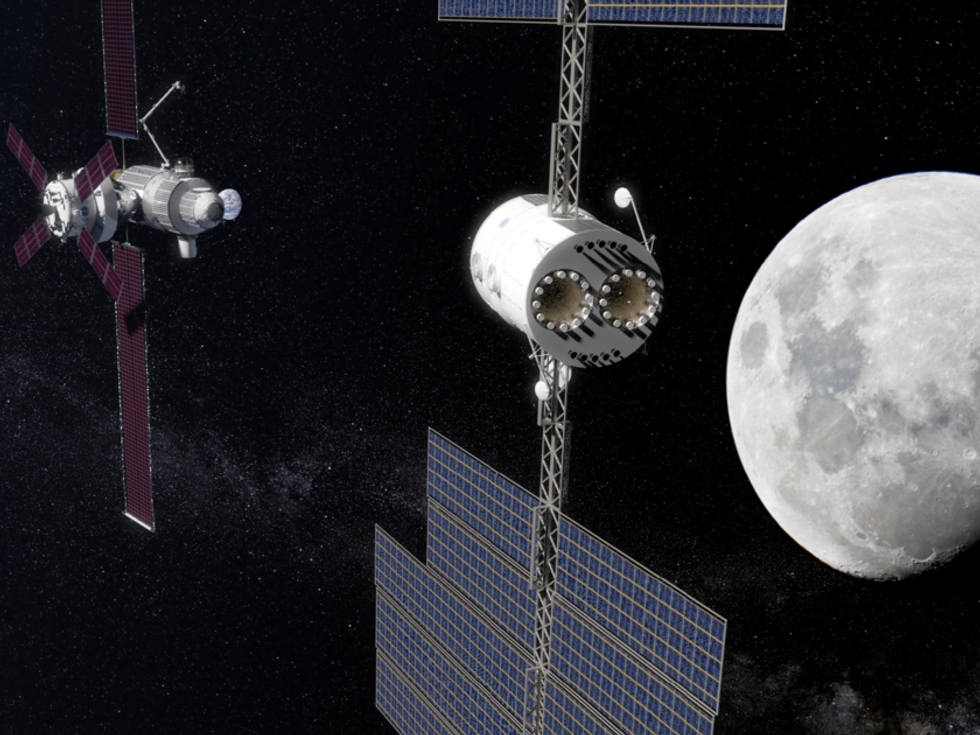
The Space Launch System only recently spoke of some of its most probable plan at sending a person to Mars earlier this month. Associate administrator Gerstenmaier admitted, "that there's a real plan worth executing." The approach is long and technical, beginning with Phase One, Deep Space Gateway, and Phase Two, Deep Space Transport. Resembling the International Space Station, the Deep Space Gateway is a smaller airlocked living system that is designed for a crew to stay only for short periods of time, up to 42 days. The Gateway becomes more than just a living space for the crew as it functions as a port for a shuttle in Phase Two. During the Deep Space Transport, the Gateway will hold a much larger team for longer periods of time that can send crews, hopefully to Mars.
Space exploration consists not only of how far away our step has landed and the range of our sight but also of the extent our imagination. After all, it was Nicholas of Cusa and Giordano Bruno who dreamed that the universe was not confined the planets and stars the astronomers of their time saw, but rather the universe was infinite and boundless.