
When people mention video games and the Bible in the same sentence it usually leads to misunderstandings and people disagreeing with one another. What if I told you that there are some games though that take heavy influence from the Bible and form their mythos around it?
I’m not talking about the definite “this is a Christian game for a Christian audience,” but games that people took at face value as something else entirely until others that looked deeper into the games found out the truth. The games aren’t bad in the sense of being derogatory towards religious practices, but said practices are actually a pivotal part of the design, game play and storytelling of these games.
"El Shaddai: Ascension of the Metatron"

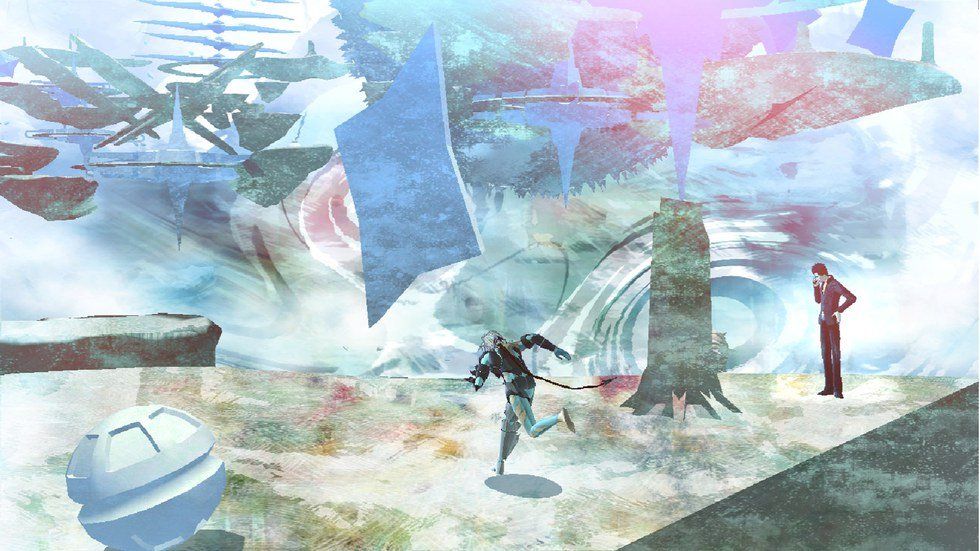
Starting with art style, we have "El Shaddai: Ascension of the Metatron." The title alone is a biblical reference. "El Shaddai" is the Judaic name for God Almighty. While playing the game we follow the main character, Enoch, who was the ancestor of Noah and who literally walked with God (Genesis 5:21-24).
In "The Book of Enoch" we follow him as he converses with God and is taken into Heaven to work beside him. In the game we have a different approach where Enoch must converse with the Fallen Angels of Genesis and try to prevent the upcoming apocalyptic flood (spoiler alert: it happens anyway with Noah). The art style is beautiful and the story is magnificent.
The "Dragon Quest" Series and "Persona" Series
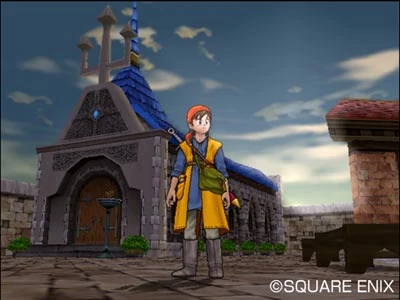

(The "Dragon Quest" church is on top and Raphael from the "Persona" series is below.)
I’ll briefly tackle the "Dragon Quest" series and "Persona" series with gameplay and story in mind. With "Dragon Quest," we have the player constantly visiting churches to do tasks. The church is seen as a safe location, free from monsters, and the player can save their progress there by means of confessing to the Pastor. The Church also offers Resurrection (revives a party member), Benediction (removes curses), Purification (removes poison), and Divination (shows how much experience is needed for the next level).
In the "Persona" series many angelic/demonic figures act as the antagonistic forces. You have your definite bad guys Lucifer, Satan, and Helel (yes they are all the same person but its broken down for the games), but you also have some archangels thrown in such as Uriel, Raphael, Gabriel, and Michael. The game is smart enough to even have an encyclopedia for the invested player to read up on each entity that is met and from what religion/faith they are from.
"The Binding of Isaac"
My biggest piece is the one that’s had the most controversy. "The Binding of Isaac" is making obvious references to the biblical section of the same name. In the Bible God asks Abraham to sacrifice his son Isaac to show his faith. At the last second God stops Abraham due to his devotion, saving Isaac’s life. In the game we have something a bit darker and more grotesque. Isaac’s mother, a Christian, is told by a voice from above to "show her devotion by purging her son of sin."
Listening to the voice, she grabs a kitchen knife and goes to Isaac’s room. Seeing the danger, Isaac scrambles for a trap door under his rug and plunges into the unknown darkness of the underground to escape his mother. You could take this as a jab at Christianity, but, with further analysis, you can see that it knows its source material very well and tries to have some commentary on people with extremist beliefs in faith.
From enemy types to item pickups, the game is able to squeeze Biblical lore throughout its mythos. Also, the latest iteration of the series has people still scrambling about trying to find all of its secrets due to some of them being hidden by means of biblical text, causing thousands of players to read the Bible to find the secrets within the game.
There is a sense of respect for the source material in these games that I’ve listed and there are plenty of games that I didn’t even cover. The ideas presented aren’t just shoved in to bash someone’s personal beliefs, but are there to entertain, educate, and/or spark some conversation about religion that most people shy away from.