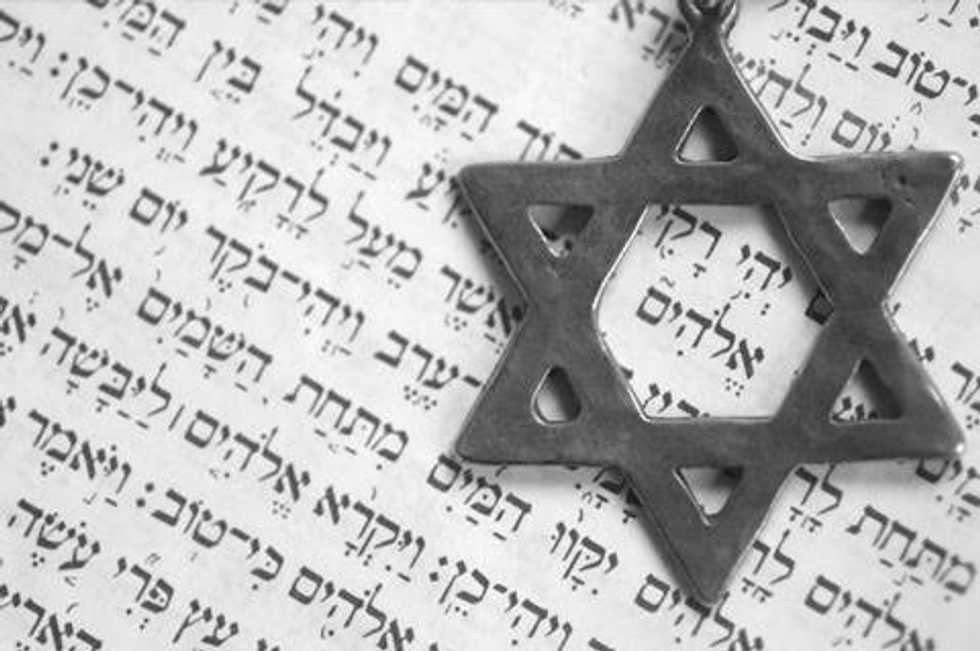
“What are you?”
A chubby, awkward fifth grader, I sat quietly, my hands folded on the cluttered desk in front of me and hesitated. It was a question I was unfamiliar with, one which assumed that I possessed at least some premature understanding of identity, and I wasn’t sure how to answer. Cautiously, with an air of uncertainty ringing in my voice, I replied:
“Jewish.”
Taken aback, the student who had asked me paused, glancing at me as though I was incapable of understanding. “No,” she repeated, shaking her head. “What are you? Like, what ethnicity are you?”
Again, I repeated, “Jewish.”
Annoyed, she huffed away, leaving me feeling uncomfortable, as though I had not provided an adequate answer. In my head, I raced through other responses I could’ve given. Polish, I could’ve said, thinking of my grandfather. Or Cuban, like my grandmother. Even the all-encompassing American. But all of those felt like a smaller piece of my overarching identity, one which pointed each fragment of my being toward completion. I was Jewish. That’s what I was.
As I’ve grown, though, this scenario has played out on multiple occasions, each pointing towards the same sense of frustration from another person. Being Jewish, I’ve consistently been told, is not an ethnicity and therefore an insufficient answer to an otherwise simple question. Judaism is a religion; Jewish people pray; and as Cindy from Orange is the New Black beautifully displayed, people from all walks of life can elect to be Jewish of their own accord.
And while I wholeheartedly agree that being Jewish entails belonging to a religion, I cannot accept the notion that religions and ethnicities are mutually exclusive; at the same time, though, I cannot fully explain why it is that many people identify so strongly with their Jewish roots.
However, I can say that it most likely stems from the origins of our oppression. Starting with the Spanish Inquisition, in which the Jewish people (along with other minorities) were ruthlessly purged from Spain, Jews have formed a tightly-linked community, traveling together and relying upon one another for a sense of security. A common language—Yiddish (which my grandfather to this day refers to as “Jewish”)—was formed in order to unite Jews of different countries, dismounting the Biblical tale of Babel to construct a cohesive unit through which all Jews could hypothetically communicate. In the face of a more secular society, many Jews, though slowly abandoning some of the semblances of their spirituality, retained instead a strong sense of tradition, celebrating such holidays as Passover with a Seder but without a complete recitation of the Haggadah, the religiously-affiliated part of the festivity. And other underlying rituals devoid of religious traces—such as going to camp as a child—strengthen even further a sense of the Jewish self.
Barring all of this though, there is a sense of connectivity that links Jews. Whether Ashkenazi or Sephardic, Reformed, Conservative, or Orthodox, Jews for the most part share some sort of mutual understanding, as there is an underlying, intimate knowledge of the minority status of the Jewish people and the significance of knowing others like oneself. Judaism, through its cultural underpinnings, has the power to shape not only the religious aspects of one’s upbringing but also the personal development of identity, individuality, and sense of self. People not only look Jewish but can have “Jewish” personalities, associating them with the group and tying them back, no matter their origins, to the overall community.
Therefore, while the Jewish people do not all originate from the same location or speak the exact same tongue, the unified past, present, and future of the Jewish people manages to shape an ethnicity and define an identity. And so, when people ask me what I am, I will continue to respond that I am Jewish, despite the confused glances which I may receive. Because being Jewish is not simply a religion. It is not restricted to a singular entity. And it is not just what I am, but who I am.