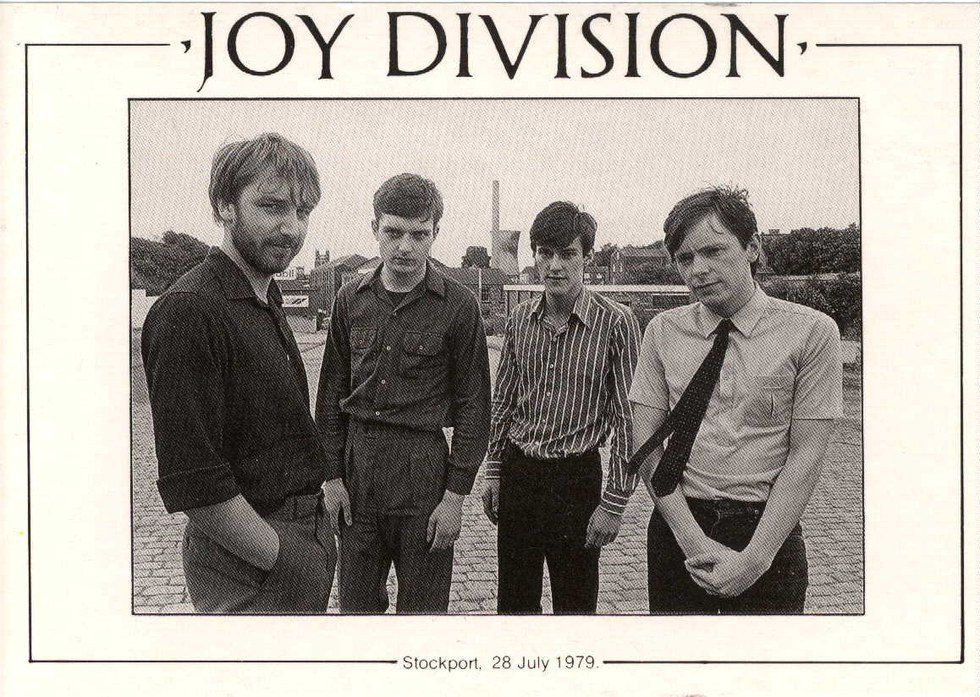
My uncle and I use to have senseless debates over the phone before tennis practice over what the future held for Joy Division regarding the increase or decrease in the quality of their music. His argument was that they had one absolute masterpiece left in their souls before their music would take a dip in quality. I always harbored the prediction, or, a prediction of an alternate timeline's future, that they had two masterpiece albums left in them before their music would decrease in quality. Now, don't misunderstand me. Both of us presumed that their music would always stagnate in significantly above-average quality (Perhaps, a couple of mishaps resulting from Curtis's experimental nature), but unfortunately, due to Ian Curtis's unfortunate, tragic, and untimely death, we'll never know. But, one must recognize the true nature of these phone conversations. What does the fact that a band, which released a grand total of two studio albums before disbanding in 1980, one of them posthumous to the lead singer's death, constitute? Exactly, what did Unknown Pleasures and the subsequent Closer accomplish?
Joy Division is reminiscent as one of the original hipster (Dare I compare Joy Division to hipster music) bands. In an era where, regarding the rock genre, hard rock and, perhaps, progressive rock, reigned as the most popular forms of rock music, there was the significantly more countercultural genre of punk rock. Of course, some examples would be the Sex Pistols, The Ramones, and The Clash. Do not misconstrue my judgment of these bands. Of course, Led Zeppelin and Pink Floyd are two iconic bands who produced truly timeless music, and obviously, the same attributes are applicable to the aforementioned punk rock bands. But simultaneously, there was a band that was a subgenre of a subgenre, the former being punk rock and the latter being what can best be described as post-punk , and their name was Joy Division. What genre describes Joy Division? Well, Joy Division produced Joy Division music, of course, because the undeniable truth is that Joy Division is an island. It is a singularity. It is a snapshot in time that deserved to develop into an emblematic music project of the late 70's and early 80's.
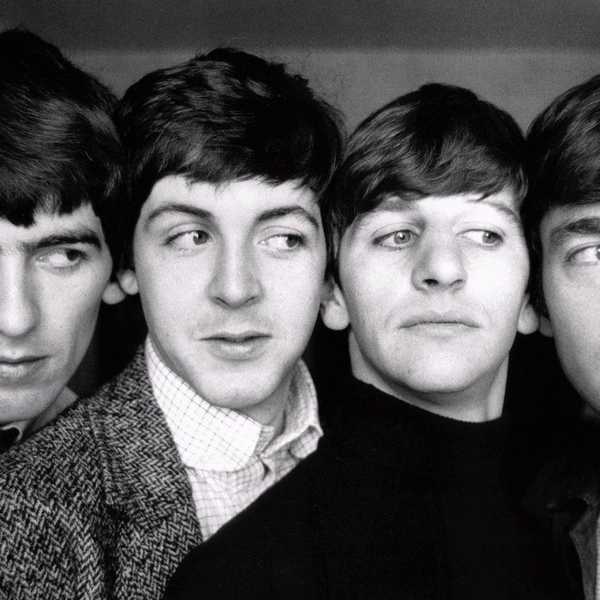
So, why do music enthusiasts like to constantly elaborate, discuss, debate, and, of course, listen to Joy Division's music in 2016? Because we are in denial. We are in denial that Joy Division, an artist whose music easily rivals The Beatles (yes, I said it) was dismantled in such early stages. If you'll recall that I described Joy Division's catalog of songs as an island, it's because their music can not be inherently derived to any former music. Obviously, with all 20th-century music (and earlier), any artist harbors their inspirations and influences, but while many mainstream artists were struggling to maintain the same style of countercultural music that was popular in the 60's, Ian Curtis was creating music unlike anything we had ever heard or listened to. I suppose it's post-punk, and, yes, Joy Division was the absolute pioneer of the subgenre, but music critics' descriptions of post-punk always resonated with me that it's simply because Joy Division cannot be academically described as what they truly were. A beautiful, wonderful, haunting, disaster.
During the incredibly short period that Joy Division was active, Curtis was writing music that was the absolute epitome of intensity. It was the gestalt of Curtis's passion, which was apparent in his tendency to lose himself in even performances of the most obscure Joy Division tracks. Whereas punk might be described as music in it's rawest form, Joy Division took it a step further. Joy Division employed the state of sound that all humans were not only capable of, but should have felt more obliged to utilize more often, and that sound, an instrument employed by Joy Division, was silence. Whereas an aspect of the punk style was the absence of gaps in the arrangement of the instrumentation, Joy Division wasn't only willing to leave gaps, but use the silence as an instrument. Curtis once said, "We haven't got a message really; the lyrics are open to interpretation. They're multidimensional. You can read into them what you like." So, what was the purpose of the gaps? For their listeners to more easily emerge themselves in the chilling lyrics and haunting music.
Ultimately, when Curtis committed suicide in 1980, this changed the course of music history. Joy Division had already managed to plant so many seeds and drive so many stakes into the ground, and the farm they raised was difficult to harvest by another artist, so it was a disaster. Now, rather than be a direct influence, artists across the globe produce music that is peppered with the sound that Joy Division created. Artists recurringly, some knowingly, like Modern English, and some unknowingly pepper their music with the greatness that was Joy Division. This is what made them so great, and what made their short lifespan a tragedy. Is it a tragedy, though? Those of us aware of Joy Division spread the content available to produce in reference to the band so thin, and their prominence as an artist worth much more than simple discourse, their music is a spice for everything that came after it that approached music in the same manner that Joy Division did. Recognizing negativity rather than asserting it. Using space as an instrument. Brilliant lyrics that might be "open to interpretation," but still concrete as impeccable writing. Perhaps it is best that whatever music Joy Division would have produced had their career not been cut short remain an unknown pleasure.