
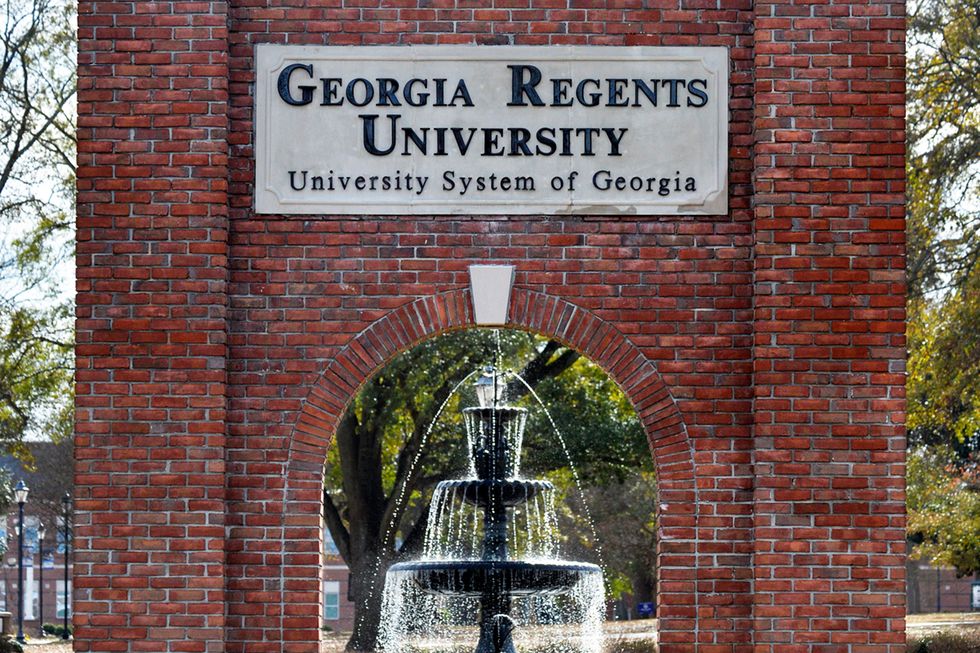
In the spring of 2012, the University System of Georgia’s Board of Regents announced their approval of a plan to merge and consolidate the campuses of Augusta State University and The Medical College of Georgia.
In the months that followed, there was an overwhelming sense of animosity among the students and faculty as well as the community at large. For those students like myself who were attending ASU at that time, there were a number of fears. The most predominant of course being issues such as potential tuition hikes, the dissolution or disbanding of certain departments and degree programs that were believed to be struggling, and of course the impending shortage of resources and class availability that would come with the exponential increase in student population as a result of the consolidation.
However, there was another concern that lay on the fringes of everyone’s minds, although few spoke of it at the time. The real concern was what would happen to us, the University. Over the years, Augusta State had worked rather hard to earn its name in being a formidable liberal arts college and the impending absorption into a larger academic institution left many feeling as if they were staring into a microscope and watching some parasite in a petri dish envelop, consume and devour a smaller organism as a means of evolving and becoming stronger. Later that same year, when it came time to choose a name for the new university, those fears would finally bear fruit.
Despite seeking the input of the community through several surveys and polls, the Board of Regents made it very clear through a number of statements released to the public as well as several emails acquired by local media, that the city of Augusta’s name would have no place in their vision for the future of the two institutions.
The student body and local community banded together and the “Save the A” campaign arose as a response, but despite a large amount of support, failed to gain any real victory or influence over the situation. To quietly resolve the issue, those in charge agreed to include the phrase “of Augusta” at the end of the University’s name. Yet this proved a rather hollow victory when you consider this distinction would still never be considered a part of the school’s official name and would seldom if ever be used for anything other than “marketing purposes.”
Taking this as a blow to the chin and soldiering on, the newly designated “Summerville Campus” of Georgia Regent’s University tried as best it could to continue in the shadow of the hospital down the hill, pretending not to notice as one by one, the things which had come to define our campus began to disappear. Things such as the insignia bearing the likeness of the Arsenal Oak found on the sidewalks lining the interior and perimeter of the campus and the identification cards issued to students bearing the iconic fountain and magnolia blossoms found at the University’s front entrance, slowly began to disappear. It was a somber sight to say the least, and left many students and faculty members speaking of the consolidation in terms which someone might use to describe an invasion or occupation by some obscure but dangerously radical foreign power.
Yet, perhaps the most dangerous implication of the situation was the message it sent to students and members of the community at large. It was a sign of betrayal and dismissal. Despite the fact that our tuition and attendance served as the primary source of physical and financial capital needed for the University to function, we were basically told that our opinions and concerns, no matter how abundant or valid, meant absolutely nothing. While school spirit hadn’t disappeared entirely, it had certainly grown very lean over the last few years as scores of Alumni from both institutions as well as other influential members of the community began to withdraw significant amounts of donations and funding as a means of voicing their frustrations with the way things were being carried out.
In time the board came to accept these losses as a necessary part of the process, but they seem to have forgotten that a university is only as strong as the individuals who support it. It is the students and the community surrounding a campus that breathes life into the school and to disregard that fact in the interest of financial gain and forward progress is just damned foolish.
Last week, Dr. Brooks Keel, former president of Georgia Southern University and the newly appointed President of Georgia Regent’s University, announced that effective immediately, the new name for the consolidated institution would be Augusta University. While sudden, the initial response from the community towards the decision appears positive. However, I have heard a number of varying opinions about the impending change across campus. Some were negative and some positive, but perhaps the most unsettling to me were the ones who displayed an overwhelming feeling of apathy and indifference.
Then I thought to myself, “Why should they care?” For a majority of students, this will be the second time in two years that their identity will be taken away and a new one put in its place. Yet, this time around there is a number of those who have simply become numb to it, choosing to forgo any emotional investment in the process and carry on with little to no interest. This is perhaps the real damage done to our campus.
The value and sense of significance we as students once felt is now broken and scattered, leaving many wondering if the new administration’s attempts to rectify the situation and win back the support of the community and its students may be too little too late…

















