


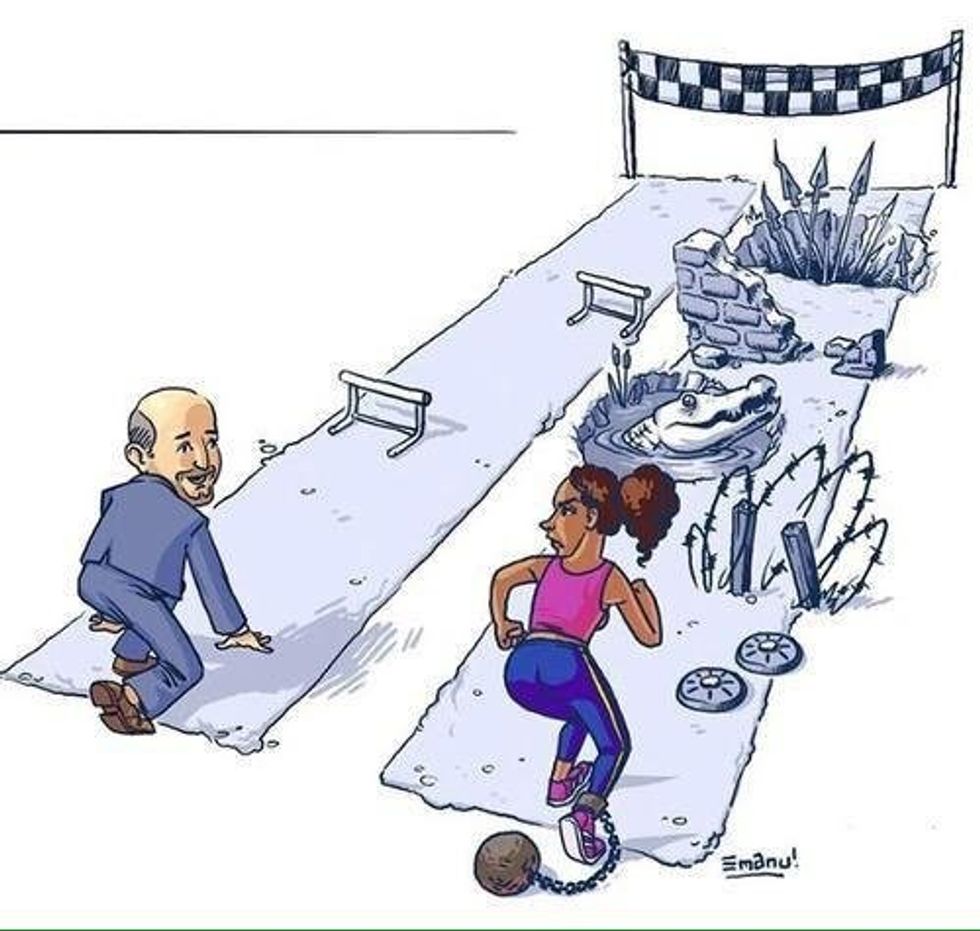
I was born poor and she was born wealthy, which means that she probably does not have to worry where her next meal is coming from. She is a woman and he is a man, so she earns an average of 77 cents to his dollar. Your neighbors are people of color and you are white and for this reason you have never experienced racial discrimination. Some people are talented and others have not been so blessed.
None of us had a choice of what we were born to or what we were born with. Our privileges are a matter of luck. So, is it fair that people suffer because of undeserved disadvantages? And if not, what can we do about it?
Thomas Nagel, the author of "What Does it All Mean?," says that these undeserved disadvantages are due to the difference in socioeconomic status that people are born to and the difference in their natural abilities to do jobs that are in demand. Nagel said that the government can do something about inequality. He suggested that the government may take out higher taxes from the wealthy people and use this money to help those in need.
Is it fair for wealthy people to give up their hard-earned money when it was not their fault that the poor were born poor? You may think that the poor are too lazy and dependent on the government. And while the wealthy have more money than the poor, it does not mean that they do not work hard to earn it. I mean, if you really want something that badly, you work for it.
In the mid-1980’s when Reagan’s economic policies took effect, there were significant tax breaks for the wealthy and corporations, unemployment rates increased, and emergency financial resources for low-income families began to decline. Due to these policies, low-income families have become much poorer. They have internalized shame because of their seemingly hopeless situation, and yet we call them lazy and dependent. We assume that they do not work as hard as the wealthy and that’s why they are poor. We assume that it was their personal failure, but we rarely think that it was the personal effect of economic policies that affect them. And even if these policies never took effect, the wealthy people still have an advantage compared to the poor. The wealthy have better access to tools like a car or internet that can be used to help them get the jobs they want and climb the corporate ladder. They are also most likely to have a better training for jobs that are in demand compared to the poor.
Next time you see your classmate who did not do their homework, don't assume that they're lazy. Think about the possibility that they work 30 hours a week to be able to go to school. Think about the possibility that your classmate takes care of their siblings and does housework while their parents are out late at night working hard so that their family doesn’t starve.
I think we can all agree that life is unfair. We don’t get to decide what socioeconomic status we are born to or what natural abilities we are born with. But whether the government should do something about socioeconomic inequality, that is something we have a say in. It's time to end socioeconomic inequality.

















