
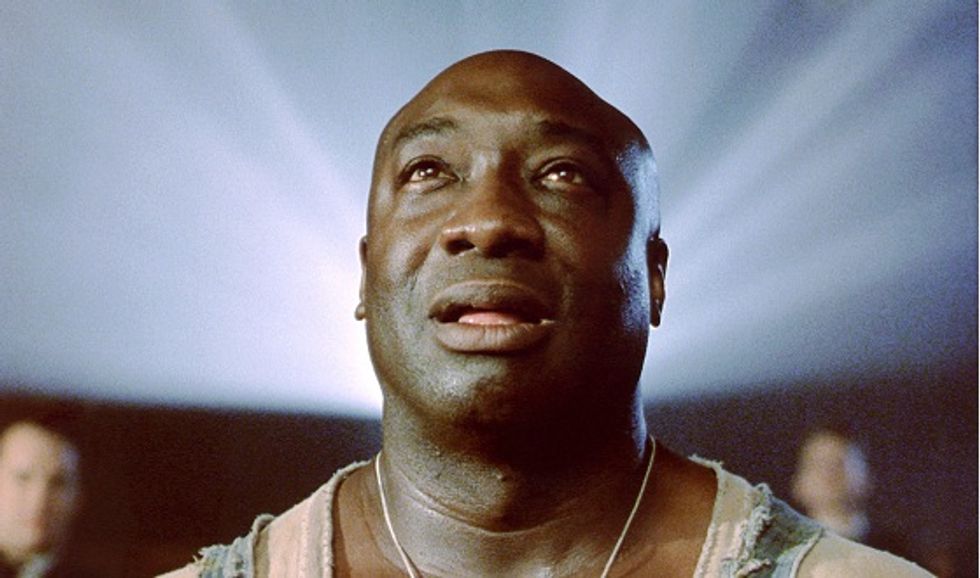
Some go to the movies to escape their problems and laugh for two hours and some go learn a new world and expand their imagination. Others go to the movies to get a new perspective on life and all the concepts that go with it like love, hope, dreams, etc. That’s when film is at its best, when it makes you think about life in ways you never imagined, or that you imagined but could never put into words. The great filmmakers and writers have given the world many films to observe in this way. From comedies to science fiction to romances and psychological horror, these films will make you put yourself in the character’s perspective and think about life within the film and as a whole. Here are 10 films to watch and maybe change your point of view on a few things in the process. Honorable Mentions would probably be Interstellar, The Tree of Life, The Matrix, and many more. Films that are heavy with the science fiction genre tend to lead to the existential aspect of things, but for this list I wanted to focus on the drama aspect, the movies people could immediately relate to when they watch them.
10. Eternal Sunshine of the Spotless Mind
This 2004 science fiction romance film has become somewhat of a favorite in the hipster scene but that’s more due to the complex narrative structure and quirky, playful renditions of a person’s memory. But it demands the viewer to answer the question: if given the opportunity, would you erase a painful memory from your mind? The director and screenwriter, Michel Gondry and Charlie Kaufman respectively, would want you think to say no, but the film gives a lot of leeway for your answer. It will make you dig deep into your mind and think about the pain that you felt in your childhood along with embarrassment, shame, and everything else you try not to think about. This film even plays with the idea of fate, and if who we are as a person indicates where we end up. Eternal Sunshine of the Spotless Mind will make you remember the beautiful moments before the painful ones, and bring tears to your eyes when you least expect it. This is a powerful film, and an experience you won’t forget even if you chose to.
9. Dead Poets Society
This is not the only Peter Weir-directed film on this list, but it is the one that many think about when Robin William’s dramatic side and the desire to seize the day. “Carpe Diem, seize the day,” whispers John Keating (Williams), an eccentric English teacher at an otherwise uptight, strict boarding school for boys. We see these kids fall under academic pressure by all the authority figures in their lives, which I’m sure we can all relate to. But when Keating opens their eyes and tells them what life is really about, the emotions on the characters’ faces as they fall in love, join the community theater, stand up to their parents, and recite poetry mirror the emotions of the viewer. Dead Poets Society reminds us while our professional and academic goals are noble pursuits; life comes down to love, beauty, words, and communication. It reminds us to be human and what that even means. If you come out of Dead Poets Society with the same outlook on life that you had when you went in, and without a single tear in your eyes, you’re doing it wrong. Also, Rest in Peace Robin Williams.
8. 500 Days of Summer
Who isn’t tired of the beautiful man and the woman meeting, falling in love, dealing with a conflict, and living happily ever after? It’s boring, repetitive, and barely realistic. But in 2008, Marc Webb gave us a game changer. He challenged all these concepts, put two up and coming actors together, and created an original story about how one battles with their own concepts of love. Zooey Deschanel’s Summer represents the guy/girl that got away to every movie viewer and as we relate to the pain of Tom, Joseph Gordon Levitt’s character, we learn how one sided a relationship can be. Accompanied with a beautiful soundtrack that forces the film to haunt you, 500 Days of Summer makes you relive that painful heartbreak from your past. It almost makes fun of you for thinking that any love story would end otherwise such as with that famous split screen scene of Expectation vs. Reality. It shows you that you are your own worst enemy because of your false expectations and misconceptions. But most importantly, it reminds you that everything that Tom is going through is all apart of life.
7. American Beauty
This 1999 directorial debut of Sam Mendes covers so many different themes that it’s almost impossible to not have a new insight on life after watching it. Take your pick: American suburbia, masculinity, homosexuality, imprisonment, sexuality, and beauty. All I know is that Lester Burnham is the all American man who is bored by his job, bores his wife and daughter, and hates himself as a person. While Mendes gives us an image to project the idea that Lester and his family are happy, we see the impending doom that threatens their lives like so many of us do in our own lives. Sure the film can be a little heavy handed at times and even a little corny. (remember that plastic bag scene with Wes Bentley crying at the screen?) But it reminds you that it is human nature to feel these emotions, and to become addicted to whatever makes you feel alive again. Even if none of these concepts grab you, the last few minutes of American Beauty pays off in every way. As Lester remembers all the details of his life that made him who he was no matter how small, such as the look of his grandmother’s skin, lying on the grass watching the stars as a kid, and the happiness he once felt with his wife and daughter, it’s hard not to think about life as this wonderful ball of energy that shoots through us, making us feel pain but reminding us that to feel anything is beautiful.
6. Boyhood
Many of you are probably looking at the films above and wondering what the hell Boyhood is doing on the list. How would a film made in 2015 that follows a white boy from Texas for 12 years give anyone any kind of new insight on life? On the surface, Boyhood is not really that special. We see a boy deal with his parent’s divorce, grow up, graduate high school, and go off to college. Big whoop, how many of us haven’t done that? But director Richard Linklater made this film unique by filming all the same actors over the course of 12 years, allowing the actors to grow older along with the characters. Me and you can argue all day that the 12 years filming period is just a cheap trope that fakes depth and existentialism, but the fact of the matter is that it is the core of the film. In the end, after Mason’s mother, played by Patricia Arquette, cries about how unceremoniously her life as a mother is ending and we see Mason drive to college, we are reminded that we just saw 12 years of a person’s life go by in less than three hours screen time. Boyhood reminds us how fast life moves, and how no matter how much we think about that time and crave do overs, we will never get those years back. It’s a frightening sentiment, but one all too real to me.
5. Life of Pi
I am by no means a religious person, not by any structural standards any way. But I think about what I believe and what makes sense to me, but Ang Lee’s fanasty survival film was as thought evoking as it was emotional. As the Christian, Hindu, Muslim by the name of Pi fights for his life while being stranded at sea on a boat with a hungry Bengal tiger, he contemplates his relationship with God and what his situation means in the context of his beliefs. Everything around him while he is stranded becomes about God, from the tiger to the storms he faces to the island he finds refuge in. And after watching this amazing story unfold, one starts to realize that God isn’t some belief system whose purpose is to make our lives better or more graceful or whatever selfish reasons we tell ourselves. God is something for us to interpret on our own and manifest it into something that will make us better people. Towards the end of this film as Pi tears up after recollecting about his lost family and his childhood, we hear all that can go wrong in a person’s life and we sit in awe at how someone could live so calmly after all they went through. But it’s because they had God in their lives. To Pi, defining God was a lot less important than feeling him in our hearts.
4. Inside Out
As much as I love film, I was never the kind of person to become excited for any animated film except maybe The Incredibles. Even as a child, my tastes for movies always involved more grown up films and even stuff that was way too explicit for me. So as the Frozen trends and whatever other animated fandom arose, I avoided those movies as much as I could. But when I saw the trailer to Pixar’s most recent film Inside Out, I was sold. I had a feeling that it was going to be different, more of a story about life than just a story geared for children. And I was watched the film in theaters and saw how Pixar interpreted the different emotions one goes through, I was overwhelmed. I sobbed and I can say that it’s the first time that has ever happened to me in an animated movie. The part that gets me the most (SPOILER ALERT) is when Riley’s imaginary friend Bing Bong lets himself be forgotten so that Joy can help balance Riley’s emotions. It’s not so much about what happens, but what it meant. Does growing up and dealing with one’s emotion mean that the creativity and imagination that you had as a kid disappears? It’s a horrible and sad thought, but it’s necessary. Inside Out reminds me what it means to grow up, and that it’s ok to be sad about it because we’re all sad about it from time to time.
3. The Truman Show
I remember first hearing about Peter Weir’s The Truman Show as a vehicle for Jim Carrey to transition into dramatic roles while maintaining some light heartedness, so I didn’t think when watching the film that it was going to affect the way I looked at things. But when as the film closed, and the creator of the television show that was Truman’s (Carrey) life goes on speaker to talk to Truman, I was taken aback. Truman is hearing the voice that has been controlling his life since he was a baby coming from the clouds as if he was who? God! Yes, The Truman Show is a huge metaphor for God and the control we allow God to have over our lives. Everything that Truman complains about throughout the duration of the film is what humans have grieved over since the beginning of time. I know that earlier in Life of Pi, I talked about what God is and isn’t. Well this film clearly states what God isn’t: God isn’t a force that controls your life and gives you blessings when you deserve it and influences what happens to you. Your life is driven by you only as exemplified by Truman himself when he chooses to step out of the world that was created for him and face life himself. It’s a message that took me a long time to fully process but I definitely wasn’t the same after watching The Truman Show.
2. Her
Who would have thought that that quirky, futuristic film about a man who falls in love with his artificially intelligent operating system would have such an effect on me and how I think about love? But after watching Spike Jonze’s science fictiony drama, I realized that I had no idea what love was. Sure I have had my own relationships and all the other manifestations of love in my life, but I never thought about fleshing out my own clear-cut definition of love. Her is a great film to explore this topic because it goes beyond the love between humans but among various forms of life, just like Pi and the Bengal tiger in Life of Pi. Anyone who has ever experienced loneliness or insecurity can relate deeply with this film, but the lesson in Her is that love transcends any possible definition that humans come up with. As Scarlett Johansson’s Samantha, the operating system, falls in love with Theodore, you can tell that she doesn’t really know what she is feeling. It’s possible that she thought she was in love because Theodore opened a door for her that introduced her to a whole new dimension of feeling, and that’s why towards the end she explains that she has outgrown any expectations or feeling that Theodore can give her. It’s a mind-boggling film, one that will keep you thinking about what human beings are made of, and how can we finally understand love?
1. It’s A Wonderful Life
This might seem like a weird choice. I mean most of the films on this list were released in the past decade, and yet the top choice on this list is It’s A Wonderful Life, a film for the 1940s and sounds like that corny movie your mother forces you to see on the holidays. Hell I didn’t even watch the film until after my high school performed a play based on the Frank Capra classic. The whole film we see humble George Bailey dream of traveling the world and having exciting adventures, but life keeps him stranded in his hometown. His obligations to his family and community won’t allow him to live the life he wants. After the dark, tense third act that leads George Bailey wishing he were never born, George finally learns the biggest lesson any one of us could learn. He realizes that all the sacrifices he made led to lifelong friendships and unconditional love from everyone around him, and that he was measuring his life in what he wanted and not what he had. It’s a wonderful epiphany, and one that all of us could stand to have. As the people in George’s town help him with his financial troubles and his kid brother Harry arrives from being in war, the joy that you feel is incomparable to any other film. Then when Harry toasts, “To my brother George, the richest man in town!” tears just start falling from your eyes, and you feel like a better person for knowing this story and realizing what’s important in life.
These might not be your favorite movies, and you might have already watched some of these movies and not felt a thing. But I beg you to give all of these films a rewatch, preferably alone, and really try to immerse yourself into what your main characters are going through. This might sound corny, but really try to watch these films with your heart on your sleeve. And hopefully you’ll feel what I felt watching this films, and maybe even come out as different person from before.

















