"Jaso gara, je bana, jatasukai laijau malai / Yo mann ta mero Nepali ho." (Do whatever, say whatever, take me wherever / My heart is Nepali.)
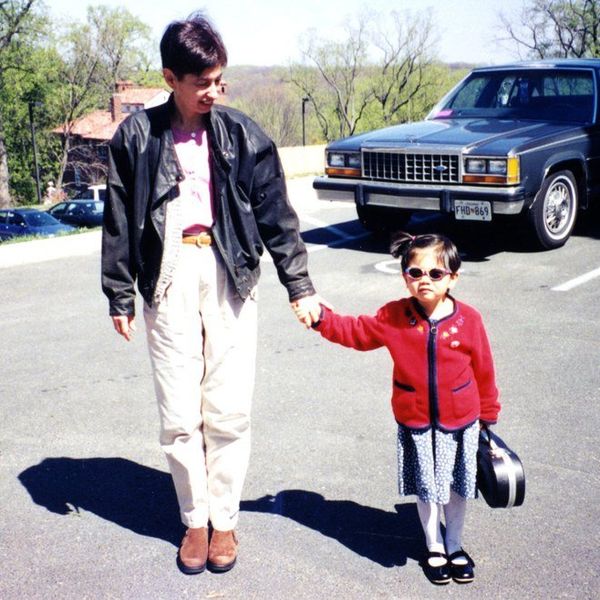
I was born and raised in the same town in Fairfax County, and I’ve never had anything but a U.S. passport. I may not have a dual citizenship, but I might have a dual identity: I consider myself Nepali-American. But is the Nepali part of my identity as valid as the American part?
I wasn’t born in Nepal. My parents immigrated from Nepal to the U.S. when my older brother was 3 years old, and I was born in Virginia. At home, we spoke Nepali, so I’m lucky to understand and speak it, as well as read a bit. Very fortunately, I’ve been able to visit Kathmandu and various other places in Nepal throughout my life. Although the weeks I spent there were short, they added up over the years and become a solid part of my childhood.
Nepal has a unique cultural niche in South Asia. The country seems small, but it is so diverse that its people and cultures do not easily fit into categories claimed by some South Asian-Americans like “brown” or “desi.” While the similarities between Nepal and its fellow South Asian countries are undeniably endless, there are a number of significant differences felt by the country as a whole as well as myself personally.
Being part of a minority-within-a-minority, the fringes of a culture and geographic label, has a strong impact on my identity. I feel as though I have to try especially hard to represent and understand my culture and its uniqueness, in order to stand out in a mass that many people homogenize. It also causes some disconnect with the wider South Asian identity, which is dominated by Indian/desi culture.
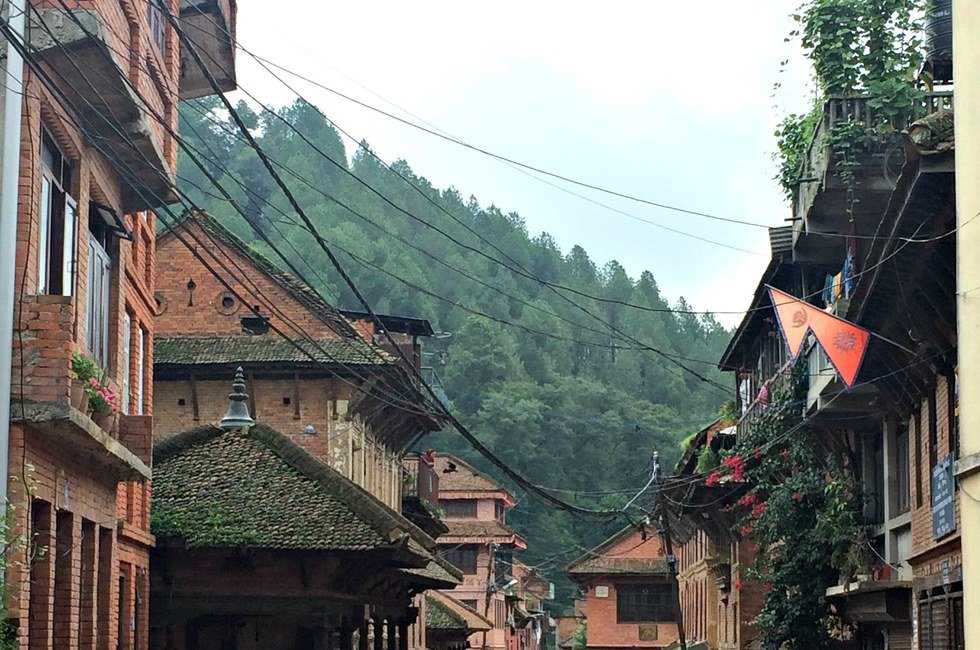
I love anything to do with being Nepali, but being a “foreigner” has its obstacles. As an American who has never lived in Nepal for an extended period of time, I find that my efforts to retain culture involve reaching out and grabbing easily recognizable symbols. Nepali food like momos and Wai Wai (instant ramen), Nepali clothes, religious symbols, the Himalayas and intricate, traditional art and architecture become my sources of pride and the visual representations for the country of my parents’ birth.
These familiar symbols from my home and childhood, however, also conveniently satisfy the white gaze: By focusing on aesthetics, I sometimes feel like I’m othering my own culture and contributing to orientalist ideas of Nepal being nothing but a beautiful land full of peaceful people and exotic Eastern religions—the kind of ideas that led a boy in 10th grade to tell me, after trying to guess my ethnicity, that there was no way he could’ve have guessed a country as obscure as Nepal because “that’s just where monks go to set themselves on fire.” It’s especially hard when I’m one of the few Nepali people in my school or on campus because I certainly can’t speak for everyone when answering questions about the nuances and diversity of Nepali culture.
I wonder sometimes if there’s a line I have to draw for myself. I’m an American—so how Nepali am I, and how Nepali am I allowed to try be? Do I even have to "try?"
Enter the additional complication of my family being part of a high caste and very privileged ethnicity back home in Nepal. Only in the past few years have I really taken the initiative to learn about social relations in Nepal, but it is a very important thing for me to do. Diaspora communities are often detached from the political realities of their motherlands and are often part of very privileged groups who were able to immigrate to America.
Educating myself on issues pertinent to Nepal not only breaks down my ignorance, but also makes me connected to my culture in a meaningful and important way. It makes me more critical of my identity and more aware of the society I am a part of, and how it isn’t perfect.
Introspective assessments of my identity now include a lot more information about the society and history of Nepal, and awareness of my place as an American citizen. I also realize that my identity doesn't have to be two halves, I can appreciate it as one whole. My experiences are no less valid because they're not the same as somebody else's.
Being a first/1.5/second generation immigrant is a reality in and of itself—it doesn't have to cause identity crises. Confusion is OK, but it's not a requirement.